Why Haleakala Sunrise Now Requires a Reservation
I did not think much about the sunrise reservation the first time I read about it. It looked like one more line item in a long list of things to book before a Hawaii trip, next to the rental car and the snorkel tour. It was only after I stood at the summit at 5:40am, watching headlights climb the switchbacks in an orderly, spaced-out line, that I understood what the system was actually solving.
What the road looks like before dawn
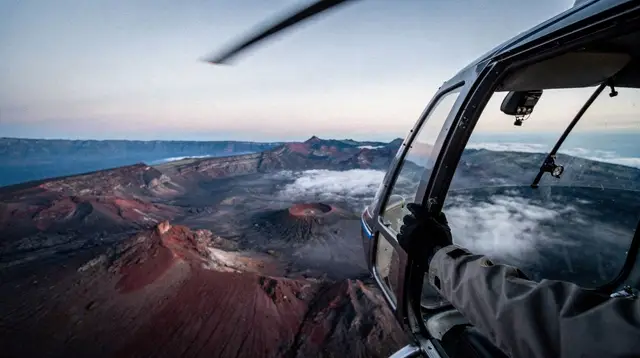
Haleakala’s summit sits at 3,055 meters, reached by a single road that climbs from sea level in under 60 kilometers — one of the steepest sustained ascents anywhere. Near the top, it narrows, bends sharply, and has almost no shoulder. The two visitor centers near the crater rim, Kalahaku and the summit building itself, were built decades ago with a modest number of parking spaces, because for most of the park’s history, sunrise at Haleakala was a niche activity for early risers and photographers, not a bucket-list item shared by millions of people on social media.
That changed gradually through the 2000s and 2010s. Sunrise from above the clouds, with the crater’s eroded valley floor glowing below, became one of the most photographed moments in Hawaii. More people wanted the same view at the same ten minutes, arriving through the same narrow window of road, into the same fixed number of parking spots. The park could not widen the road or pave a new lot on a protected summit — this is still a national park, not a stadium. So instead of expanding supply, the National Park Service limited demand.
Why 2017, and why recreation.gov
The reservation system went into effect in February 2017. By then, rangers were regularly describing traffic backed up along the summit road before 3am, cars parked illegally on switchback shoulders, and visitors arriving to find every space full with the sun still below the horizon. The park’s solution was a timed-entry reservation, sold exclusively through recreation.gov, the federal booking platform used across the national park system for permits and campsites.
The reservation itself is inexpensive — a nominal fee, currently one dollar — because its purpose was never revenue. It is a rationing tool. Each reservation guarantees one vehicle a place among a fixed daily allotment for arrivals between 3am and 7am. Outside that four-hour window, no reservation is needed at all, because arrivals naturally spread out across the rest of the day. If you read how the reservation actually works and how to book one, you’ll notice this is a narrow, deliberately-scoped rule — it targets one bottleneck, not the whole park.
Why it is separate from the entrance fee
This is the part people mix up most often, and it is worth being precise about it. The reservation and the park entrance fee are two different payments with two different purposes.
| Payment | What it covers | Where you get it |
|---|---|---|
| Sunrise reservation | Guarantees a parking spot for arrivals 3am–7am | recreation.gov, up to 60 days ahead |
| Park entrance fee | Access to the park itself, valid 3 days | Paid per vehicle at the gate or online |
You can hold a sunrise reservation and still owe the entrance fee at the gate. The reservation is not a ticket into the park — it is permission to arrive during the crowded hours. This split exists because the entrance fee funds the park’s operations generally (trail maintenance, ranger staffing, the visitor centers), while the reservation exists purely to manage a single traffic bottleneck. Merging them into one price would have obscured what each one is actually for.
Why 60 days, and why a small release two days out
The 60-day booking horizon was set to roughly match how far in advance people already plan a Hawaii trip — flights and hotel rooms for the island tend to get booked well ahead of arrival, especially in whale season from December through March. Giving sunrise slots the same 60-day runway let visitors fold it into the same round of planning instead of treating it as a separate, last-minute task discovered only once they landed.
The park also holds back a small number of slots that release two days before each date, mainly for visitors who did not plan that far ahead, or whose itinerary shifted once they arrived on Maui. It is not a reliable substitute for booking early — those slots are limited and disappear fast during peak weeks — but it acknowledges that not every trip is planned two months out.
What the system did not try to fix
It is worth saying plainly what the reservation does not control, because I see people assume it solves more than it does. It does not guarantee clear skies — the summit sits above the trade-wind cloud layer, but cloud cover still varies night to night, and no booking changes that. It does not control temperature: the air at the rim hovers close to freezing before dawn regardless of how organized the parking is, which is why what to wear at the summit is its own separate concern. And it applies only to the timed window — a sunset visit or a mid-morning hike into the crater’s trails needs only the standard entrance fee, because those arrivals were never the bottleneck the system was built to fix.
If you would rather not manage any of this yourself, a guided sunrise tour with pickup or a sunrise eco-tour that includes breakfast at the summit folds the reservation logistics into the operator’s own permit, which is one honest reason to choose one over a self-drive. If you’d rather see the mountain without the 3am wake-up call at all, a sunset llama trek on Haleakala’s slopes sidesteps the whole reservation system, since it runs outside the restricted window entirely.
Why understanding this helps before you book
None of this changes what you need to do to actually secure a slot — that is covered in the step-by-step reservation guide and in the comparison of a guided sunrise tour versus a self-drive. But knowing why the system exists changes how you plan around it. It tells you the constraint is structural, not bureaucratic — there genuinely is not more parking to build on a fragile summit, and the crowd genuinely does concentrate into the same few hours. It also explains why the park has never simply raised the entrance fee to manage demand: pricing people out was never the goal, spacing them out was.
If your dates are flexible, checking the park’s parking and access details alongside a broader look at when to visit Maui and monthly weather patterns will tell you more about your odds of a clear sky than the reservation system ever will. The booking only gets you a parking space; the mountain still decides what you see once you’re standing in it. For a wider sense of how sunrise fits into a first Maui trip, the three-day first-timers itinerary and the Haleakala volcano activities hub are useful next stops, and the site’s own best-time tool can help you weigh a January sunrise against a September one before you commit to a date 60 days out.
Haleakala volcano tours on GetYourGuide
Verified deep-linked GetYourGuide tours. Book through these links and we earn a small commission at no cost to you.
GetYourGuide does not provide a product photo for this activity — the image shows the meeting point, photographed by us.