Haleakala Crater Hiking Trails: A Guide to Walking the Summit
Can you hike inside Haleakala Crater, and is it different from watching the sunrise?
Yes. Sliding Sands and Halemauu are marked trails that drop into the crater floor and require several hours of walking at altitudes above 2,100 m, unlike the sunrise viewpoint, which needs no walking at all. Both experiences use the same park entrance but are otherwise unrelated activities.
Hiking versus watching the sunrise: two different visits
Most people who come to Haleakala National Park never leave the paved overlooks. They drive up in the dark or at midday, stand at the rim for twenty minutes, and drive back down. That is a legitimate way to see the summit, and it is the only thing the sunrise reservation actually governs. Hiking inside the crater is a separate undertaking: it means walking down onto the cinder floor, spending hours among the volcanic cones you were looking at from the rim, and climbing back out under your own power.
The two are easy to conflate because they share the same entrance station, but a reservation for sunrise viewing does not include a hike, and a hiking day does not need that reservation at all — it needs only the standard park entry pass, valid for three days from purchase. If your plan is a photo at the rim, see what to wear at the summit and the parking and access guide instead of this page.
What the crater actually is
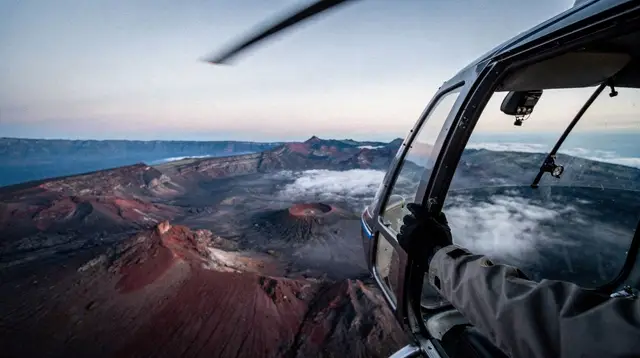
Calling it a crater is a habit, not a precise description. The 11-km-long depression below the summit was not blasted out by an eruption; it was carved by two streams that eroded the mountain’s upper valleys before later eruptions partly filled the floor with cinder cones. Haleakala is dormant, not extinct — its last eruption was several centuries ago, on the southwest rift near La Perouse Bay, and there is no lava, gas venting or seismic hazard to plan a hike around. The volcanic character shows up instead in the ground itself: red, black and gray cinder, sparse plant life, and a silence that comes from almost nothing living at that elevation.
The trailheads
Two trails drop into the crater, from opposite sides of the summit area, and they do not start at the same parking lot as the sunrise overlook.
- Sliding Sands Trailhead (Keoneheʻeheʻe) — at the visitor center, elevation about 2,970 m. This is the higher and more exposed start, with sweeping views down into the crater from the first steps.
- Halemauu Trailhead — about 6.5 km past the park entrance on Haleakala Highway, elevation about 2,140 m. This start is lower, cooler in the sense of having more air to breathe, and reaches the crater rim edge before dropping down switchbacks to the floor.
Neither trailhead has cell coverage worth relying on, and both close their gates to vehicles at the same times the park sets seasonally — check current hours before driving up, since this page does not cover the entry logistics in detail (that is Haleakala National Park: Parking, Access Road and Entry Fee Explained).
Trail options, shortest to longest
| Route | Distance | Elevation change | Typical time | Difficulty |
|---|---|---|---|---|
| Sliding Sands out-and-back (partial) | 3–6.5 km round trip | 150–300 m | 1–2 hours | Moderate (return climb) |
| Sliding Sands to Kapalaoa Cabin and back | 12.9 km round trip | ~490 m | 5–7 hours | Strenuous |
| Halemauu to crater floor and back | 6.4 km round trip | ~370 m | 3–4 hours | Moderate |
| Sliding Sands to Halemauu (one-way traverse) | ~17.7 km one-way | net loss, then a climb out at Halemauu | 7–10 hours | Strenuous, full day |
| Sliding Sands to Silversword Loop and back | ~9.7 km round trip | ~330 m | 4–5 hours | Moderate to strenuous |
The full traverse needs a second vehicle staged at the other trailhead, or a pre-booked shuttle; without one, plan an out-and-back on either side instead.
Sliding Sands (Keoneheʻeheʻe) partial hike
This is the practical choice for a half-day visit. The trail heads straight down into the crater in long switchbacks, with the cinder cones of the crater floor visible almost immediately. Walking 20–30 minutes down and back gives a genuine sense of scale — the cones that look modest from the rim turn out to be hundreds of meters across — without the altitude toll of a longer day. The catch is the same on every crater hike: the descent is easy, the return is the hike. Going down costs little effort at 2,970 m; climbing back at that elevation, with less oxygen than sea level, is where people misjudge their turnaround point.
Halemauu to the crater floor
Halemauu starts lower and gains a gentler introduction: about 1.6 km across native shrubland to the crater rim, then a set of switchbacks down basalt cliffs to the floor. It is a reasonable alternative for hikers who want the crater-floor experience without starting at Sliding Sands’ full elevation, and it is the standard exit point for a one-way traverse.
The full traverse
Starting at Sliding Sands and finishing at Halemauu (or the reverse) crosses the crater floor past the Kaupo Gap side trail, the Silversword Loop and Holua cabin, ending with a climb out on the Halemauu switchbacks. Most hikers who do this budget a full day, start early, and carry a headlamp in case the last stretch runs into dusk. This is the version of the hike aimed at fit, experienced hikers who have planned transport between the two trailheads in advance — it is not a spontaneous add-on to a sunrise visit.
Altitude, cold and weather — read before you commit
The trailheads sit between about 2,140 m and 2,970 m. That is high enough for altitude effects — shortness of breath, mild headache, faster fatigue on climbs — to show up in otherwise healthy hikers, especially those arriving straight from sea level that same morning. A few practical points:
- No hiking within 24 hours of scuba diving. Ascending to crater elevation too soon after a dive carries a real decompression sickness risk. If diving and hiking are both on the trip, put the dive after the hike, not before.
- Morning cold, midday sun, afternoon storms. Near-freezing temperatures at dawn give way to strong UV at midday (there is little shade anywhere in the crater) and clouds that can build into afternoon rain or even brief hail. Starting early and being back at the trailhead by early afternoon avoids the worst of the weather swing.
- Loose cinder underfoot. The trail surface is fine volcanic gravel on a slope — sturdy footwear with grip matters more here than trail experience elsewhere on the island.
- No water sources on the trail. Every liter needs to be carried in. There is no reliable refill point between the trailhead and the cabins.
- No cell signal. Tell someone your planned route and return time before starting.
Clothing layers for the summit’s temperature swing are covered in more depth in what to wear at the Haleakala summit; the short version for hiking is to start in a warm layer at the trailhead and expect to shed it within the first hour of descent.
Permits for overnight hiking
Two wilderness cabins (Holua and Paliku) and three tent-camping areas inside the crater are available by permit, booked through the National Park Service’s recreation system well in advance — cabins in particular are awarded by lottery months ahead. This page covers day hiking; anyone planning an overnight crater trip should check current permit rules directly with the park, since cabin and campsite availability changes season to season.
Guided alternatives to hiking
Not every visitor wants to plan a self-guided hike, carry water for a full day, or navigate the return climb without support. Two categories of guided experience cover the crater without requiring a hiking itinerary:
A guided sunset visit takes care of timing, parking and the cold-weather layer question, ending the day at the rim rather than on the trail — worth considering if the appeal is the crater’s colors and shadow rather than the physical hike itself: a small-group sunset outing with snacks and photo stops at the summit, or, for a quieter pace, a private evening tour of the summit at sunset.
For a look at the crater’s geology from above rather than on foot — useful for anyone whose knees or schedule rule out the switchbacks — a 45-minute helicopter flight over the Hana rainforest and the Haleakala crater covers ground that would take a full day of hiking to reach.
How a hiking day fits around the rest of a Haleakala visit
Because the crater trailheads are separate from the sunrise viewing area and require no timed reservation, a hiking day is one of the more flexible ways to visit the summit. A common pattern: drive up after the morning reservation window closes (after 7 a.m.), hike Sliding Sands for two to four hours, and be back down before the afternoon cloud layer builds in over Upcountry. Bikers doing the sunrise guided descent start well before dawn and are usually off the mountain by mid-morning, so trailheads are quiet by the time hikers arrive later in the day. Stargazers heading up for observatory viewing come after dark, on the opposite end of the day entirely — the three activities rarely overlap at the same trailhead.
For trip planning beyond the summit itself, the Haleakala destination page and the things to do in Haleakala category cover the full range of summit activities, and the Upcountry and Haleakala day tour guide compares guided versus self-drive options for those who would rather not manage timing and altitude alone. First-time visitors mapping a full itinerary can check how many days you need in Maui and the three-day first-timers itinerary to see where a crater hike fits against Road to Hana and the beaches. A packing checklist that covers layers, sun protection and water capacity for a summit hike is in the Maui packing list, and anyone weighing a downhill bike route instead of a hike should read the downhill bike safety guide before choosing between the two.
Hiking the Haleakala crater trails
Do I need a permit just to day-hike in the crater?
No day-use permit is required for Sliding Sands or Halemauu — only the standard park entrance pass, valid for three days. Permits apply only to overnight camping or cabin stays inside the crater.
Is the hike safe for kids?
The short Sliding Sands out-and-back (down 20–30 minutes and back) is manageable for older, fit children used to walking, but the altitude and lack of shade make it a poor choice for young children or anyone prone to altitude discomfort. Longer routes and the full traverse are not recommended for young kids.
What should I bring that isn’t already covered by summit clothing advice?
Beyond layers, carry more water than feels necessary (at least 2 liters for a half-day hike), sun protection since there is no shade, sturdy shoes for loose cinder, and a paper map or downloaded offline map, since there is no cell signal to rely on for navigation.
Can I combine the hike with the sunrise viewpoint in one visit?
Not practically. The sunrise reservation covers entry between 3 and 7 a.m., and a meaningful hike needs several hours in daylight afterward at altitude, on top of an already early start. Most hikers treat sunrise viewing and crater hiking as two separate trips up the mountain, or hike later the same day after resting.
How crowded are the crater trails compared to the summit overlooks?
Considerably quieter. The parking areas at the visitor center and rim overlooks fill for sunrise; the Sliding Sands and Halemauu trailheads see a fraction of that traffic, and once past the first switchbacks, the crater floor is often nearly empty even on a busy park day.
Does the “dormant, not extinct” status affect trail safety?
Not in any practical way for hikers. There is no current volcanic activity, no gas hazard and no restricted zone tied to eruption risk. The real hazards on the trail are altitude, cold-to-hot temperature swings, loose footing and the lack of water and shade — ordinary high-elevation hiking risks, not volcanic ones.
Haleakala volcano tours on GetYourGuide
Verified deep-linked GetYourGuide tours. Book through these links and we earn a small commission at no cost to you.
GetYourGuide does not provide a product photo for this activity — the image shows the meeting point, photographed by us.