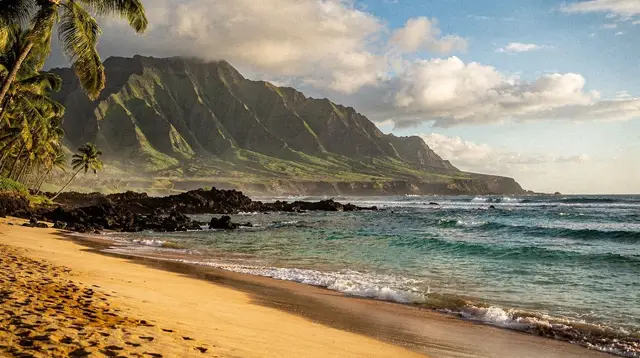
The windward side of Maui
Everything on this side of the island faces the trade winds, and it shows. Where west and south Maui stay dry most of the year, the windward coast between Paia and Hana catches rain in every season, which is exactly what feeds its rainforest, its waterfalls, and the deep green that draws people out here in the first place. This is the region built around a single road: the Hana Highway, running east from the surf town of Paia, past the wind-sport beach at Hookipa, through a corridor of gulches and one-lane bridges, to the small village of Hana and the pools of Kipahulu at the island’s southeastern edge.
It is worth saying plainly before anything else: this is a full-day undertaking, not a scenic detour on the way to somewhere else. There is no loop back through the interior. Whatever way you go in, you come back out the same road, or continue around the remote southern coast on the Piilani Highway, which many rental contracts do not allow. If you are deciding whether this fits into your Maui trip, the honest answer is that it deserves its own day, ideally with an early start.
Paia — the start line
Paia sits at the western edge of this region, a former sugar plantation town now known for surf shops, a laid-back main street, and some of the best casual food on the island. It’s the natural staging point for the drive: the last real town with a full selection of gas stations, grocery stores, and coffee before the highway narrows. Most guided vans and self-drivers alike treat Paia as mile zero, filling the tank and grabbing supplies here rather than risking it further along.
For background on exactly where to fuel up and what the driving conditions look like mile by mile, the dedicated page Road to Hana driving tips and gas stations covers that in detail — this page stays at the level of the region as a whole.
Just inland from Paia, the small community of Haiku sits away from the highway itself but close enough that a handful of visitors detour through it on the way out, drawn by waterfalls that don’t make the standard mile-marker list. The guide to hidden waterfalls near Haiku covers that side trip for anyone with extra time before the main drive begins. Paia itself is worth more than a fuel stop, too — its identity as a former plantation town turned surf hub is its own story, covered in life in Paia, a surf town’s culture.
Hookipa — watch, don’t wade in
A few minutes past Paia, Hookipa is one of the most recognized windsurfing and kitesurfing beaches in the world, and in winter it hosts serious surf on top of the wind. It is not a beginner swimming beach and not a place to underestimate: the shorebreak and currents here are for experienced watermen, and most visitors are content to watch from the bluff above, where the parking area doubles as a natural grandstand for whoever is out on the water that day. Afternoons typically bring the strongest wind, so if the goal is photos of sails and kites cutting across the swell, arriving after midday works in your favor. If the goal is beginner surfing, Lahaina or Kihei are better choices.
Into the rainforest — waterfalls and one-lane bridges
Past Hookipa, the highway commits to its reputation. The road narrows, the curves stack up, and the landscape shifts from dry cane fields to dense rainforest laced with streams. This stretch is where most of the postcard images of Maui’s east side come from: waterfalls dropping beside the road, bamboo forest, and bridges built for a single car at a time, where the unwritten rule is that whoever reaches the bridge first gets to cross first.
This page won’t walk through every named stop in order — that’s the job of Road to Hana stops map, which lays out the sequence in detail. What matters here is the shape of the experience: frequent short stops, pullouts that fill up fast in the middle of the day, and a pace that rewards patience over speed. A worthwhile detour along this stretch is Twin Falls, often the first proper waterfall stop and a good gauge of how crowded the day will be.
Waianapanapa — the black sand beach that needs a reservation
Closer to Hana, Waianapanapa State Park holds the region’s best-known beach: a crescent of black volcanic sand framed by lava rock and pandanus trees. Since the park introduced a reservation system, non-residents must book an entry window online in advance, along with a separate parking fee. There is no walk-up entry outside your assigned slot. This is one of three reservations worth locking in before you leave home, alongside the Haleakala sunrise permit and the Iao Valley entry pass for non-residents — all three fill without warning and are the most common cause of a disappointing day here.
Hana — small village, real limits
Hana itself is easy to drive past without noticing, and that’s part of its character. It is a genuine village, not a resort base: one small general store with short and sometimes unpredictable hours, no supermarket, no shopping center, and nothing resembling nightlife. There is no reliable ATM network to count on either. Anyone planning to eat, refuel, or withdraw cash should plan to do it in Paia or Kahului before setting out, not on arrival in Hana. The town’s slower pace and lack of commercial development are exactly why some travelers choose to spend a night here rather than drive back the same day, giving themselves a second morning to explore before the crowds arrive from the west.
Hana also carries real history: it was a working sugar and ranching community long before tourism, and that identity has not been replaced by the drive-through traffic it now sees daily. Treat roadside stands, private driveways, and posted no-parking areas with the same respect you’d want shown to your own neighborhood — this has become a genuinely sensitive local issue as visitor numbers have grown.
Kipahulu and the Pipiwai Trail
South of Hana, the Haleakala National Park has a second, separate entrance at Kipahulu, unconnected by any through-road to the summit district hours away. This coastal section holds the Oheo Gulch pools and the Pipiwai Trail, a roughly 6 km round-trip hike upstream through bamboo forest to Waimoku Falls. Trail conditions can turn muddy fast after rain, and the pools themselves are closed to swimming whenever flash flood risk is elevated — a closure that happens often enough that it should never be promised as a sure thing. Check current conditions before building your day around a swim here. The full hike, its trailhead, and what the bamboo forest and waterfall actually look like at the end are covered stop by stop in Pipiwai Trail and Waimoku Falls guide.
What to pack before you leave Paia
Once you’re past Paia, there is nothing resembling a shopping trip until you either reach Hana’s one small store or turn around. Cell coverage drops in and out for most of the drive, so downloading offline maps before leaving is worth more than any app that depends on a live signal. A full tank of gas, cash for the parking fee at Waianapanapa and any farm-stand purchases, a light rain layer, and water shoes for the pools at Kipahulu cover most of what catches first-timers out.
Reef-safe mineral sunscreen matters here as much as it does on any Maui beach — Maui County bans the sale, distribution, and use of sunscreens containing oxybenzone, octinoxate, or octocrylene, so pack a zinc-based one rather than assume a beach shop along the way will have what you need. Snacks matter too: beyond a few fruit stands and the farm stops some tours build in, there is no reliable place to buy food between Paia and Hana itself.
How people do this: self-drive or guided
| Option | What it involves | Rough cost per person |
|---|---|---|
| Self-drive rental car | Full flexibility on stops and pace; requires planning fuel, reservations, and driving 620 curves yourself | $60-150 (gas, park/state fees, food) |
| Guided van or jeep tour | Driver handles the road, narration included, often with lunch or farm stops built in | $150-250 |
| Private guided tour | Small group or family-only, flexible stops, higher cost | $250-400+ |
A guided tour removes the biggest sources of stress — the driving itself, the parking, and the reservations — and is a genuinely honest alternative for anyone uneasy about a full day of one-lane bridges. The full-day guided drive that includes lunch along the way is the most straightforward version of this, while the private open-air jeep tour suits travelers who want their own vehicle and schedule without doing the driving themselves. For a livelier group format, the open-air jungle adventure tour running about five and a half hours covers the rainforest half of the route at a brisker pace. Along the way, some itineraries also build in a stop at the alpaca farm just off the highway, a low-key break for families partway through the drive.
For a direct comparison of the tradeoffs, see Road to Hana guided tour vs. self-drive.
When to go
The windward side doesn’t follow the same dry-season, wet-season split as the leeward coasts as cleanly — rain is possible here in any month, since the trade winds push moisture into this side of the island year-round. That said, May through October tends to bring somewhat drier, more predictable driving conditions, while November through April sees heavier and more frequent rain, which can also mean more dramatic waterfalls. Starting early, ideally by 7 or 8 a.m., matters more than the season: it gets you ahead of both the tour van traffic and the cloud buildup that typically settles over the interior by early afternoon.
What locals want visitors to know
The surge of day-trip traffic since tourism recovered has made the relationship between the highway and the communities along it a genuinely live issue, not background color. Roadside fruit stands, family cemeteries, and private driveways sit right against the shoulder in places, and treating them as photo backdrops rather than someone’s home is the single most common friction point drivers hear about. The black sand at Waianapanapa and the beaches beyond it remain public by Hawaii law regardless of what the surrounding land looks like, a point covered in Hawaii’s beaches are all public — what that means. For a longer view on how the drive is experienced from the other side of the windshield, Road to Hana through the eyes of locals is worth reading before you go, not just after.
Planning the rest of your trip
If Hana and the windward coast are one piece of a longer stay, the seven-day complete Maui itinerary and the three-day first-timers itinerary both build in a dedicated Road to Hana day. For the broader question of how many days to allow across the whole island, see How many days do you need in Maui. And if a rental car isn’t part of your plan at all, three days in Maui without a car shows how a guided tour can substitute for self-driving specifically on this route.
Hana and the Road to Hana: frequently asked questions
Is the Road to Hana worth it if I only have a few days on Maui?
It’s worth it if you can give it a genuine full day. Squeezing it into an afternoon means missing most of what makes it worthwhile and returning after dark on an unlit, curving road, which isn’t recommended.
Can I do the Road to Hana without a rental car?
Yes, through a guided van, jeep, or private tour departing from west or south Maui. The Maui Bus does not serve this route.
Are there gas stations between Paia and Hana?
No. Fuel up in Paia or Kahului before you leave; there is no gas station along the highway itself until you reach Hana, and even Hana’s options are limited.
Do I need a reservation to visit Waianapanapa’s black sand beach?
Yes, non-residents must book a timed entry online in advance along with a separate parking fee. There is no walk-up access outside a booked window.
Can I always swim in the Kipahulu pools?
No. The pools close to swimming periodically, especially after rain, due to flash flood risk. Confirm current status before planning to swim there.
Is Hana a good place to buy groceries or find an ATM?
Not reliably. Hana has one small general store with limited hours, no supermarket, and no dependable ATM network. Handle cash and supplies before you arrive.
Should I stay overnight in Hana or drive back the same day?
Either works, but an overnight stay lets you see Hana and Kipahulu in the morning quiet before day-trip traffic arrives from the west, and avoids driving the highway after dark.
What’s the difference between this page and the stops map guide?
This page covers the region as a whole — what it is, how to plan for it, and what to know before you go. Road to Hana stops map covers the mile-by-mile sequence of specific waterfalls, viewpoints, and pullouts.