Hawaii's Beaches Are All Public. Here's What That Means in Maui
The Sand in Front of a $900-a-Night Resort Is Not Theirs
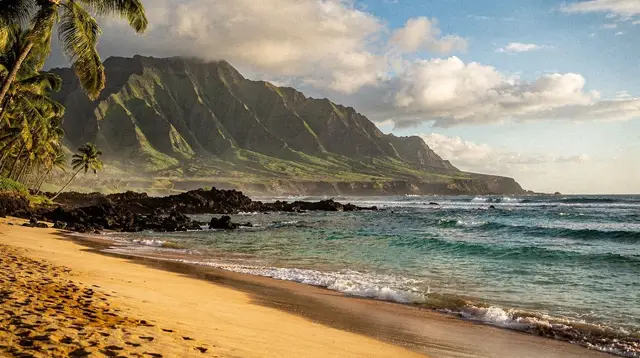
I remember standing at the edge of the Kaanapali Beach Walk on my first trip, watching guests stretched out on resort loungers a few feet from where I’d laid a towel I’d bought at a Kahului drugstore, and wondering if a security guard was about to ask me to leave. Nobody did, and nobody could have. In Hawaii, the beach itself, from the water out to roughly where the waves reach in normal conditions, is public land. It doesn’t matter whose hotel sits behind it. That single fact changes how I plan a Maui trip, and it’s worth understanding before you build a budget around which resort you can afford.
This isn’t a courtesy the hotels extend. It’s state law, rooted in old Hawaiian land tradition and written into modern statute: the shoreline up to the upper reaches of the wash of the waves belongs to the public, full stop. A resort can own the pool deck, the lobby, the landscaped lawn, and every room upstairs. It cannot own the sand its guests are lying on, and it cannot own the water past that sand.
What This Actually Lets You Do
If you’re staying in Kihei to save money, or splitting your trip between west Maui and south Maui, you can still walk onto the beach fronting any resort in Wailea or Kaanapali, spread a towel, swim, and stay as long as you like. County rules require these resorts to provide marked public shoreline access points, usually a short paved path between buildings or through landscaping, along with a small amount of public parking or a public right-of-way sign pointing you in. They can’t fence off the sand or make it feel like trespassing to a non-guest, even though plenty of the design, deliberately or not, makes you feel like you shouldn’t be there.
I’ve used this to snorkel Black Rock at the north end of Kaanapali Beach without paying for a room, and to walk the Wailea coastal path checking out different beaches before deciding where to spend an afternoon. It’s also how a lot of people compare Kaanapali against Wailea in person before committing to where they’ll actually stay.
Where the Line Actually Falls
Here’s the part that trips people up, and the mistake I want to head off: public beach access is not the same as free use of resort amenities. The beach itself, and the ocean, are public. Everything the resort built and staffs to make that beach comfortable is private and sold to paying guests, even though the resort itself has no right to own the beach, which stays public up to the high-water mark and must keep a public access path and a dedicated (often free but limited) parking area open.
That means, as a non-guest, you don’t have a right to:
- The resort’s loungers, umbrellas, or beach towels
- Cabana or poolside food and drink service
- The pool itself, even the ones that look like they blend into the beach
- Restrooms and outdoor showers inside the resort building (some properties have public ones near the access path, some don’t)
- Guest parking, valet or self-park, which resorts charge for by the night and reserve for registered guests
I’ve seen visitors get genuinely confused on this point, assuming that because the sand is public, the striped lounger sitting on it must be too. It isn’t. If you want the full resort beach experience, chair and drink service included, you either book a room or, at some properties, pay for a day pass. If you just want the beach, bring your own gear, use the public access point, and park where the public parking sign tells you to, not in the hotel’s lot.
Parking is the detail that catches people off guard most. Public lots near resort beaches tend to be small and fill up by mid-morning in high season, especially at the popular access points in Kaanapali. If you’re aiming for a specific beach and can’t find public parking, that’s a sign to come earlier the next day, not a sign to pull into the resort’s driveway and hope no one notices.
Why This Matters for How You Plan Your Trip
Once this clicks, it reshapes a few decisions. You don’t need to book the most expensive resort in Wailea just to swim in front of it. You can stay somewhere considerably cheaper, in Kihei or a condo further down the coast, and still walk the same sand as guests paying triple your nightly rate. This is one of the reasons a first Maui trip doesn’t have to mean a luxury budget: the beach, the actual product most people come for, is free and open to everyone regardless of where you sleep.
It also means beach-hopping is a legitimate way to spend a day. I’ve walked from one public access point to the next along the Wailea coastal path, checking out the sand and water in front of half a dozen resorts, without paying to enter a single one. If you’re deciding between neighborhoods before booking, this is a genuinely useful way to see what a resort’s frontage actually looks like before you commit a week of your trip to being near it.
The same principle covers free things to do around the island more broadly: the best beach on Maui, resort or not, costs nothing to visit. What you pay for is convenience, service, and comfort, not access to the water.
If your day includes more than a beach towel, the same public shoreline logic still applies once you’re in the water. Some of the best beginner reef viewing on the island is right off the Kaanapali public access points, covered in more detail in the guide to the best snorkeling beaches in Kaanapali, and it needs nothing more than what you already brought.
The Rule Applies Well Past the Resort Corridor
It’s easy to think of this law as a Kaanapali-and-Wailea thing, since that’s where the contrast between a $900-a-night room and free sand is most obvious. It isn’t limited to resort frontage at all. The same public-shoreline line runs along undeveloped stretches like Big Beach in Makena, along the smaller pocket beaches near Maalaea, and along the black sand at Waianapanapa on the way to Hana, where a separate reservation system controls the park’s parking lot, not the sand itself. Wherever the ocean meets the land on Maui, the public’s right to be there doesn’t change with the zip code.
That consistency matters if you’re weighing where to stay. Someone comparing west Maui against south Maui isn’t choosing which coast has “the” public beach; both do, along their entire length. The only real differences are which stretch of public sand sits closest to your front door, how crowded its access point gets, and what’s easiest to reach for the day trips you’ve already got planned, whether that’s a full-day circle island tour or a slower morning at one beach.
Public Sand Still Comes With Rules
Free access isn’t the same as no rules. The water fronting every resort is also where Hawaii’s marine protections apply, including the law that keeps people at a legal distance from Hawaiian green sea turtles, which haul out to rest on public sand at spots like Kaanapali and Turtle Town in south Maui without losing any of their protected status. In winter, that same public water is where humpback whales pass close enough to see from a beach towel, no boat required, and no resort has any more claim to that view than a visitor parked at the public access point down the beach.
Making the Most of a Beach Day Without a Resort Room
A few habits make this work smoothly. Bring your own umbrella or a pop-up sun shelter, since Maui sun at midday is stronger than it feels and resort shade is not for rent to outsiders. Bring your own towels and a cooler if you’re staying a few hours. Check the county’s public access points ahead of time rather than driving to a resort and guessing, since some properties make their access path easier to spot than others. And remember that Hawaii’s chemical sunscreen ban applies here just like everywhere else on the island: reef-safe mineral sunscreen only, whether you’re on public sand or a resort’s private lounger.
If you want a beach day built around something more structured than picking a spot and parking, a morning boat trip covers the same public-water principle from a different angle. A short Molokini snorkeling trip leaves from a public harbor and drops you in open water that belongs to no resort at all, and a longer Molokini snorkel and whale watching tour pairs that same public water with a chance at seeing whales in season. Neither requires a hotel reservation, only a spot on the boat.
For a day that trades the coastline for the interior, a guided Road to Hana tour with lunch makes a good contrast: public land and public roads, this time on the island’s other coast, with someone else doing the driving.
Understanding that the beach is yours, wherever you’re staying, takes the pressure off choosing a hotel purely for its shoreline. Choose it for the room, the price, and the neighborhood. The sand and water in front of it were never the hotel’s to sell you in the first place.
Tours for a first visit on GetYourGuide
Verified deep-linked GetYourGuide tours. Book through these links and we earn a small commission at no cost to you.
GetYourGuide does not provide a product photo for this activity — the image shows the meeting point, photographed by us.