The Sea Turtle Distance Law in Maui: What 10 Feet Actually Means
My first honu encounter, and the mistake I almost made
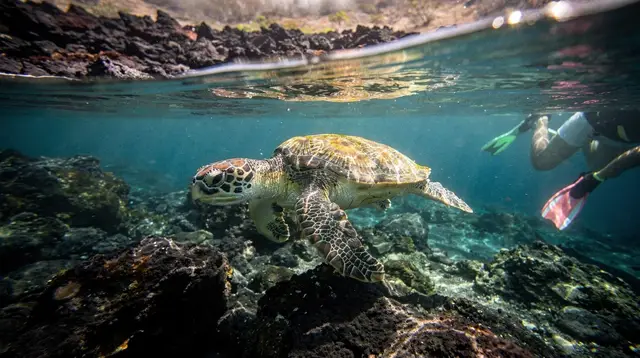
The first time I saw a green sea turtle in the water off south Maui, my instinct was to swim closer. It was gliding along a few feet below the surface, unbothered, and it looked close enough to reach out and touch. I didn’t know yet that doing exactly that — closing the gap for a better photo — is the single most common way visitors break federal law without realizing it. Nobody yells at you underwater. There’s no lifeguard whistle. You just quietly cross a line that exists precisely because thousands of well-meaning tourists do the same thing every season.
That’s the piece I want to clear up here, because it’s the part every generic packing list skips: this isn’t a “don’t touch” rule. It’s a distance rule. Ten feet, roughly three meters, in the water or on the sand. You can violate it without ever laying a hand on the animal.
What the law actually says
Green sea turtles, or honu, are protected under the U.S. Endangered Species Act and the Marine Mammal Protection Act framework that NOAA Fisheries enforces in Hawaii waters. The practical rule visitors need to know: keep a minimum distance of 10 feet from a honu at all times, whether you’re snorkeling, swimming, wading, or standing on the beach where one has hauled out to rest. When a turtle is resting on land — which honu do more than almost any other sea turtle species — the recommended distance often stretches further, since a turtle on the sand is also more easily stressed into abandoning a basking spot it needs for thermoregulation.
This isn’t a courtesy guideline that local outfitters made up to keep things calm on their boats. It’s federal law, and NOAA can issue real fines for harassment, which is defined broadly enough to include chasing, cornering, touching, or altering a turtle’s natural behavior — including by simply getting too close for a photo.
Why the distance, not just the contact, matters
I used to assume the rule existed mainly to stop people from grabbing turtles for a selfie, which does happen and is obviously bad. But the 10-foot buffer is really about behavior, not touch. A turtle that senses a swimmer closing in will often stop feeding, change direction, or swim for open water to escape what it reads as a threat. Do that enough times, in a bay where dozens of boats and hundreds of snorkelers pass through daily, and you get an animal that spends its day fleeing instead of resting and foraging. The 10 feet is the space researchers have found lets people observe honu without measurably disrupting what the turtle would otherwise be doing.
That’s also why “I never touched it” isn’t a defense that matters here. If your fins are two feet from a turtle’s shell so a friend can get a wide shot with you both in frame, you’re inside the law’s boundary regardless of what your hands did.
Where this comes up on a real Maui trip
The two places I’d flag for anyone traveling with a first-time snorkeler or curious kids:
In the water at a snorkel site. Turtle Town off Makena earns its name honestly — sightings there are common enough that boats build entire itineraries around it. The crew on a guided trip will usually call out the 10-foot rule before anyone gets in the water, and on a boat like the Molokini and turtle-focused snorkel trip from Maalaea Harbor, the guides are watching for exactly this and will quietly wave people back if a turtle drifts closer to a swimmer than the swimmer drifted to it — because a turtle approaching you isn’t a violation, but closing that gap yourself is.
On the beach. Honu haul out to rest on sand all over the island, and it’s genuinely one of the more remarkable things about Maui — you don’t need a boat or a mask to see one. But a turtle resting on the beach is not a photo prop. Keep the same 10 feet, keep kids from running up for a closer look, and never nudge or flip one that looks stranded; call the state’s marine wildlife hotline instead and let trained responders assess it.
What this means if you’re combining a beach day with a snorkel trip
A lot of families I talk to are weighing a shore snorkel against a boat tour, and the honest answer is that both come with the same distance rule — a boat crew just makes it easier to follow, because someone is actively managing the group. If you’re snorkeling from the sand on your own, it helps to know before you’re in the water rather than learning it mid-swim. For a broader sense of where sightings are reliable versus rare, that’s a separate question I’d point you to elsewhere rather than answer here.
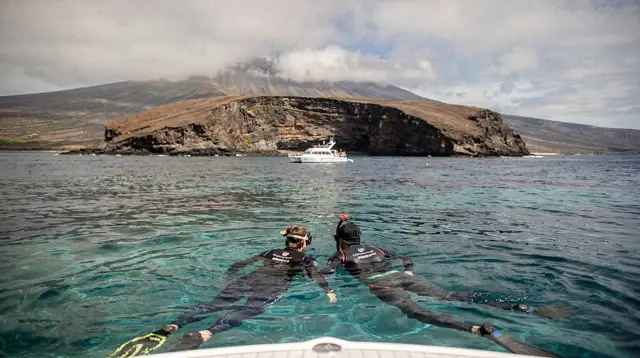
Combination trips that pair Molokini’s clear water with a stop at a turtle site, like the 3-hour Molokini Crater and Turtle Town snorkeling tour or the shorter 2-hour Molokini Express snorkeling trip, tend to have the most experienced crews on this specific rule, simply because they’re on the water near turtles every single day.
A quick reality check on distance
| Situation | Legal minimum distance | Common mistake |
|---|---|---|
| Swimming near a turtle in the water | 10 feet (3 m) | Fin-kicking closer for a photo angle |
| Turtle resting on the beach | 10 feet (3 m), often more | Kids approaching to touch the shell |
| Turtle surfacing to breathe near you | 10 feet (3 m) | Following it as it swims to breathe |
| Guided snorkel tour | 10 feet (3 m), enforced by crew | Assuming the guide’s presence means the rule is relaxed |
Traveling with kids and this exact rule
If you’re bringing children who are excited (understandably) at the idea of swimming near a real sea turtle, the most useful thing I’ve found is to set the expectation on land, before anyone has a mask on. “We look, we don’t chase” is a simple enough rule for even a six-year-old to hold onto once they understand it protects the turtle, not just the rulebook. Tours built around families, including most family-friendly snorkel trips, brief this clearly before anyone enters the water, and a rented mask that actually fits well from a Maui snorkel gear rental makes it easier for a nervous first-timer to relax and let the turtle do the approaching, if it chooses to.
Sea turtle distance law: frequently asked questions
Is the 10-foot rule a state law or a federal one?
It’s federal. Green sea turtles are protected under U.S. federal wildlife law enforced by NOAA Fisheries, which applies the same way across all Hawaiian islands, not just Maui.
Can I get in trouble just for taking a photo, even without touching the turtle?
Yes. The law defines harassment by distance and behavior disruption, not by physical contact. Closing the gap to under 10 feet for a photo can qualify on its own.
What if a turtle swims toward me? Am I breaking the rule?
No. The rule restricts you from approaching the turtle; it doesn’t require you to flee if the animal chooses to swim near you. The obligation is on people, not on the honu.
Does the distance rule apply on the beach, or only in the water?
Both. Turtles regularly rest on Maui’s sand, and the same minimum distance applies on land as in the water.
Are guided snorkel tours better for seeing turtles without breaking the rule?
Generally yes, because crews actively watch group spacing and will redirect swimmers who drift too close, which is harder to self-monitor on an unguided shore snorkel.
What should I do if I see a turtle that looks sick, injured, or entangled?
Keep your distance and contact Hawaii’s marine wildlife hotline rather than approaching or attempting to help directly; untrained handling can injure the animal further.
Does this rule apply to other marine animals I might see in the same water, like monk seals?
Hawaiian monk seals have their own, larger recommended buffer, generally further than 10 feet, since they’re also federally protected and even more sensitive to disturbance while resting on beaches.
Where are the best odds of a legal, respectful sighting?
Sites like Turtle Town off Makena and the waters near Wailea and Makena see frequent honu activity, and a boat departing Maalaea toward Molokini often adds a turtle stop precisely because sightings there are reliable enough to plan around — a separate topic worth reading on its own.
Every beach in Hawaii is public, as explained here, which is part of why honu show up on so many different stretches of sand rather than one roped-off sanctuary. If you’re curious how a crater like Molokini even formed into the snorkel site it is today, that’s a good rabbit hole for the boat ride out, and if diving is more your interest than snorkeling, Maui’s scuba operators see honu regularly too. Whatever you pack, a travel essentials checklist is worth a glance before you leave the room key at the front desk on tour morning.
Family-friendly activities on GetYourGuide
Verified deep-linked GetYourGuide tours. Book through these links and we earn a small commission at no cost to you.
GetYourGuide does not provide a product photo for this activity — the image shows the meeting point, photographed by us.