Two coasts, one road south
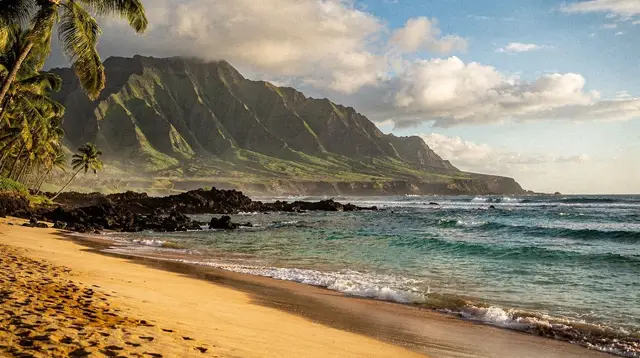
Wailea and Makena sit at the end of South Kihei Road, on the dry, sunny side of Maui where the lava flows of Haleakala meet the sea. The two places share a coastline but little else. Wailea is planned and manicured: a string of five-star resorts set back from a paved shoreline path, a golf course, and an outdoor mall, The Shops at Wailea, built for a traveler who wants the beach in the morning and a reservation at 7pm. Makena, a few minutes further south, is what South Maui looked like before the resorts arrived — scrub, lava rock, and a beach with no lifeguard tower in sight for long stretches.
Neither is Kihei, the more affordable stretch of condos and beach parks just up the coast — that comparison and its budget angle live on its own page. This one is for a traveler deciding whether a resort stay in Wailea makes sense, and for anyone heading south past the hotels to see Big Beach and the lava coast at La Perouse Bay.
For travelers still weighing where to base a trip, the broader question of West Maui versus South Maui as a home base comes down mostly to weather and drive times: South Maui’s leeward coast sees less rain year-round, while West Maui sits closer to the ferry to Lanai and the sunset catamaran fleet. Most travelers who choose Wailea or Makena plan a multi-day Maui trip built around romance and beach time or something longer, and the broader question of how many days a Maui trip actually needs is worth answering before booking flights, since a one-week trip splits very differently than a ten-day one.
Wailea: the resort coast
Wailea’s hotels line a low bluff above a series of small, sandy coves — Keawakapu, Mokapu, Ulua, Wailea Beach, and Polo Beach among them. A paved coastal path runs about 2.5 km (1.5 miles) along the whole strip, connecting the beaches and hotel grounds, and it’s a public path: anyone can walk it, resort guest or not. Hawaii state law makes every beach public up to the vegetation line, and Wailea’s hotels are required to provide public beach access points, usually a short walkway between two properties with a handful of free parking spots. The private feeling of a resort beach in Wailea is a design choice, not a legal one — the sand itself belongs to no one.
That distinction matters because Wailea markets itself on exclusivity, and it’s easy for a first-time visitor to assume the beaches in front of the hotels are for guests only. They aren’t. Non-guests do need to find the small public lots, which fill early, and hotel self-parking runs well into the double digits per night on top of the room rate — a cost that isn’t always advertised up front.
Wailea’s beaches are small and generally calm, better for swimming and floating than for big surf. Ulua and Wailea Beach are the two most popular for snorkeling right off the sand, with rocky points at either end that hold fish even without a boat. None of them are where the well-known Turtle Town snorkeling happens — that’s a boat trip south of Makena, covered in full on its own guide rather than here.
Travelers who’d rather snorkel these coves independently than book a boat can rent gear before heading out — the practicalities of renting snorkeling gear on Maui apply here just as they do anywhere else on the south shore, and picking the best month to visit for clear snorkeling water matters more at Ulua and Wailea Beach than the calendar alone suggests.
What a Wailea resort stay actually costs
Room rates in Wailea run from roughly $500 a night at the more modest properties to well over $1,000 at the top end, and that number is before three separate additions: Hawaii’s general excise tax (around 4.2–4.5%), the combined state and county transient accommodations tax (roughly 18% total on top of the room), and a nightly resort fee, typically $35–$60, that almost never appears in the advertised rate. A quoted “$550 a night” resort can land closer to $700 once tax and fees are added — worth budgeting for before booking, not after checking in.
| Item | Typical range (before adding the next line) |
|---|---|
| Wailea resort room, per night | $500 – $1,200+ |
| + GET (general excise tax) | ~4.2–4.5% |
| + State & county lodging tax | ~18% combined |
| + Resort fee, per night | $35 – $60, added separately |
| Hotel self-parking, per night | $30 – $50 |
Makena: past the last resort
South of the Wailea resorts, the road narrows and the development stops almost entirely. This is Makena — a name that covers a stretch of coast rather than a town, since there’s no town here. The Makena Landing area holds a small boat ramp and some of the calmer snorkeling water on this part of the coast, but the reason most people drive this far south is Big Beach.
Big Beach (Oneloa) and its shorebreak
Big Beach, known locally as Oneloa, is close to a mile of wide, golden sand with almost no development behind it — genuinely one of the most striking beaches on Maui. It’s also one of the more dangerous ones for casual swimmers, and that needs to be said plainly rather than buried under the scenery.
Big Beach has a steep drop-off close to shore, and waves break directly onto the sand rather than dissipating over a reef or shallows first. That produces a shorebreak — a wave collapsing hard and fast right at the waterline — powerful enough to knock people down and drive them into the sand headfirst. Neck and spinal injuries happen here every year, and they aren’t confined to big-wave days; a shorebreak can be dangerous even when the ocean looks moderate from the parking lot. This is not a beach to bring young children into the water at the edge, and it’s not a place for bodysurfing without real caution. Wading and sunbathing are fine; jumping straight into the shorebreak line is where people get hurt.
At the north end of Big Beach, a short scramble over a lava outcrop called Puu Olai leads to Little Beach, a smaller cove that is traditionally clothing-optional, though it isn’t an official designation and enforcement varies. It’s a five-minute walk over uneven volcanic rock, not a stroll in sandals.
The coast road to La Perouse Bay
Beyond Big Beach, the paved road continues a short distance to Makena State Park’s south end and then to La Perouse Bay, where the pavement stops for good. This is Maui’s youngest lava flow, dating to the late 1700s — a black, jagged field with almost no shade and no facilities, named for the French explorer whose ships anchored here in 1786, decades before Lahaina became the whaling port it’s remembered for. A rough trail continues along the coast from here, but it crosses sharp, sun-baked lava with no shade and no water source; it’s a destination for a prepared hiker, not a stroller-friendly walk after the beach.
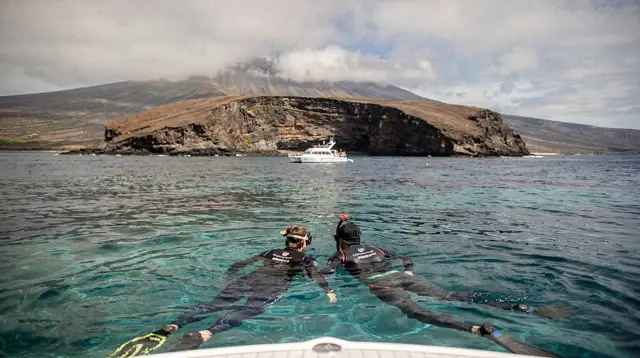
This stretch of coast is also where boats bound for Turtle Town launch their snorkeling stops, since the protected bays here are some of the more reliable places on Maui to see green sea turtles feeding close to shore. Federal law requires staying at least 3 meters (10 feet) from any turtle, in the water or on land — a rule that guides on organized trips enforce as a matter of course.
a clear-bottom kayak and snorkel tour that launches right from the Makena shoreline is one way to see this water without a full-day boat charter, paddling out over the reef before snorkeling near the turtle grounds.
Getting to Molokini from the south shore
Wailea and Makena sit closer to Molokini’s crescent than any other resort area on Maui, which is one of the practical reasons to base a stay here if snorkeling the crater is a priority. Boats departing nearby reach the site faster than those coming from Lahaina or Kaanapali, leaving more time in the water before the trade winds pick up in early afternoon and the crossing gets choppier.
A half-day boat trip combining Molokini crater with a Turtle Town stop is the most common way to do both in one outing, and a Wailea-based departure that adds Makena’s sea caves to the same route covers a longer stretch of the south coast on the way back. For travelers short on time, a shorter midday sail out of nearby Maalaea Harbor also passes through whale territory in season without requiring a full morning.
Timing the trip matters as much as the departure point: the best time of day for a Molokini snorkel is generally the earliest boat out, before the trade winds pick up, and travelers comparing a Maalaea departure against one leaving from the Makena or Wailea coast will find the two operate on similar early-morning schedules.
Where to eat and what fills the evening
Wailea’s dining runs upscale by default — resort restaurants, ocean-view lounges, and a handful of standalone spots at The Shops at Wailea. It’s the kind of place to book a sunset dinner reservation rather than wander in. Makena has essentially no restaurants; anyone spending the day there packs food and water, since the nearest grocery stop is back toward Kihei.
Evenings in Wailea tend to center on the coastal path at sunset — locals and guests alike walk it as the light drops — and on resort bars and restaurants rather than nightlife in the bar-hopping sense. This isn’t a late-night district; it’s a quiet one after dark.
Practical notes for a Wailea or Makena stay
A rental car is close to essential here. The Maui Bus does reach Wailea, but Makena and Big Beach sit outside its route network, and organized tours to Molokini or Turtle Town usually include hotel pickup regardless. Sunscreen matters more here than the marketing suggests: Maui County has banned the sale, distribution, and use of sunscreens containing oxybenzone, octinoxate, or octocrylene since October 2022, so a bottle brought from home may not be legal to wear in the water — only mineral, zinc-based sunscreen is permitted.
Whale season runs December through April, peaking January to March, and the Wailea coastal path is one of the better shore-based spots on the island to watch humpbacks breach in the Auau Channel without booking a boat. In summer, the same water is flat and warm, better suited to the snorkeling this coast is known for.
For a closer look than the shoreline path offers, whale-watching boats out of Maalaea Harbor run daily through the season, and the broader question of when whale season actually starts and ends is worth checking before planning a trip specifically around the humpbacks.
The debate over whether a rental car is really necessary on Maui is easy to settle for Wailea and Makena specifically: it is. Anyone flying into Kahului and planning to base here should sort out renting a car at OGG airport before the trip rather than after landing, since south-shore rental counters are limited and pickup lines at the airport can run long.
Wailea and Makena: frequently asked questions
Is the beach in front of a Wailea resort private?
No. All beaches in Hawaii are public up to the vegetation line, including the sand fronting Wailea’s hotels. Resorts are required to provide public access points, though parking near them is limited and fills early in the day.
Is Big Beach safe to swim at?
Big Beach has a steep drop-off and a powerful shorebreak that causes neck and back injuries every year, even on days that look calm. Wading and sunbathing are fine; entering the breaking waves at the shoreline requires real caution, and it isn’t a good choice for young children.
How far is Wailea from the Molokini snorkeling boats?
Most Molokini boats depart from nearby Maalaea Harbor or directly from the Makena/Wailea coast, both a short drive from Wailea resorts — closer than departures from Lahaina or Kaanapali, which means more time in the water before the afternoon wind picks up.
Can I drive all the way around the south coast past Makena?
No. The paved road ends at La Perouse Bay, on Maui’s youngest lava flow. Beyond that point there’s only a rough coastal trail across sharp lava rock, with no shade, water, or facilities.
Does Wailea have restaurants outside the resorts?
Yes, mainly at The Shops at Wailea, but the area overall is upscale and resort-centered rather than a walkable town with varied budget options. Makena has no restaurants at all.
Is Little Beach really clothing-optional?
It’s treated that way locally and by longstanding custom, though it has no official designation. It sits past a short, rocky scramble at the north end of Big Beach.
Do I need a car to stay in Wailea?
Effectively yes. The Maui Bus reaches Wailea but not Makena or Big Beach, and getting to the Haleakala summit or the Road to Hana isn’t possible on the bus network at all.
What’s the best time of year to visit Wailea and Makena?
May through October brings the driest, calmest weather for beach days and snorkeling. January through March adds reliable whale-watching from the shoreline path, though winter also brings a higher chance of rain and bigger surf on north-facing shores elsewhere on the island.
How many days should I spend in Wailea and Makena?
One to two days covers the beaches and Big Beach properly, but most travelers base a longer South Maui stay here — a full seven-day Maui trip commonly uses Wailea as a home base for day trips to Molokini, Haleakala, and the Road to Hana rather than moving hotels partway through.
Is Wailea a good place to stay on a first trip to Maui?
Yes, particularly for couples and honeymooners who want a resort base with easy beach access. Travelers weighing South Maui against the island’s other resort corridor can compare the two directly on Kaanapali versus Wailea, since both are Maui’s main resort strips but with different weather and drive-time trade-offs.