Snorkel Gear Rental on Maui: Where to Rent and What to Know
Where can I rent snorkel gear on Maui without booking a tour?
Dive shops and beach-gear rental counters in Kihei, Kaanapali, Lahaina and Kahului rent masks, snorkels and fins by the day or the week, usually 5 to 20 USD per day per set. Whatever you rent, you still need mineral, zinc-based sunscreen — Maui County bans the sale, distribution and use of sunscreen containing oxybenzone, octinoxate or octocrylene.
Renting your own gear versus booking a guided snorkel
Maui rewards snorkelers who can get in the water on their own schedule. The best light at Molokini is early morning, the calmest water off Kaanapali is often at the start of the day, and a shore session that runs long when the fish are out is hard to plan around a boat’s departure time. If that sounds like your trip, owning — or renting — your own mask, snorkel and fins for the length of your stay makes more sense than buying gear you use once and pack away.
This page covers the practical side only: where to rent on Maui, what a set costs, how to judge fit, and the one legal requirement that catches almost every visitor off guard, which is sunscreen. It does not recommend specific snorkel spots — Best Snorkeling Beaches in Kaanapali and Honolua Bay Snorkeling: What Experienced Snorkelers Should Know do that — and it does not cover scuba equipment, which belongs to a different activity and a different certification; see Scuba Diving Tours in Maui: Sites, Certification, and What to Book for that.
If you would rather have gear and a guide handled for you on at least one outing, that is a reasonable way to try a spot before returning on your own. A guided snorkel outing that supplies mask, snorkel, fins and instruction removes the fitting and buying decision entirely for that day.
Where to rent snorkel gear on Maui
Rental counters cluster around where visitors stay, which on Maui means Kihei, Kaanapali, Lahaina and Kahului near the airport. Three categories of shop carry gear, and they are not interchangeable:
- Dedicated dive and snorkel shops. These carry proper silicone-skirted masks in multiple sizes, including narrow and wide-face fits, plus prescription-lens masks for near-sighted snorkelers. Staff will help you test the seal before you pay. Expect the highest quality and the highest price.
- Beach-gear rental stands. Found near the main beach parks in Kihei and along the Kaanapali Beach Walk, these rent mask-snorkel-fin combo sets by the hour, day or week from a walk-up counter, sometimes alongside boogie boards and stand-up paddleboards. Quality is basic but adequate for calm, shallow water.
- Grocery and drugstore chains. Large stores in Kahului and Kihei sell inexpensive snorkel sets outright rather than renting them. For a week or longer, buying here and leaving the gear behind (or checking it home) can undercut a week of rental fees.
A few shops deliver gear to your condo or hotel and pick it up at the end of your stay, which is worth asking about if you are staying in Wailea or another resort area without a rental counter within walking distance.
What it costs
Prices below are typical ranges in USD, before Hawaii’s roughly 4.2–4.5% general excise tax, which most rental counters add at the register rather than folding into the sticker price.
| Rental period | Basic combo set (beach stand) | Quality set (dive shop) |
|---|---|---|
| Half day | 5–8 | 8–12 |
| Full day | 8–12 | 12–20 |
| 3 days | 15–20 | 25–35 |
| 7 days | 20–30 | 35–50 |
A few things move the price up or down: prescription lenses and full-face masks cost more than a standard oval mask; open-heel fins with adjustable straps rent for slightly more than cheaper full-foot fins; and shops near Wailea and Kaanapali resorts tend to charge more than equivalent shops a short drive away in Kihei or Kahului, simply because of foot traffic and rent.
If your plans include a boat trip to Molokini as well as independent shore snorkeling, weigh the numbers: a Molokini snorkeling trip from South Maui already includes gear for that day, so renting is really about the other days of your trip.
Fit matters more than price
The single biggest reason people give up on snorkeling after ten minutes is a leaking mask, not cold water or rough conditions. Before leaving any rental counter:
- Press the mask lightly against your face without the strap and inhale gently through your nose. A good seal should hold with no air leaking in, even without the strap tightened.
- Check that the skirt sits flush against your skin along the cheeks and above the eyebrows — facial hair, especially a mustache, breaks the seal for many masks and may need a specific low-profile design.
- Ask to try more than one size or shape if the first doesn’t seal; shops that rent by the day expect this and keep several molds in stock.
- For fins, open-heel designs with an adjustable strap fit a wider range of foot sizes and work over a thin water sock, which matters on Maui’s occasional rocky entries.
Children’s gear is stocked at most rental counters, but fit varies more by face shape than by age, so test a child’s mask the same way before you leave the shop.
The sunscreen rule you cannot rent your way around
This is the part of gear planning that trips up more visitors than a bad mask seal. Maui County bans the sale, distribution and use of any sunscreen containing oxybenzone, octinoxate or octocrylene, effective since October 1, 2022. That covers the large majority of drugstore “water-resistant” and “sport” sunscreen sold on the mainland. The rule is about use, not just purchase — bringing a bottle from home that contains one of these chemicals and wearing it in the water on Maui is still against county law, even though nobody is likely to stop you on the beach to check the label.
The only sunscreen that satisfies the rule is a mineral formula built on zinc oxide as the active ingredient (titanium dioxide alone is sometimes marketed as reef-friendly but zinc is the standard most compliant products use). Practical notes:
- Many snorkel rental shops and tour operators on Maui sell or supply mineral sunscreen at the counter, precisely because they deal with this rule daily — it’s worth asking when you pick up your gear.
- A rash guard or lycra swim shirt, often rented alongside snorkel gear, covers your torso and shoulders and reduces how much sunscreen you need at all.
- Check the active ingredients list, not the marketing copy. “Reef safe” is not a regulated term in the US; “active ingredient: zinc oxide” with no oxybenzone, octinoxate or octocrylene listed is what actually complies.
For the fuller story on how the rule came about and what it protects, see The Maui Sunscreen Law That Caught Me Off Guard.
Packing your own gear versus renting on arrival
If you already own a well-fitting mask, bringing it is usually worth the suitcase space — a mask you know seals properly beats guessing at a rental counter on day one. Fins and snorkels pack less conveniently and rent cheaply enough that most travelers rent those locally instead. A reasonable middle ground:
- Bring: your own mask, if it already fits well, plus mineral sunscreen bought before you travel (it’s sold everywhere on the mainland now, just check the label).
- Rent locally: fins, snorkel, and a rash guard, especially if you’re only in the water a few days.
- Buy locally and keep or leave behind: a full set, if your trip runs a week or more and you’d rather not deal with rental pickup and return times.
For a day that pairs snorkeling with sailing rather than a straight rental, a West Maui sailboat trip that includes snorkeling stops and meals or a snorkeling and sailing outing with a buffet lunch both supply gear as part of the trip, which is worth factoring in if you’re deciding how much rental gear you actually need for the rest of your stay.
Where to snorkel with rented gear
This guide deliberately stops short of naming specific entry points and conditions — that’s covered in depth elsewhere on the site. For the west side, Best Snorkeling Beaches in Kaanapali and Honolua Bay Snorkeling: What Experienced Snorkelers Should Know cover shore access, seasonal conditions and what you’ll see.
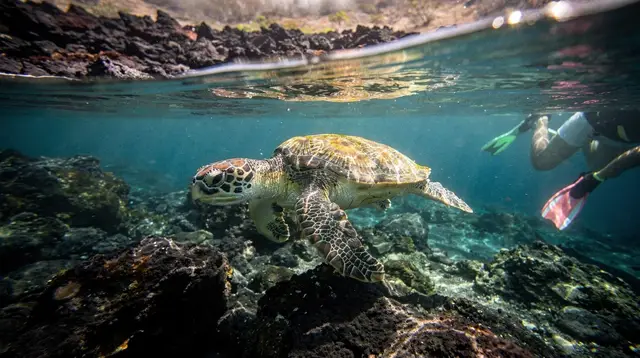
For the south side, Turtle Town Snorkeling From Shore: The Self-Guided Makena Entry and Best Spots to See Turtles in Maui cover where sightings are most consistent, keeping in mind that federal law requires staying at least 3 meters (10 feet) from sea turtles at all times — see The Sea Turtle Distance Law in Maui: What 10 Feet Actually Means for the specifics. If a boat trip to the crater itself is more your plan for at least one day, Molokini Snorkel Tour from Maalaea: What to Expect and What to Bring on a Molokini Snorkel Trip cover what a rental set doesn’t: what to pack for a boat day specifically.
Night snorkeling is a different undertaking with its own gear and safety considerations — see Night Manta Ray Snorkel Tour in Maui: What to Actually Expect rather than assuming daytime rental gear and daylight habits transfer directly after dark.
For a general packing checklist that covers more than snorkel gear, Packing List Generator is a useful cross-check before you fly. And for the wider category of water activities on the island beyond snorkeling, Snorkeling and diving is the hub page.
Renting near Maalaea and the south shore
If your independent snorkeling will happen mostly around the south shore or you’re catching a boat from the harbor there, Maalaea itself has limited rental options directly at the harbor — most travelers rent in Kihei on the way and bring gear with them, since Maalaea is a working harbor rather than a beach town.
Snorkeling gear FAQ
How much does it cost to rent snorkel gear on Maui?
A basic mask, snorkel and fins set runs roughly 5 to 10 USD per day or 20 to 35 USD per week at a beach-side stand. Dive shops with better-fitting silicone masks and prescription lenses charge more, often 10 to 20 USD per day. Multi-day and weekly rates cut the daily cost substantially.
Is it cheaper to buy snorkel gear than to rent it for a week-long trip?
For a stay of five days or longer, buying a budget set at a discount store on Maui or before you fly can cost about the same as a week of rental, and you keep the gear. For a short trip, or if you want a proper silicone mask seal, renting is usually the better value.
Can I bring my own sunscreen from home to use on Maui?
Only if it is mineral, zinc-oxide based. Maui County prohibits the sale, distribution and use of sunscreen containing oxybenzone, octinoxate or octocrylene, which covers most drugstore water-resistant sunscreens. Bringing a non-compliant bottle from home does not make it legal to use here.
Do snorkel rental shops provide reef-safe sunscreen?
Many do, either included with a rental or sold at the counter, because they deal with the same county rule every day. It is worth asking when you pick up your gear rather than assuming your own sunscreen already qualifies.
Do I need my own gear if I am only doing one guided snorkel tour?
No. Boat tours to Molokini and shore excursions typically include mask, snorkel and fins in the price. Renting your own gear makes sense when you plan to snorkel independently from several beaches over multiple days.
Are rental fins allowed on a snorkel boat?
Most boats allow guests to use their own fins, but full-foot fins meant for shore snorkeling can be bulky in a small boat. Ask the operator in advance if you plan to bring your own set rather than use what is supplied.
What size mask and snorkel should I rent for a child?
Rental shops on Maui stock youth sizes, but fit varies by face shape more than by age. Try the mask on dry at the counter and check for a seal before leaving the shop, since a leaking mask is the most common reason a child gives up on snorkeling early.
Snorkeling and diving on GetYourGuide
Verified deep-linked GetYourGuide tours. Book through these links and we earn a small commission at no cost to you.
GetYourGuide does not provide a product photo for this activity — the image shows the meeting point, photographed by us.