What Molokini actually is
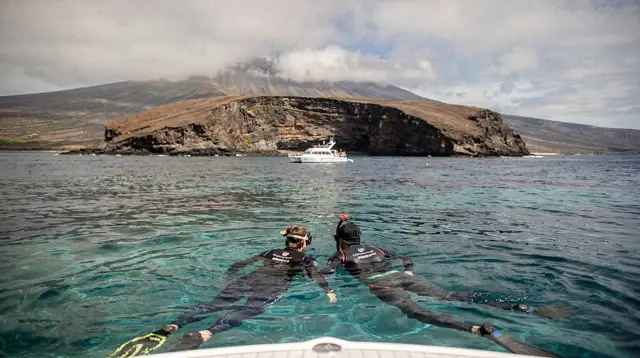
Molokini is the exposed rim of a partly submerged volcanic cone, sitting in open water about 4 km off the coast of south Maui. Seen from above it is a thin crescent of rock, a few hundred meters end to end, with almost no vegetation and no beach. Nobody lives there. Nobody camps there. The only structure on it is a small navigation marker.
The whole thing is a State Marine Life Conservation District, one of the more strictly protected patches of water in the state. That status is the reason the crater has stayed as clear and fish-filled as it has, and it’s also the reason a visit works the way it does: boats moor at a permitted buoy inside the crescent, passengers enter the water from the boat, and nobody sets foot on the rock. There is no dock, no trail, and no legal way to land. If a page or a photo caption implies you can walk out onto Molokini, it is describing a different place, or it is wrong.
For a visitor still deciding whether to include Molokini in a Maui itinerary, that’s the first thing to settle: this is a boat excursion, not a landmark you drive to. Everything else on this page is about whether that excursion earns its slot in a trip.
Why people go: the water, not the rock
The appeal isn’t the crater’s shape, it’s what’s underneath it. The inside of the crescent forms a natural amphitheater that blocks a lot of the swell and current that reaches the open coast, so the water inside is often calmer and noticeably clearer than most shore snorkeling around Maui — 30 meters of visibility on a good morning is common, more on the best days. That clarity is what draws snorkel operators from three different ports rather than one.
The reef inside the crescent supports a dense population of reef fish, several species of coral, and regular sightings of green sea turtles, though turtles are more reliably seen at Turtle Town, a separate site closer to Makena that many boats add as a second stop on the same trip. The outer, ocean-facing wall of the crater — the “back wall” — drops steeply and is a different experience altogether, used mainly by certified divers rather than snorkelers; it’s covered on its own page rather than here.
Molokini is not a guaranteed wildlife show. Reef fish and coral are dependable; a curious turtle or a passing manta ray are not. What is dependable is water clarity, and that’s the honest reason to go.
No landing, ever — and why that surprises people
It’s worth spelling this out because it’s the single most common misunderstanding about Molokini: there is no beach to sit on, no rim to climb, and no operator that will drop you off there for a few hours. Every trip is water-only, entered and exited from the boat’s swim step, usually with a ladder and a crew member helping first-timers in. Snorkel vests and pool noodles are standard equipment on almost every boat, free for anyone who wants the extra buoyancy, so being a strong swimmer isn’t a requirement.
The closest thing to “time on land” is standing on the boat’s deck between swims. That’s normal, and it’s also enough — the water is the destination.
Getting there: three ports, one crater
Boats reach Molokini from three different harbors, and which one matters less for what you’ll see in the crater than for how long you spend getting there and back:
| Departure port | Approx. boat time to Molokini | Typical trip length |
|---|---|---|
| Maalaea | 20–25 minutes | 4–5 hours |
| Kihei / south Maui marinas | 25–35 minutes | 4–5 hours |
| Lahaina | 35–45 minutes | 5–6 hours |
Maalaea sits closest, which is why most of the larger snorkel catamarans use it. The tradeoff between ports, and between morning and afternoon departures, is covered in more detail on the two sister guides for Maalaea departures and Wailea-area departures, and the question of what hour actually gives the best visibility has its own page as well: best time of day for a Molokini snorkel. This page isn’t the place to relitigate port choice — the short version is that all three get you to the same crater, and the difference is mostly about how much of your morning the boat ride itself takes.
Morning versus afternoon, in brief
One pattern is worth knowing before you book anything: wind in the Alalakeiki and Auau channels tends to build through the day, which stirs up the water and adds chop to the ride. Morning trips consistently see calmer seas and better visibility than afternoon ones. That’s also why afternoon trips are sometimes priced lower — not because the trip is shorter, but because the conditions are less reliable. Anyone prone to seasickness should treat a morning departure as the safer bet and take motion-sickness medication before boarding, not after the boat is underway.
What a typical trip includes
Most Molokini boats follow a similar shape, whether they’re a large sailing catamaran, a smaller rigid-hull boat, or a raft-style vessel:
- Check-in at the harbor 20–30 minutes before departure
- A scenic ride out, often with a breakfast or light snack served on board
- 45–75 minutes of snorkel time anchored inside the Molokini crescent
- A second stop, commonly Turtle Town or another south Maui reef, for another 30–45 minutes
- Lunch or a deli-style spread on the return leg
- Return to the harbor by early-to-mid afternoon on a morning trip
Snorkel gear (mask, fin, snorkel) is included on nearly every operator’s trip, and most also carry snorkel vests and a few sizes of prescription masks. Wetsuit or “shortie” rentals are usually available for a fee, worth considering for anyone who runs cold — water temperature hovers in the mid-to-high 70s Fahrenheit year-round, comfortable for most people for the swim windows but not warm.
a full-day sail to Molokini and a second reef aboard the Malolo, breakfast and lunch included is a solid example of the standard format described above, run from Maalaea.
Choosing a boat, at a glance
Operators differ mainly in boat size, speed, and whether the trip is a full morning or a shorter express run:
| Trip style | Typical length | Best for |
|---|---|---|
| Full-day sailing catamaran | 5–6 hours | Travelers who want breakfast, lunch, and two snorkel stops without rushing |
| Express power-boat trip | 2 hours | Anyone short on time, or combining Molokini with another activity the same day |
| Small-group or raft tour | 3–4 hours | Snorkelers who prefer fewer passengers and more crew attention |
A shorter option, a two-hour express run out to Molokini, trades the second stop and the meal service for speed — useful if a trip needs to fit around a flight or an afternoon activity elsewhere on the island. A similar two-hour format departing from Kihei, a two-hour Molokini snorkel adventure leaving from Kihei, works the same way for visitors staying closer to that stretch of coast.
What to bring, and what the county requires
Maui County bans the sale, distribution, and use of sunscreens containing oxybenzone, octinoxate, or octocrylene — not just the sale of them. That rule is enforced on the water as much as on the beach, so a chemical sunscreen packed from home isn’t a workaround; it’s still not allowed to be worn in the water here. Most operators either supply reef-safe mineral sunscreen or sell it on board, and a rash guard or lycra suit does the same job with zero product at all, which is what a lot of crew recommend anyway given how much time you’ll spend face-down in strong sun.
Beyond sunscreen, pack:
- A swimsuit worn under clothes, since changing rooms on board are minimal or nonexistent
- A light jacket or windbreaker for the ride out, which is breezier and cooler than it looks from shore
- Motion sickness medication taken well before boarding, if there’s any history of seasickness
- Reef-safe sunscreen or a rash guard, given the rule above
- A dry bag or waterproof phone case if bringing a phone on deck
Full packing detail for this specific trip, including what’s usually provided versus what to bring yourself, is on what to bring for a Molokini snorkel.
Diving at Molokini
Certified divers have access to sites most snorkelers never see, particularly the crater’s back wall, which drops to depths well beyond snorkel range and draws a different set of species than the inside of the crescent. Introductory (resort) dives are offered by several operators for travelers without certification, done under close supervision in shallower water inside the crater. Molokini-specific and other Maui dive options are covered separately at scuba diving tours on Maui; this page focuses on the snorkel experience most visitors book.
Weather, whales, and when trips get cancelled
Trips run essentially year-round, but two seasonal factors are worth knowing. From December through April, humpback whales move through the channels between Maui, Lanai, and Molokai, and it’s common for a Molokini boat to slow down or divert briefly if whales are spotted en route — a bonus, not a guarantee, and never a reason to book a Molokini trip in July expecting whales. Separately, from June through November, the central Pacific hurricane season can bring swell and wind events that push operators to cancel outright; most companies rebook or refund on short notice when that happens, so it’s worth checking a trip’s cancellation policy rather than assuming.
Is it worth it?
For anyone who enjoys being in the water and hasn’t snorkeled clear, current-sheltered water before, yes — Molokini reliably delivers the best visibility most visitors will find anywhere around Maui, without technical diving skills or a long open-water swim. For a traveler who has snorkeled excellent reefs elsewhere, or who gets seasick easily and can’t manage a morning departure, a shore snorkel at Kaanapali or Honolua Bay may be a better use of a morning, since it comes without the boat ride or the cost. The honest answer depends less on the crater itself, which is consistently good, and more on how much a half-day boat trip fits the rest of a given itinerary.
Molokini crater: frequently asked questions
Can you walk on Molokini crater?
No. Molokini is a protected marine reserve, and landing on it is prohibited. All visits are snorkel or dive trips entered directly from the boat.
How do you get to Molokini?
Only by boat. Trips depart from Maalaea, from marinas around Kihei and south Maui, and from Lahaina; there is no way to reach Molokini from shore.
How long is the boat ride to Molokini?
From Maalaea it’s about 20–25 minutes each way, the shortest of the three departure ports. From Kihei-area marinas it runs 25–35 minutes, and from Lahaina 35–45 minutes.
Is Molokini good for beginners who have never snorkeled?
Yes. The water inside the crescent is usually calm and clear, crews provide flotation vests, and most operators walk first-timers through the basics before anyone gets in the water.
Do Molokini boats guarantee you’ll see turtles or whales?
No. Reef fish and coral are reliable; turtles are commonly seen at a separate nearby site, Turtle Town, added on many trips as a second stop, and whales are only present from December through April and never guaranteed.
What should I wear or bring on a Molokini trip?
A swimsuit under your clothes, a light jacket for the ride out, reef-safe mineral sunscreen or a rash guard, and motion-sickness medication taken before boarding if you’re prone to seasickness.
Is morning or afternoon better for a Molokini snorkel trip?
Morning. Wind and chop typically build through the day in the channel, so morning departures see calmer water and better visibility; afternoon trips are sometimes cheaper for that reason.
Can certified divers visit Molokini, not just snorkelers?
Yes. Certified divers can access deeper sites including the crater’s back wall, and several operators also offer supervised introductory dives for people without certification.