Molokini Snorkel Tour from Wailea
Can you snorkel Molokini on a boat that leaves from Wailea?
Yes, several operators launch directly from Wailea beach or a nearby South Maui landing, saving guests staying in Wailea or Makena a drive to Maalaea. The trade-off is a longer boat ride out to Molokini, since Wailea sits farther from the crater than Maalaea does.
Snorkeling Molokini While Staying in Wailea
Molokini’s best-known departure point is Maalaea harbor, on the other side of South Maui, and most guides to the crater assume that’s where the trip starts. If you’re staying in a Wailea or Makena resort, though, driving to Maalaea before 6 a.m. isn’t always appealing when there are boats that leave from your own coastline instead. A handful of operators launch directly from Wailea beach or a nearby South Maui landing, which means no early drive, no parking to find, and a shorter walk from your hotel room to the sand.
That convenience comes with a trade-off worth understanding before you book: Wailea sits farther from Molokini than Maalaea does, so the boat ride out is longer. This guide covers what a Wailea-based Molokini snorkel trip actually involves — who runs them, how the day unfolds, and where the convenience of a local departure does and doesn’t pay off.
Wailea Is Convenient, Not Closer
It’s worth stating plainly, because it’s the detail most visitors get backwards: Maalaea harbor is the closest point on Maui to Molokini, not Wailea. A boat leaving Maalaea typically reaches the crater in 20 to 30 minutes. A boat leaving Wailea or Makena has a longer open-water crossing, often 45 minutes to just over an hour, because the geometry of the coastline puts Wailea’s shoreline at a greater distance from the crescent.
What a Wailea departure actually saves you is the drive, not the sail. If you’re staying in Wailea, Makena, or even Kihei’s southern end, skipping a 30 to 45 minute drive to Maalaea in the dark can be worth a longer boat ride. If you’re already staying near Maalaea, there’s little reason to choose a Wailea trip — see our guide to Molokini tours from Maalaea instead, since it covers the shorter-crossing option in detail.
Who Runs Molokini Trips from Wailea
Operators launching from the Wailea coast tend to run smaller vessels than the multi-deck catamarans based at Maalaea harbor. Expect rigid-hull inflatables, smaller catamarans, or beach-launched boats that can pull directly onto Wailea’s sand rather than tie up at a commercial dock. That has two practical effects:
- Smaller groups. A beach-launch boat generally carries fewer passengers than a harbor vessel, which usually means more room per person and a bit more personal attention from crew.
- Beach loading, not dock loading. You’ll typically wade or be shuttled a short distance to board, rather than walking down a gangway. Wear something you don’t mind getting wet at the start of the day.
Because these are smaller operations, schedules and exact meeting points shift more often than a harbor departure. Confirm the meeting spot on your booking confirmation the night before, not the morning of.
Group sizes on Wailea departures typically run smaller than a full harbor boat, which suits travelers who specifically want a quieter outing rather than a crowded deck. If you’re traveling with young kids, check the operator’s minimum age and confirm flotation gear sizing before booking — not every Wailea-based boat accommodates toddlers the way a larger Maalaea vessel might. See our roundup of family-friendly snorkel tours if the swimming ability across your group varies widely.
How the Day Unfolds
A typical Wailea-departure Molokini trip follows a similar shape across operators, even though boat size and exact stops vary:
- Early check-in on the beach. Most trips meet before 7 a.m., since morning is when the water is calmest and visibility is best — a rule that holds regardless of departure point, and one covered in more depth in our guide to the best time of day for Molokini snorkeling.
- The crossing. The longer sail from Wailea gives crews time to cover safety briefings, gear fitting, and reef etiquette before arrival, so the extra minutes on the water aren’t entirely lost time.
- Molokini, snorkel from the boat. The boat anchors or moors just inside the crescent’s inner bay. Everyone enters the water from the boat’s swim step or ladder — there’s no beach on Molokini, and stepping onto its rim isn’t allowed under state marine reserve rules. You swim, you don’t walk ashore.
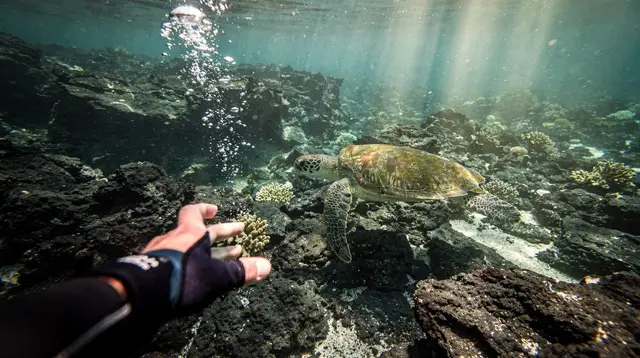
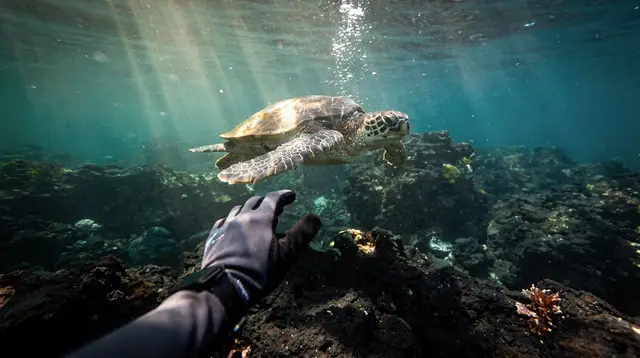
- A second stop. Most Wailea-based itineraries pair Molokini with Turtle Town off Makena, since it’s a short hop back toward the South Maui coast and improves the odds of seeing a green sea turtle. Some operators substitute a look at Molokini’s outer, deeper wall instead, weather permitting.
- Return by early-to-mid afternoon. Wind on the Maalaea-side channel tends to pick up after late morning, and Wailea-based crews plan their return before conditions turn choppy.
Bring your own reef-safe gear preferences sorted out ahead of time — see what to pack for a Molokini snorkel trip — since Maui County law prohibits chemical sunscreens containing oxybenzone, octinoxate, or octocrylene, and most boats will hand out mineral sunscreen if you show up without your own.
Best Time of Year to Book
Molokini’s water clarity holds up for much of the year, but conditions do shift with Maui’s two seasons. The dry season, roughly May through October, tends to bring calmer channel crossings and more consistently clear water on average — a difference that matters more for a Wailea departure than a Maalaea one, simply because the crossing itself is longer. See our guide to the best month to visit Maui for snorkeling for a month-by-month breakdown.
Winter departures, from around November through April, add a bonus many first-time guests don’t expect: a chance at spotting humpback whales somewhere during the crossing, since the waters around Maui fill with whales through the cooler months. It’s not a substitute for a dedicated whale watch — see our guide to timing a Maui trip around whale season if that’s the real priority — but a Wailea-to-Molokini crossing in January or February often turns up a distant blow or fluke at no extra cost, simply because the boat is already on the water.
No Landing on the Crater, Ever
It bears repeating because first-time visitors sometimes expect otherwise: Molokini is an uninhabited volcanic crescent inside a Hawaii state marine reserve. There is no dock, no beach, and no permitted landing for tour boats or their passengers. Every operator, whether based in Wailea, Maalaea, or Kihei, snorkels guests directly off the boat into the crater’s calm inner bay. If a listing implies you’ll “explore the island” or “walk the crater rim,” that’s not how any legitimate Molokini tour works.
Comparing Wailea-Area Molokini Options
Exact pricing and duration change with fuel costs and season, so treat the ranges below as a starting point rather than a quote, and check current listings before booking.
| Style | Typical duration | Best for |
|---|---|---|
| Small-boat Molokini + Turtle Town | 4 to 5 hours | Guests wanting two stops without a Maalaea drive |
| Express Molokini-only run | 2 to 3 hours | Shorter mornings, less time on open water |
| Kayak-and-snorkel combo near Makena | 3 to 4 hours | Travelers who want Turtle Town without a larger boat |
| Photo-focused snorkel trip | 3 to 4 hours | Guests who want documented underwater photos |
For a combined Molokini and Turtle Town outing that launches close to Wailea’s resorts, the sea caves, Molokini, and Turtle Town snorkel tour based in Wailea covers both stops in one morning without requiring a Maalaea drive. Travelers who’d rather book through a larger, more established operator that still picks up South Maui guests can look at the three-hour Molokini crater and Turtle Town snorkeling tour, which runs a similar two-stop itinerary.
If your morning is tight, the two-hour express Molokini snorkeling tour trims the outing to the crater alone, cutting total time on the water for guests who don’t want a full half-day commitment. For a slightly more polished experience with food included, the luxury catamaran tour combining turtles, tacos, and snorkeling adds an onboard meal to the Molokini-and-Turtle-Town format.
How Molokini Got Its Shape
Understanding why Molokini looks the way it does helps explain why every tour, regardless of departure point, ends the same way: snorkeling from the boat rather than walking ashore. Molokini is the exposed rim of a volcanic crater, its crescent shape formed where the cone’s far wall eroded away below the waterline, leaving a curved reef that shelters the inner bay from open-ocean swell.
That sheltered inner water is exactly what makes the crater snorkelable at all — a fully round, unbroken rim would keep boats from entering the calm side in the first place. For the full geological story, our piece on how Molokini crater formed covers the timeline in more depth. Because the site sits inside a protected state marine reserve, its underwater walls and the fish and coral sheltering along them see far less pressure than reefs closer to shore, which is part of why clarity and fish counts tend to hold up even on a busy tour day.
Who Should Book from Wailea — and Who Shouldn’t
A Wailea departure makes the most sense if:
- You’re staying in a Wailea or Makena resort and want to avoid an early drive to Maalaea.
- You don’t have a rental car, or you’d rather not navigate before sunrise.
- You’re comfortable trading a shorter drive for a longer boat crossing.
It makes less sense if:
- You’re staying in Kihei, Maalaea, or Lahaina, where a Maalaea departure is either just as close or genuinely closer.
- You get seasick easily — more time on open water before reaching calm crater conditions means more time exposed to channel chop.
- You specifically want the largest boats and widest amenity list, which tend to be based at Maalaea harbor rather than launched from a resort beach.
For a broader look at snorkeling options in the area, South Maui’s snorkeling and diving guide and the Wailea and Makena activities hub cover alternatives beyond Molokini, including shore snorkeling and scuba options.
Practical Notes Before You Book
- Seasickness medication works best taken before boarding, not after you start feeling queasy. The channel between Maui and Molokini can be choppy even on a “calm” morning.
- Morning departures see calmer water and better visibility than afternoon trips, a pattern that holds for every departure point on Maui, not just Wailea.
- Reef-safe, mineral sunscreen is legally required for use in Maui County, not just for sale — bring your own or expect the boat to supply it.
- Turtle encounters are never guaranteed. Federal law requires boats and swimmers to keep at least 10 feet from any green sea turtle, and crews won’t chase one down for a better view.
- Confirm your exact meeting point. Beach-launch operators in Wailea sometimes shift their exact spot along the shoreline by a hundred yards or so depending on surf conditions; the confirmation email or text is the source to trust, not a general address.
- Morning versus afternoon changes more than the light. Wind and boat traffic both build through the day on the crossing to Molokini; our comparison of early-morning and afternoon Molokini snorkeling breaks down exactly what shifts hour by hour.
- Tipping the crew is customary, generally in the same 18 to 20 percent range as a Hawaii restaurant meal, and usually split among the whole crew rather than handed to one person — ask at check-in whether a tip jar or card option is available.
If you’d rather compare timing strategies across all Molokini departures, our guide to the best time of day to snorkel Molokini applies equally whether you leave from Wailea or Maalaea, and the outer wall guide is worth reading if your Wailea operator offers a back-side option on calmer days.
Molokini Snorkel Tours from Wailea: Common Questions
Is Wailea closer to Molokini than Maalaea?
No. Maalaea harbor is the closest departure point to Molokini on Maui. A Wailea departure means a longer open-water crossing, even though Wailea itself is a shorter drive for guests already staying on that coast.
Do Wailea boats stop only at Molokini?
Most Wailea-based trips pair Molokini with a second stop, usually Turtle Town off Makena, so guests get a crater visit and a chance at green sea turtles in the same outing.
Can you get out of the boat and walk on Molokini?
No. Molokini is a protected state marine reserve with no beach landing allowed. Snorkeling happens in the water directly off the boat, inside the crescent’s calm inner bay.
How long is the boat ride from Wailea to Molokini?
Expect roughly 45 minutes to just over an hour each way, depending on the operator’s launch point and the boat’s speed, compared to about 20 to 30 minutes from Maalaea.
What size boats leave from Wailea for Molokini?
Wailea departures tend to use smaller vessels, including rigid-hull inflatables and mid-size catamarans launched from the beach, rather than the larger passenger boats based at Maalaea harbor.
Is a Wailea departure worth it if I’m staying in Kihei or Maalaea instead?
Generally no. Guests already based near Maalaea gain little from a Wailea departure and add crossing time; the convenience only pays off for travelers staying in Wailea or Makena resorts.
Do I need to be a strong swimmer for a Wailea Molokini tour?
Basic swimming comfort in open water is expected, and flotation vests are provided. Crews assist hesitant swimmers, but everyone snorkels from the boat, not from a beach entry.
Molokini snorkel cruises on GetYourGuide
Verified deep-linked GetYourGuide tours. Book through these links and we earn a small commission at no cost to you.
GetYourGuide does not provide a product photo for this activity — the image shows the meeting point, photographed by us.