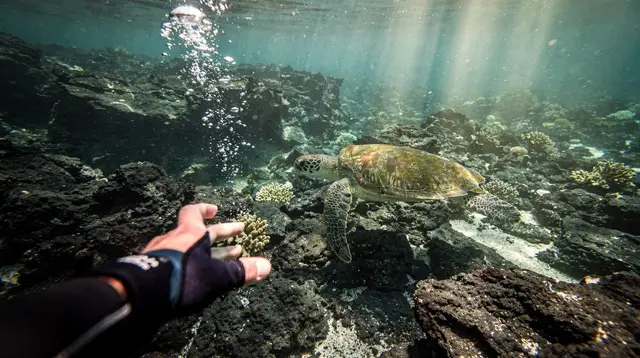
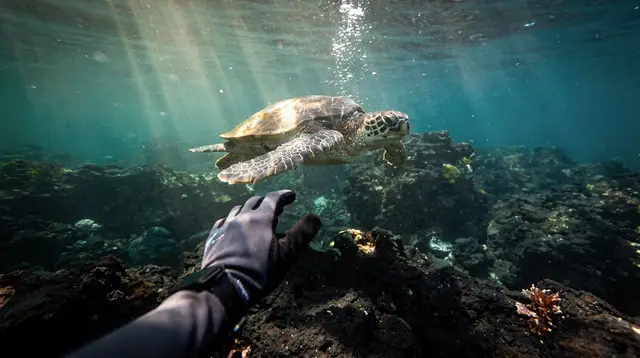
Turtle Town Snorkel Boat Tour from Makena
What is a Turtle Town snorkel boat tour from Makena?
It is a short boat trip from the south Maui coast to a reef off Makena where green sea turtles feed and rest, with snorkeling from the boat rather than the shore. Federal law requires staying at least 3 meters (10 feet) from every turtle, and most trips run 2 to 4 hours including gear and a crew briefing.
Why book a boat instead of walking in from the sand
Turtle Town sits off the Makena coastline, past the point where the last resorts give way to lava-rock shoreline. Green sea turtles gather there to graze on algae growing on submerged rock, and on a calm morning it is one of the more reliable places on the island to see several in a single outing. A boat tour reaches that reef directly, drops anchor or holds position near it, and puts snorkelers in the water in deeper, more open water than the shore-entry route covered in our shore snorkeling guide.
The trade-off is straightforward. Shore access from a Makena beach park costs nothing and needs no reservation, but it means a longer swim out through shallow, current-prone water, less certainty about where the turtles are that day, and no crew watching the group. A boat tour costs money and runs on a schedule, but it includes gear, a safety briefing, a spotter in the water, and a shorter swim from the boat to the reef. For a first-timer, a nervous swimmer, or anyone who wants photos without treading water the whole time, the boat is the easier choice.
What a typical trip looks like
Most Turtle Town boat tours from south Maui run 2 to 4 hours door to door, including a check-in window, the ride out, one or two stops in the water, and the return. Boats commonly depart from Kihei, Maalaea or south Maui marinas, though the exact departure point varies by operator — check your confirmation rather than assuming.
| Step | What happens |
|---|---|
| Check-in | Arrive 20-30 minutes early; waiver, gear fitting, and a safety talk |
| Ride out | 15-30 minutes depending on departure point and sea state |
| Turtle Town stop | 45-75 minutes in the water, crew spotting turtles and enforcing distance |
| Second stop (if included) | Some trips add a reef or bay stop, or pair with a Molokini crossing |
| Return | Snacks or light drinks on many boats, gear rinse and stow |
A typical run starts in the morning, when the water is calmer and easier for snorkelers, though afternoon and sunset departures exist and are usually a little cheaper for that reason.
Boats running this route range from small six- to twelve-passenger vessels to larger catamarans carrying several dozen people, and the choice changes the feel of the trip more than the itinerary does. A smaller boat means less time waiting to get in the water, a crew that can brief everyone individually, and an easier time keeping the group within the required distance of any turtle the guide spots. A larger catamaran usually costs less per person, has more deck space and shade, and often adds amenities like a swim ladder platform or a bigger snack spread, at the cost of a longer queue to enter and exit the water. Neither format changes the 3-meter rule or the site itself — it is mostly a trade between price, crowding, and how personal the crew’s attention feels.
If you don’t swim well, or you’re prone to seasickness
A boat-based Turtle Town trip is generally the easier of the two ways to see the reef for anyone unsure about open water, precisely because it removes the long shore swim that the beach-access route requires. Crews fit every guest with a mask, snorkel and fins before boarding, hand out flotation vests without anyone having to ask, and expect to have a staff member in the water alongside first-timers. Telling the crew ahead of time, or at check-in, that you are a weak swimmer or have never snorkeled changes nothing about the price and everything about how closely they watch you.
Seasickness is a separate issue from swimming ability, and it is common enough on the ride out that most crews mention it during the safety talk. Taking medication before boarding — not after the first wave of nausea — is the difference between a manageable ride and a ruined one; sitting toward the center of the boat and watching the horizon rather than a phone screen also helps. A rougher morning is more often a reason to expect chop on the crossing than a reason to expect worse turtle sightings, since Turtle Town itself sits in a somewhat sheltered stretch of coast compared to open channel crossings like a Molokini run.
The 3-meter rule, and why the crew enforces it
Green sea turtles (honu) are protected under federal law, and that protection includes a hard rule: stay at least 3 meters, or about 10 feet, away from every turtle, whether it is swimming or resting on rock. This applies on a boat tour exactly as it does from shore — a guide standing beside you does not change the law, and crews brief every group on the distance before anyone gets in the water.
In practice this means no chasing a turtle to get a closer photo, no reaching out to touch one, and no cutting off its path to the surface for a breath. Turtles that are hauled out on the rocks to rest need the same space; approaching one on land is treated the same as approaching one in the water. Crews on reputable boats will call swimmers back if they drift too close, and repeated violations can get a tour cut short for the whole group, so it is worth taking the briefing seriously rather than as a formality.
What you’ll actually see
Sightings are common at Turtle Town but never guaranteed — turtles move with feeding conditions and current, and a boat crew that promises a guaranteed encounter is overselling. Most clear mornings turn up at least a few turtles, sometimes resting on the rock in shallow water, sometimes grazing along the reef edge. Beyond turtles, the reef itself hosts reef fish, occasional eagle rays, and healthy coral in patches, so the stop is worth the time even on a slower turtle day.
Visibility, like everywhere on this coast, is best earlier in the day before the wind and afternoon chop pick up — the same pattern that makes morning departures to Molokini the preferred slot for that crossing.
Bringing your own camera into the water works fine if it is in a proper waterproof housing, but the 3-meter distance rule applies whether or not you are trying to get a shot — a wide-angle lens from the legal distance beats a blurry close-up taken by drifting nearer than allowed. Anyone who would rather not manage a camera while snorkeling can let a crew member handle it instead, which is the appeal of the photo-and-video option among the booking choices below: it frees both hands for the water and still comes home with images.
Booking options
a clear-bottom kayak paddle out to the reef followed by snorkeling at Turtle Town is a good middle option for anyone who wants to see the reef from above the water before getting in, and it keeps the group small.
For a trip built around keepsake images, a Turtle Town outing with a photographer shooting stills and video in the water handles the camera work so swimmers can focus on staying at a legal distance rather than fumbling with a housing.
To pair two of south Maui’s best snorkel sites in one outing, a three-hour combination trip visiting both Molokini crater and Turtle Town covers the crater’s clear water and the reef’s turtles on a single morning booking.
For golden-hour light and a quieter boat, a late-afternoon Turtle Town outing timed for sunset, with an optional photo package trades a little visibility for softer light and fewer boats on the water.
If sea caves and a longer route appeal, a Wailea-based tour combining coastal sea caves with stops at Molokini and Turtle Town adds shoreline scenery to the standard reef-and-crater format.
Prices and what’s included
Expect roughly $90 to $170 per person for a Turtle Town-focused or combination trip, in USD, before the general excise tax of about 4.2-4.5% that Hawaii adds to the displayed price. Most boats include mask, snorkel, fins, a flotation aid, and light snacks or drinks; photo and video packages, wetsuit rental, and gourmet lunch options usually cost extra. A gratuity for the crew, typically in the same 18-20% range as a restaurant tip, is customary but not automatically added to the fare.
Getting there and what to bring
Departure points along south Maui are a short drive from Kihei and Wailea hotels, generally 15-30 minutes depending on traffic and exact pickup location. Parking at marinas can be limited, so arriving early matters as much for finding a space as for check-in. Bring a reef-safe mineral (zinc or titanium oxide) sunscreen — Maui County’s ordinance 5306, in effect since October 1, 2022, goes further than the state and bans the sale, distribution AND use of sunscreen containing oxybenzone, octinoxate or octocrylene (medical prescription aside), and a chemical formula brought from the mainland is not exempt — it’s still against the rules once you’re in the water. A rash guard, a hat and sunglasses for the ride out, and motion sickness medication taken before boarding (not after symptoms start) round out a practical packing list.
Turtle Town versus other south Maui snorkel options
Turtle Town is one of several reasons boats leave from this coast. A morning Molokini crossing from Maalaea or from Wailea targets the volcanic crater’s exceptional clarity rather than turtle density, and timing your Molokini trip for the best visibility matters more there than at Turtle Town, where turtles are the draw regardless of water clarity. A kayak and snorkel combo out of Makena covers similar water at a slower pace and lower cost for anyone comfortable paddling. If you’d rather rent your own mask and fins and try the shore route first, gear rental options around the island make that possible before committing to a boat.
Divers wanting more time at depth than a snorkel mask allows should look at scuba diving tours on Maui instead, several of which visit reef sites near Turtle Town as part of a two-tank day. And if turtles are the priority but you want the full picture of where else to look, our broader guide to turtle-viewing spots on Maui covers sites beyond this one stretch of coast.
When to go
Morning departures, generally before 10 a.m., offer calmer water and better visibility before the trade winds strengthen in early afternoon — the same wind pattern that pushes many south Maui boats to leave the dock before 9. Winter months add the chance of seeing humpback whales in the channel on the ride out, from December through April with a peak in January through March, though whale sightings are a bonus on a turtle-focused trip, not the point of the booking; a dedicated whale watching tour from Maalaea is the better choice if whales are the priority. Trade winds and afternoon chop make later departures rougher, which is part of why sunset trips trade some visibility for calmer late-day light rather than clearer water.
Turtle Town boat tour FAQ
Where does a Turtle Town boat tour actually go?
The boat heads to a reef area off the Makena coastline in south Maui, sometimes called Turtle Town or Turtle Reef, where green sea turtles regularly feed on algae growing on the rocks. It is not a fixed, marked site — the crew picks the exact spot based on conditions and where turtles were seen that morning.
How close can I get to a turtle?
Federal law sets a minimum distance of 3 meters (10 feet) from green sea turtles at all times, whether they are swimming or hauled out on rock. Crews brief every group on this before entering the water and will call swimmers back if they drift too close.
Are turtle sightings guaranteed?
No operator can guarantee a sighting, since turtles move with the current and feeding conditions. Most mornings deliver at least a few sightings at Turtle Town, but a guide will say so honestly rather than promise it.
Do I need snorkeling experience?
No. Boats provide mask, snorkel and fins, plus a flotation vest for anyone unsteady in open water, and staff stay in the water with weaker swimmers. Comfort putting your face in the water and breathing through a snorkel is enough.
What should I wear and bring?
A swimsuit under light clothing, a rash guard or wetsuit top if you chill easily, a towel, and a reef-safe mineral sunscreen — Maui County bans the sale and use of sunscreen containing oxybenzone, octinoxate or octocrylene. Seasickness medication taken before boarding helps on choppier mornings.
How is this different from snorkeling Turtle Town from the beach?
A boat tour reaches the reef directly, in deeper water beyond the shore break, and it comes with a crew, gear and safety briefing built into the price. Shore access from Makena beaches is free but exposes swimmers to more current and less predictable turtle activity — see our separate guide for that approach.
Can I combine Turtle Town with Molokini on the same trip?
Yes. Several boats pair a Molokini crater stop with a second stop at Turtle Town on the same morning outing, which is a common way to see both sites without booking two separate tours.
Turtle Town snorkeling on GetYourGuide
Verified deep-linked GetYourGuide tours. Book through these links and we earn a small commission at no cost to you.
GetYourGuide does not provide a product photo for this activity — the image shows the meeting point, photographed by us.