Kayak and Snorkel Combo Tour in Makena
What is the kayak-and-snorkel combo tour in Makena?
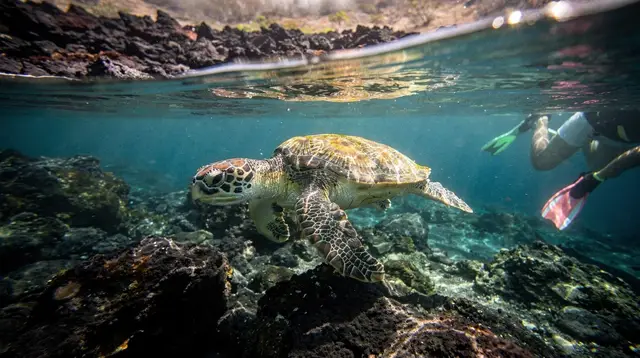
It pairs a guided ocean kayak paddle out of Makena Bay with a snorkel stop in the water nearby, often close to the Turtle Town area. Guides carry the gear, set the pace, and remind swimmers of the 10-foot federal distance rule around any green sea turtle.
How the Makena combo actually works
A kayak-and-snorkel combo is two activities stitched into one launch. A guide meets the group on the sand at Makena, usually before 8 a.m., and runs through paddle basics for anyone who has never held one: how to hold the shaft, how to steer as a pair, what to do if the kayak drifts sideways in a gust. Most outfits use stable, sit-on-top ocean kayaks built for two, so one person’s inexperience does not sink the trip — the stronger paddler in the back can correct the line while the one up front just keeps stroking.
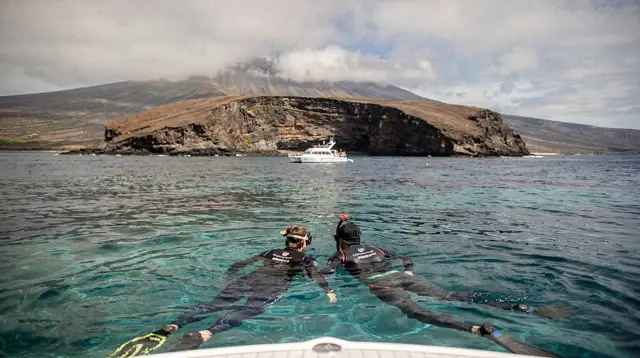
The group paddles out from the bay toward a patch of water the guide has picked for the day, based on wind, current, and where the water has been clear that week. This is the detail worth understanding before booking: the kayak is transport, not the main event. Once the group reaches the spot, kayaks raft together or anchor briefly, masks and fins go on, and everyone slips into the water for the snorkel stop. After thirty to forty-five minutes in the water, the group climbs back aboard and paddles home, usually with the wind at their backs since Makena mornings tend to build a light onshore breeze as they go.
This structure — paddle out, snorkel, paddle back — is what separates the combo from either activity done alone. A South Maui kayak tour that skips the water time is built around covering coastline and reading the shore from the water. A dedicated Turtle Town snorkel tour is built around a boat, a longer run, and more time in the water with less physical effort getting there. The combo sits between the two: real paddling, then a real snorkel stop, in roughly the time it takes to have a late breakfast.
Why Makena, and why the water can include turtles
Makena Bay sits at the quiet end of South Maui, past where the Wailea resorts stop and before the road narrows toward La Perouse Bay. The bay is sheltered enough for kayaks to launch directly off the sand most mornings, and the reef and rock structure nearby is part of the same general area known collectively as Turtle Town — a loose stretch of reef off Makena where green sea turtles are seen more often than almost anywhere else on the island.
That reputation is the reason most Makena combo tours market themselves around turtles rather than reef fish or coral. It is worth being precise about what that means here: this guide covers the kayak-and-snorkel format itself, not the specifics of Turtle Town’s reef layout or which entry points see the most turtle traffic — that detail lives in the dedicated Turtle Town snorkeling coverage. What matters for the combo is simpler — a turtle sighting is a real possibility on this route, it is never guaranteed, and if one does surface near the group, everyone in the water needs to know the rule before it happens, not after.
The federal distance rule — not a suggestion
Green sea turtles, or honu, are protected under federal law, and the rule that matters in the water is a minimum distance of 10 feet (about 3 meters) between a swimmer and any turtle. That distance increases when a turtle is hauled out resting on sand or rock rather than swimming. The rule is not a courtesy guideline that a guide mentions once and drops — it is federal protection with real enforcement behind it, and it applies to every snorkeler in the water, not just the ones filming.
In practice, a good guide manages this actively during the snorkel stop: calling the group back if a turtle rises to breathe nearby, positioning kayaks so no one drifts into a turtle’s path, and reminding first-timers that a curious turtle swimming toward a person does not cancel the distance requirement — it means backing away, not moving in for a closer photo. Touching, chasing, cornering, or feeding a turtle is illegal regardless of how calm the animal seems. The same 10-foot rule applies to every turtle encounter on Maui, whether from a kayak-and-snorkel combo, a boat trip, or wading in from shore near Kaanapali.
None of this should read as a warning against booking the tour — it is the opposite. Groups that understand the rule going in tend to have calmer, better encounters, because nobody is scrambling to figure out the right distance while a turtle is ten feet away. It also matters because a first-time visitor unaware of the law has no defense if a ranger or officer sees a violation: ignorance of a federal wildlife rule does not make the infraction go away.
What a typical booking includes
| Element | Typical detail |
|---|---|
| Group size | Small groups, often 6–12 guests, 1–2 guides |
| Kayak type | Sit-on-top, two-person, stable hull |
| Duration | 2–3 hours door to door |
| Snorkel time | 30–45 minutes in the water |
| Gear provided | Kayak, paddle, life vest, mask, snorkel, fins |
| Departure time | Early morning, before wind builds |
| Turtle sighting | Possible, never guaranteed |
Most operators include mask, snorkel, fins, and a life vest in the price, along with the kayak and paddle. Water and light snacks are common on longer combos; a full breakfast is not. Because Maui County bans the sale, distribution, and use of sunscreen containing oxybenzone, octinoxate, or octocrylene, bring a mineral, zinc-based sunscreen from home or plan to buy one locally before the trip — showing up with a chemical sunscreen and no alternative means going without protection or borrowing from a stranger.
a standard Makena Bay kayak-and-snorkel tour is the straightforward version of this format: paddle out, snorkel, paddle back, all from the same beach. For groups who want the boat visible below them the whole way, a clear-bottom kayak version at Turtle Town adds a transparent hull section, so non-swimmers or younger kids can watch the reef and any turtles pass beneath the kayak even before anyone gets in the water. Photographers who want the encounter documented without juggling their own camera in the surf often choose a Turtle Town outing with a photo-and-video package built in.
Combo tour vs. the alternatives
It helps to know what this format is not, since Makena’s activity menu overlaps in ways that confuse first-time bookers.
- Kayak-and-snorkel combo (this guide) — self-powered paddle out, snorkel stop, paddle back, from the beach.
- Turtle Town snorkel boat tour — motors out from a harbor, covers more water, longer overall trip, no paddling required.
- South Maui kayak tour — paddling-focused, coastal, snorkeling optional or absent.
- Molokini and Turtle Town snorkeling — a boat trip to the offshore crater with a second stop, unrelated to kayaking.
- Stand-up paddleboard rental — self-guided, no snorkel component built in.
Anyone who wants the physical activity of paddling but is lukewarm on snorkeling should look at a straight kayak tour instead. Anyone who wants maximum time in the water with turtles and reef, with none of the paddling effort, is better served by a dedicated Turtle Town boat trip such as a three-hour Molokini and Turtle Town combination by boat. The kayak-and-snorkel format earns its place for travelers who want both in one morning and don’t mind a bit of physical effort to get there.
Booking timing and what changes it
Morning departures dominate this category for a reason that has nothing to do with marketing: South Maui’s trade winds tend to build through the day, and a bay that is glassy at 7 a.m. can have real chop by 11. A choppy bay makes both the paddle and the snorkel visibility worse, so nearly every combo tour leaves early. Booking a midday or afternoon slot, where one is offered at all, usually means calmer water was already used up by the earlier groups and a rougher ride is more likely.
Visibility in the water follows the same pattern as elsewhere on this coast — clearer early, before wind-driven surface chop stirs up sediment near shore. None of this guarantees a turtle sighting on any given morning; sightings vary by season, water conditions, and simple chance, and no operator can promise one regardless of what a listing implies.
For travelers building a full South Maui morning, this combo pairs naturally with a slower afternoon back at the condo or resort, since two to three hours of paddling and swimming is a reasonable dose of exertion before lunch. It also fits well into itineraries that treat Wailea and Makena as a base for water activities rather than a beach-only stay.
Who this tour suits
The format rewards travelers who like being active rather than being shuttled. If the appeal of a boat trip is not having to do anything, this is the wrong choice — paddling is real work, even in calm water, and groups typically share the effort as pairs. Families with kids old enough to hold a paddle, couples who want a shared physical activity rather than a lounge-and-swim boat day, and solo travelers comfortable in open water all tend to enjoy the format. Anyone with limited upper-body mobility, a bad back, or real discomfort in open water without a boat nearby should consider the boat-based alternative instead, since a kayak offers less immediate rescue support than a dive boat with a swim platform and crew.
A water bike is a newer variant worth knowing about if straightforward kayaking sounds too tame: a pedal-powered water bike tour in Makena Bay swaps the kayak for a pedal-driven hull, which some travelers find easier to balance and steer than a traditional kayak, though it is a different physical motion entirely and worth trying only if the idea appeals on its own terms.
Practical notes before booking
Reef-safe, mineral sunscreen is not optional in Maui County — it is required by law for use, not just sale, since October 2022. Pack it before arriving if a specific brand matters, since availability on-island varies by store and season. A rash guard reduces both sun exposure and the need to reapply sunscreen mid-tour, which matters on a trip that spends real time in direct sun before the water portion even starts.
Seasickness is rarely an issue on this format compared to boat-based snorkeling, since the kayak sits low and close to shore rather than out past the swell line — a point worth knowing for travelers who love the idea of Turtle Town but get queasy on boats. Water shoes or snug sandals help on the beach launch and landing, where lava rock and coral rubble can be uncomfortable barefoot.
Anyone weighing this against a fully independent option — paddling out on a rented board or kayak without a guide — should know that a guide’s main value here is not paddling instruction but water knowledge: which day the visibility is good, where the current runs, and, most importantly, keeping the group at a legal distance from any turtle without anyone needing to think about it mid-swim. For a first Makena outing, that guidance is worth more than the modest cost difference from a bare rental.
Kayak and snorkel combo in Makena — frequently asked questions
What is the kayak-and-snorkel combo tour in Makena?
It pairs a guided ocean kayak paddle out of Makena Bay with a snorkel stop in the water nearby, often close to the Turtle Town area. Guides carry the gear, set the pace, and remind swimmers of the 10-foot federal distance rule around any green sea turtle.
How close can I get to a sea turtle during the snorkel stop?
Federal law requires staying at least 10 feet (3 meters) from a green sea turtle in the water, at Turtle Town as anywhere in Hawaiian waters, and further if the turtle is resting on sand or rock, per NOAA and DLNR rules. Guides will call swimmers back if a turtle surfaces nearby; touching, chasing or feeding one is illegal.
Do I need kayaking experience?
No. Most combo tours use stable two-person kayaks and stay inside Makena Bay’s sheltered water. Guides paddle in the back seat or nearby, so a first-timer just needs to sit and paddle forward.
How long does the combo tour last?
Most departures run two to three hours door to door: a group briefing, the paddle out, thirty to forty-five minutes of snorkeling, and the paddle back. Morning slots are the norm, before the trade winds pick up over the bay.
What is the difference between this and a Turtle Town snorkel boat?
This is a self-powered kayak trip that launches from the beach and paddles to a nearby snorkel spot. A dedicated Turtle Town snorkel tour uses a boat that motors out from a harbor, covers more water, and usually runs longer. Both can encounter turtles, but neither guarantees a sighting.
Is this the same as a plain kayak tour of South Maui?
No. A general South Maui kayak tour is built around the paddle itself and coastal scenery, with snorkeling as an optional add-on or skipped altogether. The Makena combo is built the other way around: the paddle is the transport, and the snorkel stop is the point of the outing.
What should I bring?
A swimsuit worn under quick-dry clothes, a rash guard or reef-safe layer, mineral sunscreen only (Maui County bans chemical sunscreen use), a dry bag for phone and keys, and water shoes or sandals that stay on. Most operators supply the kayak, paddle, mask, snorkel, and fins.
Can beginners and kids join?
Yes, within limits set by each operator — usually a minimum age and a requirement that non-swimmers wear a life vest for the snorkel portion. Two-person kayaks let an adult paddle while a child rides along, but everyone entering the water for the snorkel stop should be comfortable in open water.
Kayak and water sports on GetYourGuide
Verified deep-linked GetYourGuide tours. Book through these links and we earn a small commission at no cost to you.
GetYourGuide does not provide a product photo for this activity — the image shows the meeting point, photographed by us.