Best Spots to See Turtles in Maui
Where can you see turtles in Maui besides Turtle Town?
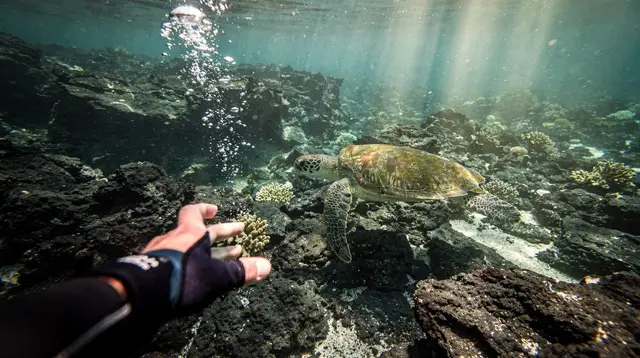
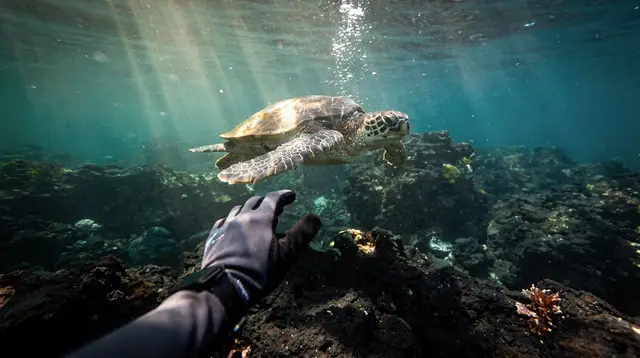
Green sea turtles (honu) show up along most of Maui's calmer coastline: Black Rock in Kaanapali, Napili and Kapalua Bay, Honolua Bay in summer, the Kamaole beaches in Kihei, and the Wailea coastal path. Sightings are never guaranteed anywhere, and a federal rule requires staying at least 3 meters (10 feet) away wherever you find one.
Where honu actually turn up around the island
Ask around Maui and most people point straight to Makena. That reputation is earned, and the boat tours to Turtle Town near Makena or the shore access to the same site are worth their own pages. But green sea turtles, called honu in Hawaiian, are not a Makena exclusive. They graze on algae-covered rock and rest on sand from Kaanapali in the west to Kihei and Wailea in the south, and the animal you see off a hotel beach at sunrise is exactly the same species and the same protected status as the one a boat takes you to see near Makena.
This page is a map of the options, not a substitute for the two pages above. If you already know you want the boat trip or the shore snorkel at Turtle Town, those pages cover the logistics. What follows is for the traveler still comparing where to base a morning: which beach, which bay, which coastline gives the best odds without a boat, and what the law requires everywhere you look.
One rule applies at every single spot on this list, without exception: honu are protected under the U.S. Endangered Species Act, and federal guidance requires staying at least 3 meters (10 feet) away from a turtle in the water or on the sand, more if it is hauled out to rest. That distance is not a Makena rule or a Turtle Town rule. It follows the turtle, not the location.
The short list, region by region
| Spot | Region | How you get there | What makes it work |
|---|---|---|---|
| Black Rock (Puu Kekaa) | Kaanapali | Swim from the beach | Rock structure and current bring turtles close to shore year-round |
| Napili Bay | West Maui, near Kapalua | Swim from the beach | Shallow, sheltered bay; good for slower swimmers |
| Kapalua Bay | West Maui | Swim from the beach | Calm most of the year, popular but not crowded at the edges |
| Honolua Bay | North of Kapalua | Swim from the beach | Marine reserve, strong in summer, rough in winter swell |
| Kamaole Beach Parks I-III | Kihei | Swim from the beach | Reliable sightings, easy parking, no boat needed |
| Wailea coastal path beaches | Wailea | Walk the path, swim from shore | Calmer water, resort-adjacent access points |
| Turtle Town | Off Makena | Boat or advanced shore swim | Best-known site, covered on its own pages |
None of these are guaranteed. A spot that had five turtles last week can have none today. Treat the list as where to look, not a booking confirmation.
Kaanapali and Black Rock
Black Rock, the volcanic outcrop at the north end of Kaanapali’s beach, is one of the most reliable shore-access spots on the island for a reason that has nothing to do with luck: the rock structure holds algae, the algae feeds honu, and the drop-off next to the rock lets turtles glide close to swimmers without needing to come all the way into the shallows. Early morning, before the beach fills and before the afternoon wind picks up, is when visibility and calm water line up best.
This is a shore spot, no boat and no tour required. Rent gear, walk in from the sand along the Beach Walk, and swim out toward the rock slowly. The same 3-meter rule applies here as anywhere else — Black Rock’s turtles are used to swimmers nearby, which makes it tempting to drift closer than the law allows. Fight that instinct.
Napili Bay, Kapalua Bay, and Honolua Bay
North of Kaanapali, the coastline breaks into a series of smaller, more sheltered bays. Napili Bay and Kapalua Bay are both shallow, sandy-bottomed, and calm for most of the year, which makes them easier for weaker swimmers and families than the open-water feel of Black Rock. Turtles here tend to graze along the rocky edges of each bay rather than the open sand in the middle.
Honolua Bay, a short drive further north, is a marine life conservation district — gear restrictions apply, and taking anything from the reef is illegal. In summer, when the water is glassy, it is one of the better turtle and reef spots on the west side. In winter, north swell can make it rough, murky, or outright unswimmable, so check conditions before driving out. None of these three bays require a boat.
Kihei’s Kamaole beaches
South Maui’s Kihei coastline runs through a string of county beach parks — Kamaole I, II, and III — that see steady turtle activity along their rocky points, particularly at the south end of Kamaole III. These beaches have none of the resort infrastructure of Wailea, which means free parking, public showers, and a more local crowd, but the same fish and turtles show up regardless of which side of the county line they’re feeding on.
Morning, again, tends to bring calmer water. Kihei’s coastline faces the same afternoon wind pattern as the rest of leeward Maui, and by early afternoon the water often turns choppy enough to cut visibility.
Wailea’s coastal path
Wailea’s resorts line a shoreline connected by a public coastal path, and several of the small beaches along it — Ulua, Mokapu, Keawakapu — have turtle sightings reported regularly. Every beach in Hawaii is public up to the high-water mark by law, including the ones fronting five-star resorts, so nothing here requires a room key. Park at a public beach access point (required by law at each one) and walk the path to compare a few beaches in one outing rather than committing to a single spot.
Wailea sits just north of Makena, which is why many visitors treat the two as one stretch of coast. They’re distinct: Wailea is resort beaches and a paved path, Makena is where the hotels stop and the boat departures to Turtle Town begin.
What a boat adds that shore spots don’t
Shore snorkeling from any of the beaches above costs nothing beyond gear rental and gives you full control over timing. A boat trip changes the equation in a few ways: it reaches deeper water and reef structure that a shore swimmer can’t easily get to, it usually pairs a turtle stop with a second site such as Molokini, and a crew that spots turtles from the water can guide the group toward (and, importantly, keep the group at a legal distance from) an animal that a solo swimmer might miss entirely.
a kayak and snorkel outing that paddles out to the Turtle Town area from South Maui is one way to combine light exercise with a guided search. For a smaller group and a slower pace, a private snorkel charter built around turtle sightings and a beach picnic removes the shared-boat crowd from the equation, at a higher price.
Turtles beyond the snorkel mask
Not every honu sighting on Maui happens underwater. Turtles regularly haul out onto quiet stretches of sand to bask, a natural behavior that has nothing to do with being stranded or injured. A basking turtle should be left alone and given even more room than the standard 3 meters, since disturbing a resting animal forces it back into the water before it’s ready.
One black-sand beach worth knowing for exactly this reason sits along the road to Hana: honu are regularly seen resting on the sand there, away from the crowds that gather at Makena or Kaanapali. a half-day tour that combines a stop at this black-sand beach with turtle viewing is a way to fold a turtle stop into a shorter version of the Hana drive rather than committing to the full one-day itinerary.
For a guaranteed, controlled view of a honu — useful with young kids, or on a day when the ocean is too rough to snorkel anywhere — the Maui Ocean Center in Maalaea keeps sea turtles in its exhibits as part of its marine life and conservation programs. an entry ticket to the Maui Ocean Center is not a wildlife encounter in the ocean, but it removes all uncertainty about seeing a turtle up close.
The rule that applies at every spot on this list
It’s worth repeating on its own, because it’s the detail most guides skip once they’ve listed a few beaches: the 3-meter (10-foot) minimum distance from a green sea turtle is federal law, tied to the species’ threatened status, not a courtesy suggested by a single beach park or tour operator. It holds at Black Rock exactly as it holds at Makena. It holds when a turtle is swimming and when it’s resting on dry sand, where the buffer should if anything be larger, since a startled turtle on land has nowhere calm to retreat to.
In practice this means: no chasing a turtle to get a closer photo, no touching, no feeding, no positioning yourself in its path to force it toward the surface to breathe. Most encounters end well simply because the turtle moves off in its own time while swimmers keep their distance and watch.
Planning around the season and the swell
Turtle activity doesn’t follow the same hard seasonal calendar as Maui’s humpback whales, which are only in the Auau Channel from December to April. Honu are resident year-round. What changes with the season is water clarity and access: the north-facing bays (Honolua, and to some extent Kapalua) get rougher in winter swell, while the leeward beaches (Kaanapali, Kihei, Wailea) stay calmer most of the year but can still turn choppy on a windy afternoon.
The practical pattern across nearly every spot on this list is the same: mornings before the trade winds build tend to have calmer, clearer water, which makes spotting a turtle easier without getting any closer to it. For general trip timing beyond turtles specifically, the best time to visit Maui and the Best Time to Visit planner cover the wider seasonal picture.
A short comparison for deciding where to go
| If you want… | Go to |
|---|---|
| The easiest shore access, no gear rental drive | Kamaole Beach Parks, Kihei |
| The most reliable reputation, boat or shore | Turtle Town area, Makena |
| A resort-adjacent walk between several beaches | Wailea coastal path |
| Calm, shallow water for beginners | Napili Bay or Kapalua Bay |
| A guided search plus a second site | A snorkel or kayak boat tour |
| A guaranteed sighting regardless of ocean conditions | Maui Ocean Center, Maalaea |
| To pair turtles with a black-sand beach stop | A half-day Hana-area tour |
Whichever spot you pick, the reef gear matters too: sunscreen containing oxybenzone, octinoxate, or octocrylene is banned from use, not just sale, throughout Maui County, so pack or rent a mineral (zinc-based) sunscreen before you go. For gear logistics, see the guide on snorkeling gear rental.
Frequently asked questions about seeing turtles in Maui
Is Makena the only place to see turtles in Maui?
No. Makena and its Turtle Town site have the strongest reputation, but honu also feed and rest along Black Rock in Kaanapali, Napili Bay, Kapalua Bay, Honolua Bay in summer, the Kamaole beaches in Kihei, and the Wailea coastal path. Sightings shift with the season and the day.
How close can you legally get to a sea turtle in Maui?
Federal law protects green sea turtles as a threatened species and requires keeping at least 3 meters (10 feet) of distance at all times, more if the turtle is resting on the beach. This applies the whole island, not only at Makena or Turtle Town.
What is the best time of day to see turtles from shore?
Morning tends to bring calmer water and better visibility at most shore spots, which makes it easier to spot a resting or feeding turtle without disturbing it. Turtles also haul out to bask on beaches at any hour, most often on quieter stretches of sand.
Can you touch or feed a sea turtle in Maui?
No. Touching, feeding, chasing, or blocking a turtle’s path is illegal under federal law, and it can also push the animal back into deeper water before it has finished resting or feeding, which harms it.
Do you need a boat tour to see turtles in Maui?
No. Several shore spots, including Black Rock, Napili Bay, and the Kamaole beaches, regularly have turtles within swimming distance of the sand. A boat tour to Turtle Town near Makena improves the odds but is not the only way.
Are turtle sightings guaranteed on a Maui snorkel tour?
No operator can guarantee a sighting, and any page or tour description that promises one is overstating it. Turtles are wild animals that move with the season, the swell, and the time of day.
Is Honolua Bay a good place to see turtles?
In summer, when the water is calm, Honolua Bay is one of the better spots on the west side. In winter, north swell often makes it rough or unswimmable, and the marine reserve rules there restrict some gear.
Turtle Town snorkeling on GetYourGuide
Verified deep-linked GetYourGuide tours. Book through these links and we earn a small commission at no cost to you.
GetYourGuide does not provide a product photo for this activity — the image shows the meeting point, photographed by us.