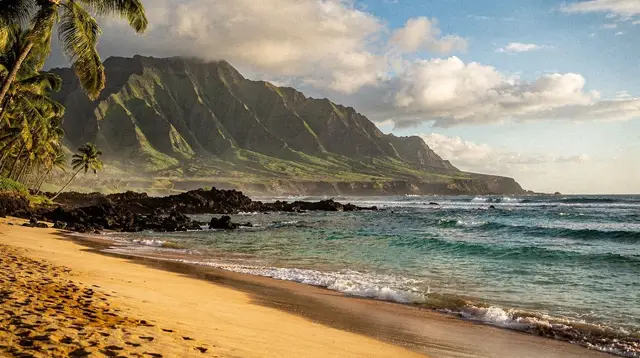
Kihei runs for several miles along Maui’s south shore, a strip of condo buildings, strip malls, and public beach parks that gets far less attention than the resort names of Wailea just down the road. That is largely the point. For a traveler who wants the same dry, sunny climate and the same calm water without paying resort rates, Kihei is the practical answer, and it has been the default base for budget-minded visitors to south Maui for decades.
A working town, not a resort corridor
Unlike Wailea, Kihei was not built around a handful of large hotel properties. Its shoreline is lined with mid-rise condominium buildings, many of them individually owned and rented short-term, interspersed with strip malls, surf shops, and a steady run of casual restaurants. There is no manicured coastal path connecting one property to the next the way there is in Wailea and Makena, and there is no equivalent to Wailea’s row of luxury resorts. What Kihei offers instead is square footage: a two-bedroom condo with a kitchen frequently costs less per night than a single hotel room a few miles south, which matters for a family staying five nights or more.
The trade-off is aesthetic as much as financial. Wailea’s grounds are landscaped and its beach access points are grand entrances through resort lobbies. Kihei’s beach parks are exactly that — public parks, with a paved lot, restrooms, and open sand, sitting next to condo towers rather than golf courses. Travelers who want resort infrastructure (pools, concierge desks, daily housekeeping) should look toward Wailea instead. Travelers who want a kitchen, a lower nightly rate, and the same reliable south shore sun should stay in Kihei.
The beach parks, and why conditions are not uniform
The heart of Kihei’s coastline is the string of three Kamaole Beach Parks, known locally as Kam I, Kam II, and Kam III, running roughly north to south. All three are public, all three have lifeguards on regular hours, and all three sit on the sheltered side of the island, which keeps the water generally calmer than Maui’s north-facing or east-facing shores.
That said, “generally calmer” is not the same as uniformly calm, and this is where a lot of first-time visitors get the wrong idea about Kihei. Each of the three Kamaole parks has its own personality:
| Beach | Typical conditions | Best for |
|---|---|---|
| Kamaole I | Wide sand, gentle entry, can get windy by afternoon | Families, casual swimming |
| Kamaole II | Rockier edges, moderate shorebreak at times | Bodyboarding, short walks |
| Kamaole III | Grassy park area, playground, tide pools at south end | Groups with kids, sunset picnics |
Wind is the main variable. South Maui mornings are typically calmer across the board; by early-to-mid afternoon, onshore wind tends to pick up and can turn a flat morning swim into a choppier one by 2 or 3 p.m. This is the same pattern that pushes snorkel and surf outfitters toward early departures across the entire south shore, and it is worth planning a beach day in Kihei around it rather than assuming any given afternoon will match the morning.
North of the Kamaole parks, near the Kealia Pond National Wildlife Refuge at Kihei’s northern edge, the shoreline turns marshy and is better suited to birdwatching than swimming. South of the Kamaole parks, the coast heads toward the resort district covered on the Wailea and Makena page, where beach character changes again, including stretches with currents and shorebreak that require more caution than anything typical in central Kihei.
Snorkeling from the beach, and where the boats actually leave from
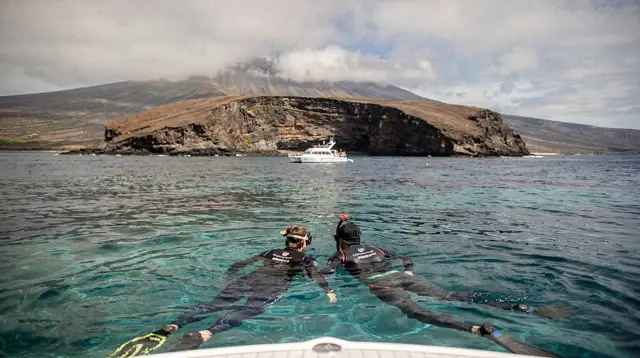
Some sections of the Kamaole beaches, particularly around the rocky points at either end, offer workable shore snorkeling on calm mornings, and a short guided outing that starts and ends right on the sand is a reasonable option for a traveler who does not want to commit to a full boat trip. Visibility, though, is inconsistent: it depends on recent surf, recent rain runoff, and time of day, and it does not compare to the clarity most people are chasing when they picture Maui snorkeling.
That clearer water is at Molokini, the crescent-shaped islet a few miles offshore, and Kihei is not actually the closest launch point to it. Most Molokini snorkel boats depart from the harbor at Maalaea, a short drive north of Kihei, because it sits closer to the crater and the channel there tends to be calmer before midday wind builds. A smaller number of operators do run trips out of Kihei itself, which can be convenient if a condo is a short walk from the pickup point, but the detailed comparison of departure options, timing, and what to expect on the water belongs on the dedicated Molokini snorkel tour from Maalaea and Molokini snorkel tour from Wailea guides rather than here.
For visitors staying in Kihei who want a boat trip without the drive, a shorter Molokini snorkeling run covers the essentials in about two hours, which suits a traveler who wants time back for the beach afterward. For something closer to shore and lower-key, a guided shoreline snorkel sticks to Kihei’s own coastline and skips the boat entirely.
Turtle sightings are common but never guaranteed anywhere on this coast, including in Kihei’s own waters; green sea turtles are protected by federal law, and boats and swimmers alike are required to keep at least 3 meters away. The dedicated Turtle Town snorkel tour from Makena covers the specific site most associated with reliable turtle encounters, which sits south of Kihei near Makena rather than in front of the Kamaole parks.
Surfing, kayaking, and staying active without leaving town
Kihei’s gentler surf breaks, along with the nearby bay at Kalama Park, are a common starting point for first-time surf lessons on the south shore, and the town has more surf schools per mile than almost anywhere else on Maui. A two-hour beginner surf lesson based in Kihei is a practical way to try it without booking a full day. The dedicated surf lessons in Kihei guide covers school options and what a first lesson actually involves; for a broader look at which beaches suit beginners islandwide, see best beginner surf spots on Maui.
South Maui’s flat morning water also makes it a reasonable base for kayaking, and several outfitters combine a paddle with a snorkel stop. A kayak and snorkel combination trip departs the south shore and pairs well with an early start, while a late-day kayak trip toward Turtle Town is a quieter alternative to a full boat charter for travelers who want time on the water without an early wake-up call. The kayak tour options across south Maui guide and stand-up paddleboard rental page go into more detail on rental logistics and launch points.
Whale watching from Kihei’s own shoreline
Kihei sits on the Auau Channel, the stretch of water between Maui, Lanai, Kahoolawe, and Molokai where humpback whales gather every winter, and it is one of the easier places on the island to see them without boarding a boat. From roughly December through March, it is common to spot spouts, breaches, and tail slaps from the sand at any of the three Kamaole beach parks, from the Kihei boat ramp, or from a bench along the coastal path near the aquarium — no binoculars or admission required, just patience and a clear morning.
The whale watching from shore on Maui guide covers the best vantage points along this stretch of coast in more detail, and the best time for whale watching on Maui guide narrows down which weeks of the season tend to produce the most sightings. Travelers who want a closer look, rather than a distant spout, can pair a Kihei stay with a dedicated boat trip departing from nearby Maalaea, covered on the whale watching tour from Maalaea guide.
Getting around from a Kihei base
Kihei sits roughly 25 to 30 minutes south of Kahului Airport (OGG) by car, making it one of the more convenient south shore bases for arrivals and departures. A rental car is close to essential: Kihei’s own strip is walkable in sections, but reaching Maalaea’s harbor, the Haleakala summit, or the Road to Hana all require driving, and the Maui Bus, while it does serve Kihei, does not reach the Haleakala summit or run the length of the Road to Hana. The do you need a rental car in Maui and renting a car at OGG airport guides cover the practical side of that decision.
From Kihei, the drive to Wailea’s resorts takes about 10 to 15 minutes, to Maalaea harbor about 15 to 20 minutes, and to Kahului or Wailuku in central Maui about 20 to 25 minutes. That central location is a genuine advantage of basing in Kihei rather than farther out on the west side: it shortens the early-morning drive to a Maalaea boat departure and keeps the airport close on departure day.
Budgeting a stay in Kihei
Condo rates in Kihei vary widely by building, view, and season, but a realistic range for a clean, well-located one or two-bedroom unit runs from roughly 150 to 350 USD per night before taxes, compared to 400 USD and up for a comparable resort room in Wailea. Add Hawaii’s general excise tax of roughly 4.2 to 4.5 percent plus the combined state and county lodging tax, which brings the total tax load on a hotel or condo stay to around 18 percent, and factor in that some condo buildings charge separate cleaning or amenity fees similar in spirit to a resort fee, even though they are not called that.
Restaurants in Kihei skew casual and are generally less expensive than Wailea’s resort dining, which is part of why the town remains popular with longer-staying families working with a fixed budget. The cheap eats in Maui and budget snorkeling options on Maui guides go further into stretching a south shore budget.
Condo buildings are less likely than a full-service resort to itemize a nightly resort fee the way a Wailea property does, but it is still worth reading the fine print on cleaning fees, parking, and Wi-Fi before booking, since these add up the same way. The resort fees and taxes in Maui hotels article breaks down where these extra charges tend to appear and how to spot them ahead of time.
One line item that is not optional anywhere on Maui, condo or resort: sunscreen. Maui County bans the sale, distribution, and use of sunscreens containing oxybenzone, octinoxate, or octocrylene, so a bottle packed from home may not be legal to use on a Kihei beach. Only mineral, zinc-based sunscreen is allowed, and it is worth buying it before arriving or at a Kihei grocery store rather than assuming a favorite brand will pass. The Maui reef-safe sunscreen law explained article covers what changed and why.
Planning around Kihei
Kihei works best as a base for a stay of three to five nights or as one stop within a longer island itinerary that also spends time on the west side or upcountry. It pairs naturally with an early snorkel or surf morning, a beach afternoon at whichever Kamaole park suits the day’s conditions, and evenings spent in town rather than at a resort restaurant. For first-time visitors weighing where to stay at all, the where to stay in Maui, first time guide compares Kihei against the island’s other bases, and the best time to visit Maui guide and things to do in Kihei hub round out planning for the area. Travelers building a full trip around the south shore’s water activities can also check the things to do: Molokini snorkeling category and the three-day first-timers itinerary for a sense of how Kihei fits into a wider south Maui plan.
Kihei questions, answered
Is Kihei cheaper than Wailea?
Yes. Kihei is built around condo buildings rather than resort towers, so nightly rates and dining are consistently lower than in neighboring Wailea, without giving up the south shore’s dry, sunny climate.
Are Kihei’s beaches good for swimming?
Most days, yes, but conditions vary by beach and by season. The Kamaole beach parks are generally gentle, though wind and small shorebreak can pick up in the afternoon, so mornings tend to be calmer.
Can you snorkel directly from the beach in Kihei?
Some stretches, especially near rocky points at either end of the Kamaole parks, offer decent shore snorkeling. Visibility is inconsistent compared to a boat trip to Molokini, and it depends on recent surf and wind.
Do Molokini snorkel boats leave from Kihei?
A few smaller operators launch from Kihei, but most Molokini boats depart from the harbor at Maalaea, a short drive north, since it is the closest launch point to the crater.
Is Kihei walkable without a car?
Kihei stretches along several miles of coastal road, so a car or bicycle makes getting between beach parks and restaurants far easier. The Maui Bus serves the area but does not reach the Haleakala summit or the Road to Hana.
What is the best month to visit Kihei?
May, September, and October combine dry weather with lighter crowds. December through March adds humpback whale sightings from shore but also the year’s highest occupancy.
Is Kihei good for families?
Yes. Condo rentals with kitchens keep costs down for groups, and the calmer sections of the Kamaole beach parks work well for young children, though it is worth checking conditions each morning rather than assuming every cove is equally gentle.