Best Beginner Surf Spots in Maui
Where are the best beginner surf spots in Maui?
The gentlest learner waves are on the west and south coasts, around Lahaina and Kihei, where small swells break over sand in shallow, sheltered water. The north shore, including Hookipa, is a wind and big-wave coast built for experienced surfers, not first-timers.
Picking a coast before picking a lesson
Maui has surf on every side, but not every side has surf a first-timer should be on. The island sits in the northern hemisphere, and its coastline faces four different directions, so its swell exposure changes completely from one bay to the next. A beach that is glassy and knee-high on a Tuesday morning can be a different place entirely once a north or south swell arrives. Before booking anything, it helps to know which coasts are built for learning and which are not — that choice matters more than which specific school you pick.
This page compares regions, not schools. If you already know you want to learn near Lahaina, the operator-level detail lives on Surf Lessons in Lahaina, Maui. If Kihei is your base, see Surf Lessons in Kihei: Learning to Surf on Maui’s Calmer South Shore. And if you are deciding between a private lesson and a group class, that comparison is covered separately in Private vs Group Surf Lessons in Maui: How to Choose, not here.
What makes a wave good for a first lesson
A few things matter more than wave height:
- A sand bottom. Falling is part of every first lesson. Sand forgives; reef and rock do not.
- A gentle, slow-breaking wave. Beginners need a wave that rolls rather than pitches, giving several seconds to pop up before it closes out.
- Shelter from wind and current. An exposed, windy bay makes balance harder and paddling back out exhausting.
- Depth that stays shallow for a while. A long, gradual sandbar lets an instructor stand beside a student rather than tread water.
Maui has several bays that check all four boxes, concentrated on the west and south coasts. It also has world-famous surf on its north shore that checks none of them for a beginner.
West Maui: the original learning ground
The waters around Lahaina have taught visitors to surf for decades, and the appeal is straightforward: small, sand-bottomed breaks sit close to shore, protected by the bulk of West Maui from much of the winter north swell. The town itself is still rebuilding after the August 2023 fire — Front Street is not the browsable strip it once was — but the harbor operates, boats run, and surf lessons continue on the beaches nearby. This is a case where checking current, official sources before you go is worth the extra step, since conditions on the ground change month to month.
Just north, the long beach fronting Kaanapali offers a similar profile: sandy bottom, a public Beach Walk running behind the hotels, and generally mild shorebreak away from Black Rock at its northern end, which is better suited to snorkeling than to a first surf session. Farther up the coast, Napili Bay is smaller and more enclosed, which some first-timers find less intimidating than an open beach.
West Maui works best in summer and shoulder months. A big winter north swell can still wrap into parts of this coast, so a lesson operator here will typically shift you to a more sheltered stretch of beach on a bigger day rather than cancel outright.
South Maui: the dependable second option
The beaches fronting Kihei — the string of Kamaole Beach Parks I, II, and III — offer some of the most consistent small surf on the island, in part because this coast faces away from the strongest winter swells that hit the north and west shores. That makes South Maui a reasonable fallback in winter when West Maui gets choppier, and it is one reason many schools run lessons here year-round.
Toward Wailea, the surf gets smaller and the coast turns rockier in places, which makes South Kihei’s sandy stretches the more practical choice for an actual lesson rather than the resort beaches farther south. This guide does not rank specific breaks within Kihei by name — that level of detail belongs to surf-lessons-kihei — but as a region, South Maui deserves serious consideration alongside West Maui, especially for a winter trip.
The north shore: watch, do not paddle out
Paia and Hookipa, on Maui’s windward north shore, are two of the most photographed surf locations in the world, and neither is a place to take a first lesson. Hookipa in particular is a wind-sports and big-wave coast: strong currents, a shorebreak with rock and reef sections, and swell that builds quickly with little warning. It draws professional windsurfers, kiteboarders, and surfers, along with sizeable crowds who come only to watch from the bluff overlooking the break. Treat it as a viewpoint on your itinerary, not a lesson venue — the same coastline that hosts Hookipa also hosts Jaws (Peahi) farther along, a wave strictly for expert big-wave surfers and, for everyone else, strictly for watching from land.
If a lesson package or a general “north shore surf” listing tries to place a beginner class at Hookipa, that is a red flag, not a selling point.
Comparing the two learner coasts
| Coast | Typical wave | Best season | Watch for |
|---|---|---|---|
| West Maui (Lahaina, Kaanapali) | Small, sand-bottomed, sheltered | Year-round, best May–Oct | Winter north swell can add size |
| South Maui (Kihei) | Small, consistent, sand-bottomed | Year-round, good winter fallback | Wind picks up early afternoon |
| North Shore (Paia, Hookipa) | Powerful, wind-driven, reef/rock sections | Not a beginner coast at any season | Not suitable for first-timers |
Wind is worth planning around wherever you go: on Maui, trade winds tend to build through the morning and are strongest in early afternoon, so a morning lesson slot is usually calmer than an afternoon one, on either coast.
How this fits into a Maui trip
Most first-time visitors base themselves in either West Maui or South Maui for exactly the reasons above — good beaches, easy beach access, and, as it happens, good beginner surf close to the hotel. If you have not settled on a base yet, West Maui vs South Maui: Where to Stay walks through that decision in more depth, and Where to Stay in Maui: A First-Timer’s Guide to Choosing Your Base covers it at the whole-island level.
A single surf lesson also slots easily into a multi-day plan. Three Days in Maui for First-Timers and Four Days in Maui: Family Beach and Snorkel both build in a morning of water activity on the west or south coast, the same window this guide recommends for calmer wind.
A surf lesson also pairs naturally with other water time on the same trip. Families weighing a first lesson against other ocean introductions might also look at a guided beginner snorkel outing with flotation gear and a wetsuit, which uses similarly calm, shallow water and works well as a lower-effort alternative or a second activity the same week. If your group includes kids or true first-timers who want an instructor-led introduction built around families specifically, a surf lesson designed for families and beginners is the more direct option, generally run out of the sheltered west or south beaches described above.
For travelers who would rather stand than paddle, a private, beginner-level stand-up paddleboard lesson uses the same calm bays and can feel like an easier entry point before or instead of a surf lesson. And if a group lesson closer to the west side fits your base better, a group surf lesson based near Lahaina puts you on the sand-bottomed beaches described above without needing to drive further afield.
Whichever coast you choose, the instructor running the lesson will read the day’s wind and swell and pick the exact sandbar — that is part of what you are paying for. Your job, at the planning stage, is simpler: pick West Maui or South Maui, avoid the north shore, and book a morning slot if you can.
Central Maui and getting to your lesson
Most beginner surf lessons run out of West Maui or South Maui, but almost every visitor’s trip starts in Kahului, home to the island’s only commercial airport (OGG) and the isthmus that separates the two volcanoes. There is no highway shortcut between the airport and either surf coast — the drive west follows the Honoapiilani Highway toward Lahaina and Kaanapali, while the drive south follows the Piilani Highway toward Kihei and Wailea. If you have not decided whether to rent a car for the trip, Do You Need a Rental Car in Maui? and Renting a Car at OGG Airport both cover that decision before you book a lesson; without a car, the Maui Bus connects Kahului to both Lahaina/Kaanapali and Kihei, though not every beach stop is a short walk from its route.
Reef-safe sunscreen, required in the water
Before paddling out anywhere on Maui, sunscreen matters as much as swim gear. Maui County has banned the sale, distribution, and use of sunscreens containing oxybenzone, octinoxate, or octocrylene since October 1, 2022 — the rule covers use, not just purchase, so a bottle brought from home is not automatically compliant. A mineral, zinc-based sunscreen is the only kind allowed in the water, and most surf schools and beach shops on both coasts now stock it as a matter of course. Maui’s Reef-Safe Sunscreen Law, Explained covers what to check on a label before your first lesson.
Season, weather, and why timing still matters
Maui sits in the northern hemisphere with a two-season tropical climate: a drier season roughly May through October and a wetter one from November through April, and the central Pacific hurricane season runs June 1 through November 30. None of that maps neatly onto surf conditions — winter is also when the north swell builds, which is a bigger factor for beginner planning than rainfall — but it does affect the rest of a trip built around a lesson. Maui Weather by Month breaks down what to expect season by season, and Hurricane Season on Maui: What to Know covers the summer-into-fall window specifically.
What a first lesson usually looks like
Every school runs things a little differently, but a first surf lesson on Maui typically starts on the sand: a short briefing on paddling, balance, and how to stand, using the same soft-top board students will use in the water. Instructors then walk or paddle students out to water shallow enough to stand in, position the board, and push into small, already-breaking waves so a beginner can focus on standing rather than catching the wave unassisted. Lessons run in small groups or one-on-one, and a family or a mix of skill levels can usually be accommodated within the same booking, with the instructor adjusting the spot and the wave size to the least experienced person in the water.
Wildlife you may share the water with
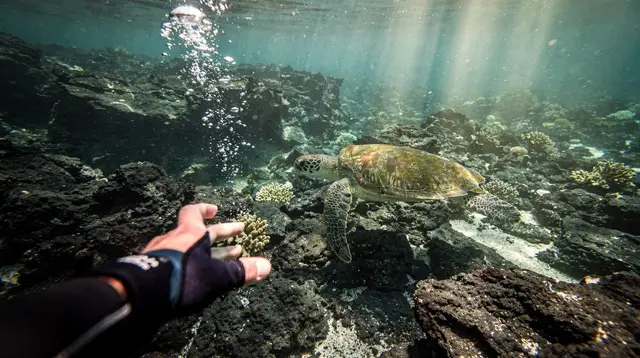
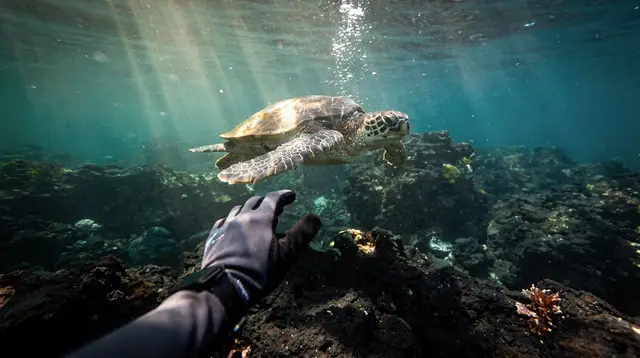
Sea turtles are common in Maui’s shallow, sandy bays, including some of the same waters used for beginner lessons, and Hawaii state law sets a minimum viewing distance that applies to swimmers and surfers alike — see Hawaii’s Sea Turtle Viewing Distance Law for specifics, and Best Spots to See Turtles on Maui for where sightings are most likely. In winter, humpback whales pass through the Auau Channel between Maui, Lanai, and Molokai close enough to be visible from shore; Whale Watching Tour from Lahaina covers that separately, but it is worth knowing that a distant splash during a winter lesson is more likely a whale than anything to worry about.
FAQ: choosing a beginner surf spot on Maui
Is Hookipa good for beginner surfing?
No. Hookipa is a wind and wave sports coast known for strong currents, a rocky shorebreak, and swell that can jump quickly. It draws experienced surfers and windsurfers, and it is one of the better places on Maui to watch from the bluff, not to paddle out as a first-timer.
Which side of Maui is best for learning to surf?
West Maui and South Maui, broadly the coasts around Lahaina and Kihei, hold the island’s most consistent small, sand-bottomed waves. Both face away from the winter north swell and the summer south swell in ways that keep at least one side rideable most of the year.
Do I need a rental car to reach the beginner surf beaches?
A car helps, since the learner-friendly beaches are spread across two coasts, but the Maui Bus does connect Lahaina, Kaanapali, and parts of Kihei. If you are not renting a car, picking a lesson operator with hotel pickup near your beach is the simpler route.
What time of year has the calmest waves for beginners?
Summer, roughly May through October, tends to flatten the north-facing shorelines and is the easier season overall. Winter swell affects north and west-facing spots more than the softer, south-facing beaches near Kihei, so a south-facing beach is a safer bet from November to April.
Can kids and true first-timers surf on Maui?
Yes, at the right beach. The same soft, sandy-bottomed bays that suit adult beginners work for kids and non-swimmers taking their first lesson, provided a certified instructor sets the location and reads the day’s conditions before anyone paddles out.
Are Maui’s beginner surf beaches crowded?
The most popular learner beaches near Lahaina and Kihei see multiple schools running lessons on the same sandbars, especially midmorning in high season. Early sessions and shoulder-season months (May, September, October) are noticeably quieter.
Surf lessons on GetYourGuide
Verified deep-linked GetYourGuide tours. Book through these links and we earn a small commission at no cost to you.
GetYourGuide does not provide a product photo for this activity — the image shows the meeting point, photographed by us.