Night Manta Ray Snorkel Tour in Maui: What to Actually Expect
Is the night manta ray snorkel tour worth it in Maui?
It's worth it if you're a confident swimmer looking for an unusual after-dark experience, but manta sightings off Maui are not guaranteed the way they can be at a dedicated cleaning station elsewhere in Hawaii. Go for the plankton-lit night ocean itself, and treat any manta as a bonus.
A night manta ray snorkel is a different animal, so to speak, from anything else on Maui’s water-activity list. It happens after the sun goes down, it depends on lights held just below the surface, and the payoff — a manta ray gliding through a column of illuminated plankton — is never promised, only pursued. This page covers what the tour actually involves, who it suits, and what an honest operator will and won’t tell you before you book.
This is not a review of scuba diving with tanks, which is its own activity covered separately in our scuba diving guide, and it isn’t about the daytime reef snorkeling at Kaanapali’s beaches or at Honolua Bay. If you just need a mask and fins for your own swimming, that’s covered in our gear rental guide. This page is specifically about the after-dark boat trip built around plankton light and the chance of manta rays.
How the tour actually works
A night manta snorkel departs from a harbor on Maui’s leeward side, timed so the boat reaches a sheltered stretch of water as the sun sets. Once anchored, the crew sets up a lit platform or a ring of dive lights just under the surface. Snorkelers hold onto a floating light bar or a boogie-board-style float, spread out in a loose circle, and shine their beams downward into the water column. The lights attract plankton, and plankton is what draws manta rays in to feed, mouths open, in slow barrel-rolls beneath the swimmers.
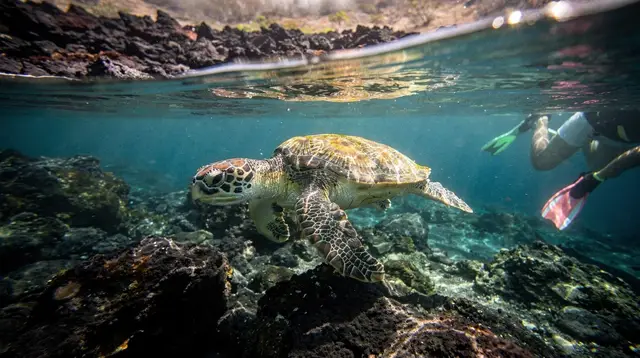
You are not chasing the mantas. You float, you hold your light steady, and you watch what comes to the light — which some nights is a manta ray turning circles a few feet below you, and other nights is mostly small fish and the occasional curious turtle. The crew briefs the group beforehand on staying still, not touching anything that shows up, and how to signal if you need to get back to the boat.
Trips typically run a couple of hours door to door, with maybe 45 minutes to an hour of actual time in the water. A guided snorkeling tour with gear and an instructor is the standard format: gear, wetsuit, lights, and a briefing are handled by the crew, so your job is just to get in, float, and watch.
Why sightings are never guaranteed — and why that matters
This is the part most marketing pages skip, and it is the single most important thing to understand before booking. Manta rays are wild, wide-ranging animals. They follow plankton density, which shifts with current, moon phase, and water temperature, not with a tour schedule. A cleaning or feeding area that produced mantas on Monday can be quiet on Tuesday for no reason a guide can predict.
Operators fish known aggregation spots along Maui’s coast and have a real track record, but “a real track record” is not “a guarantee.” A trip with a bright plankton bloom, dozens of small fish, and zero mantas is a normal outcome, not a failed one — the crew is honest about this if you ask directly before booking, and you should ask. Go into this expecting a genuinely strange and beautiful night-water experience first, and a manta sighting as the possible bonus on top, and you’ll leave satisfied either way.
Who this tour actually suits
Night snorkeling removes visual reference points that daytime swimmers rely on without noticing: the sea floor, the shoreline, other swimmers’ silhouettes. Add cooler-feeling water (even though the actual temperature barely drops after dark), and the comfort level this trip asks for is meaningfully higher than a calm-morning reef swim.
This tour is a good fit if you:
- Are a confident, relaxed swimmer already comfortable snorkeling in open water during the day
- Are not claustrophobic or anxious about dark water beneath you
- Understand and accept that a manta sighting is possible, not promised
- Want something genuinely different from a standard reef snorkel, more experience than checklist
It is not the right choice if you are traveling with young children, if you or anyone in your group gets nervous in open water even in daylight, or if a guaranteed wildlife sighting is the actual goal of the evening. Presenting this as a family activity for toddlers or as an easy first snorkel would be dishonest — the darkness and the marine-life uncertainty both raise the bar compared to a daytime outing, and no amount of enthusiasm in the marketing changes that. If you want a gentler introduction to Maui’s water with better odds of marine life close to shore, look instead at turtle-focused snorkeling at Turtle Town or a combined kayak and snorkel tour during the day.
What to bring and what’s provided
Most operators include mask, snorkel, fins, and a wetsuit in the price, since a wetsuit is standard for a night trip even in Maui’s mild water — it’s as much about comfort and confidence as warmth. Lights are provided and, in most formats, required as part of the shared lighting setup that draws plankton to the group.
| Item | Usually provided | Bring your own if |
|---|---|---|
| Mask, snorkel, fins | Yes | You prefer a specific mask fit |
| Wetsuit | Yes | You run cold even in warm water |
| Dive light / light float | Yes | Rarely allowed as a substitute — check first |
| Underwater camera | No | You want your own footage; confirm flash policy |
| Towel, dry clothes | No | Always bring your own |
| Motion sickness remedy | No | Take it before boarding if you’re prone to it |
Sunscreen is a separate issue worth flagging on any Maui water trip: the county’s ban on chemical sunscreen ingredients (oxybenzone, octinoxate, and octocrylene) applies to use, not just sale, so a mineral, zinc-based sunscreen is the only compliant option — and for an evening trip, you may not need sunscreen for the water time at all, only for the daylight hours beforehand.
Departure points and what to expect around the trip
Boats running this tour typically leave from a harbor on Maui’s leeward coast, where the water is more consistently calm than the windward side. Maalaea and Lahaina are the island’s two working boat harbors, and either can be a departure point depending on the operator and the specific site they fish that season. Your exact meeting point and time will be confirmed after booking, since it depends on where the crew has been finding activity recently.
Because the trip runs into the evening, plan your day around it rather than trying to combine it with a full day of driving or a separate sunset activity. If you’re also interested in a sunset sail with drinks and views or an evening cruise from Maalaea, those are different products on a different schedule — don’t try to stack them with a night manta trip on the same evening unless the timing is confirmed to work.
Comparing the night manta tour to other water options
| Tour type | Time of day | Wildlife odds | Comfort level needed |
|---|---|---|---|
| Night manta ray snorkel | After sunset | Possible, not guaranteed | High |
| Turtle Town snorkel | Morning/midday | Turtles frequent, not guaranteed | Moderate |
| Molokini snorkel cruise | Morning | Reef fish reliable | Moderate |
| Scuba diving tour | Day or night | Depends on site | High (certification-dependent) |
| Kaanapali shore snorkel | Any daylight hour | Reef fish, occasional turtle | Low |
If reliable, easy wildlife viewing during daylight is really what you want, a Molokini snorkel departure from Maalaea or a Turtle Town trip will serve you better than chasing mantas after dark. If the appeal is specifically the strangeness of night water and the small chance of something extraordinary swimming beneath your light, this tour delivers an experience nothing in daylight can replicate — plankton glowing green in your beam, the sudden shape of something large turning below you, the boat’s lights the only reference point in an otherwise black ocean.
A west-coast sailboat trip that combines snorkeling with a meal aboard is a good complementary daytime booking if you want a calmer, more social water outing earlier in your trip, saving the night manta tour as the more adventurous evening add-on.
Seasonality and conditions
Maui’s leeward coast stays comparatively calm year-round, which is part of why operators can run this tour through both the dry season (roughly May through October) and the wetter months (November through April). Wind and swell matter more than season for this particular trip, since the boat needs a sheltered anchorage to hold a stable light platform. Rough conditions on a given evening can cancel or relocate a trip; operators reschedule rather than run in unsafe swell.
Moon phase is worth asking about if you’re flexible on dates: a darker sky around the new moon tends to make the boat’s own lights more effective at concentrating plankton, though this is a general tendency crews mention, not a rule that guarantees better sightings.
Booking practicalities
Book ahead during peak travel weeks — holidays and the winter whale season put pressure on evening boat capacity across the island generally, even though this specific tour isn’t whale-focused. A daytime Turtle Town kayak and snorkel tour is a sensible complement to book for earlier in your stay if you want at least one high-probability wildlife encounter alongside the higher-variance night trip.
Confirm cancellation and rescheduling policies before paying, since weather and sea conditions are the most common reason these specific evening departures get moved. If you’re arranging transport from a hotel outside walking distance of the harbor, check whether the tour includes pickup or whether you’re expected to arrange your own transport to a separate daytime raft tour if you’re bundling multiple water activities across your visit — the logistics of a night departure are less forgiving of a late arrival than a morning trip, since the whole group’s light schedule depends on reaching the site by a set time after sunset.
For planning your broader trip around this and other water activities, see our guide to how many days you need in Maui, Maui’s weather by month, and the general packing list for the island, which flags the mineral-sunscreen requirement in more detail. For the full spread of snorkeling and diving options across the island, the snorkeling and diving activity hub lists every related tour by type.
Frequently asked questions about the night manta ray snorkel tour
Are manta ray sightings guaranteed on a Maui night snorkel tour?
No. Operators fish known feeding and cleaning areas along Maui’s coast, but mantas are wild animals that move with plankton concentrations and moon phase. A trip with no manta sighting still happens, and honest operators say so upfront.
Is this tour suitable for children or nervous swimmers?
It is not the right choice for young children or anyone uneasy in open water. Night snorkeling means darkness, cooler water, and reduced visual reference points, all of which raise the comfort level required compared with a daytime reef swim.
What is the water like at night compared to a daytime snorkel?
The surface water is usually calm after sunset, but visibility depends entirely on your light and the boat’s floodlights. Depth perception is harder, and the sensation of dark water below you is the main adjustment first-timers report.
Do I need my own gear for a night manta snorkel?
Most tours include mask, snorkel, fins, and a wetsuit for warmth, plus a dive light or a lit flotation ring you hold onto. If you prefer your own mask fit, bring it, but confirm with the operator before assuming outside gear is allowed.
How cold is the water at night in Maui?
Ocean temperature barely changes between day and night, typically in the mid-to-high 70s Fahrenheit year-round, but wind chill and the psychological effect of darkness make most people want a wetsuit they would skip on a daytime swim.
Where do night manta snorkel boats leave from in Maui?
Departures are typically from harbors on Maui’s leeward coast, timed to reach a calm, sheltered stretch of water before dark. Exact meeting points are confirmed by the operator after booking.
Can I bring a camera or underwater light?
A dive light is often provided or required as part of the group’s shared lighting, since coordinated light is what draws plankton and, with luck, mantas. Personal underwater cameras are usually fine to bring, but check whether a flash is discouraged so it doesn’t disturb the animals or other swimmers.
Snorkeling and diving on GetYourGuide
Verified deep-linked GetYourGuide tours. Book through these links and we earn a small commission at no cost to you.
GetYourGuide does not provide a product photo for this activity — the image shows the meeting point, photographed by us.