Lahaina Pali Trail: West Maui's Panoramic Coastal Hike
What is the Lahaina Pali Trail and how hard is it?
It's a state-maintained ridge trail above West Maui's leeward coast, running between Ukumehame and the Maalaea side of the pali, with no shade and steady elevation gain. Most visitors hike a partial out-and-back of a couple of hours rather than the full point-to-point route, which needs two cars.
A ridge hike, not a waterfall hike
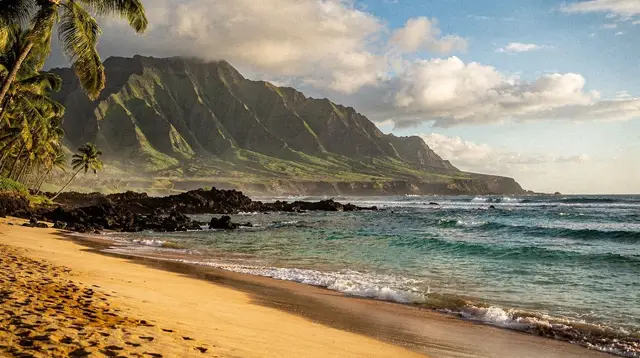
Most of Maui’s well-known trails end at a pool or a curtain of water in a green valley. The Lahaina Pali Trail does the opposite: it climbs a bare, sun-baked ridge on the dry side of the island and hands you an ocean view instead. From the upper sections you look down on Maalaea Bay, across the channel toward Kahoolawe and Molokini, and out toward Lanai on a clear day, with the West Maui Mountains rising behind you. There is no shade, no stream crossing, and no swimming hole at the end. If that sounds like a downgrade next to the waterfall hikes near Haiku or the falls at Makamakaole, it isn’t — it’s a different kind of hike, built for a different kind of morning, and it happens to sit closer to the beach towns of Lahaina and Kaanapali than any of Maui’s rainforest trails.
This guide covers the trail on its own terms: what the terrain actually does underfoot, how much sun you’re signing up for, which end to start from, and who this hike suits. It doesn’t cover the valley hikes of central Maui — for those, see the guides to Iao Valley and the Waihee Ridge Trail — and it doesn’t cover the east-side waterfall hikes, which have their own guides. The Lahaina Pali Trail belongs to west Maui, and it’s best understood as a complement to a beach day, not a full-day expedition on its own.
Where the trail sits and what it connects
The Lahaina Pali Trail is a state-maintained route (part of the Na Ala Hele trail system) that runs along the flank of the West Maui Mountains between two trailheads on opposite sides of the pali: one near Ukumehame, close to Lahaina and Olowalu on the Honoapiilani Highway, and the other on the Maalaea side, where the highway curves toward central Maui. The full point-to-point distance is roughly 5 miles (about 8 km) one way, with total elevation gain on the order of 1,500 to 1,600 feet.
Almost nobody hikes it as a simple there-and-back loop, because it isn’t a loop at all — it’s a line between two trailheads on two different roads. There are really two ways to experience it:
| Option | Distance | Cars needed | What you get |
|---|---|---|---|
| Full point-to-point crossing | ~5 miles one way | Two (one staged at each end) | The complete ridge traverse, both trailheads’ views |
| Partial out-and-back from Ukumehame | 2–4 miles round trip | One | The steepest, most scenic lower section and the first major viewpoints |
| Partial out-and-back from the Maalaea side | 2–4 miles round trip | One | Wider views over Maalaea Bay and the harbor from early on |
For a visitor based in Lahaina or Kaanapali without a second vehicle, the out-and-back from the Ukumehame end is the realistic option, and it’s the one this guide assumes for timing and water estimates below. Arranging a car shuttle for the full crossing is possible if you’re traveling with a group and two rental cars, but it isn’t worth organizing for a single-day visit.
Terrain profile: what the climb actually feels like
The trail starts low, near sea level at the Ukumehame end, and climbs steadily rather than in short punishing bursts. The surface is dry, reddish volcanic soil and rock, loose in places, with old telephone poles from a decommissioned line still standing along parts of the route as a historical marker of the original King’s Highway alignment this trail partly follows. There’s no scrambling and no exposure in the technical, hands-on-rock sense — the difficulty is entirely about sustained climbing with no cover.
Rough waypoints on the Ukumehame side:
| Distance from trailhead | What to expect |
|---|---|
| 0–0.5 miles | Gentle start, gravel road feel, first look back at the coastline |
| 0.5–1.5 miles | Steady, exposed climbing on loose ground, first wide ocean views open up |
| 1.5–2.5 miles | Higher ridge sections, views over Maalaea Bay and toward Kahoolawe |
| 2.5 miles to the far trailhead | Continued climbing and descent toward the Maalaea-side road |
A turnaround anywhere past the 1.5-mile mark already delivers the main visual payoff — the wide-angle view of the channel islands — so there’s no need to push to the far end unless you’ve staged a second car.
The sun exposure is the real difficulty, not the grade
This is the point most casual write-ups underplay, and it’s the one piece of information that matters more than the mileage. The Lahaina Pali Trail has no tree cover anywhere along its length. None of it is shaded, at any hour, in either direction. Combined with the fact that this stretch of coast is one of the driest and sunniest on Maui — the same leeward exposure that keeps Kihei and Lahaina dry most of the year — a midday hike here means several hours of direct sun on a reflective, light-colored slope with radiant heat coming back up off the rock.
The wind adds a second factor that cuts both ways. It’s usually present and often strong on the upper ridge, which keeps the air moving and can make the temperature feel manageable even when the sun is intense — but it also dries you out faster than you’d expect, and a hat that isn’t secured will end up in the valley below. Treat the wind as a reason to drink more water, not less.
Practical consequences:
- Start early. Aim to be on the trail at or before sunrise, or at latest in the first couple of hours after. An afternoon start means hiking the hottest part of the day with no way to escape the sun partway through.
- Carry more water than the distance suggests. A 2 to 4 mile round trip on a shaded, cool trail might need one bottle; on this ridge, plan on at least a liter per person for a short out-and-back, more for anything longer or for a hot day.
- Sun protection is not optional. A hat, sunglasses, and sunscreen matter here more than on almost any other trail on the island. Because Maui County bans the sale, distribution, and use of sunscreens containing oxybenzone, octinoxate, or octocrylene, bring a mineral (zinc-based) sunscreen — the chemical formulas common on the mainland aren’t just discouraged here, their use is against county rules.
- Skip it entirely in the middle of a hot afternoon, especially outside the cooler winter months. This isn’t a trail where a return trip through failing light or heat is a minor discomfort; it’s a genuine risk on an exposed slope with no bailout shade.
Who this hike is for
The Lahaina Pali Trail suits a specific traveler: someone already staying on the west side, in Lahaina, Kaanapali, or nearby, who wants a morning hike with a real view before or after a beach-focused day, and who isn’t chasing a waterfall or a swimming hole. It rewards people who like open, elevated coastal views and don’t mind sun and wind in exchange for them.
It’s a poor match for anyone expecting a rainforest walk, a pool to cool off in, or full shade — those are found on the east side and in central Maui, not here. It’s also not the right choice for young children, for anyone with heat sensitivity, or for a hot midday window with no flexibility on timing. Compare this profile against the two central-Maui hikes covered elsewhere on this site: the Iao Valley walk is short, shaded, and reservation-based, while the Waihee Ridge Trail climbs through green, often cloud-wrapped terrain with real tree cover for much of its length. The Lahaina Pali Trail is the driest, most exposed, and most coastal-feeling of the three.
Pairing it with the rest of a west Maui day
Because the trailhead sits so close to the beach towns, this hike works best as the first half of a day rather than a standalone outing. A workable rhythm: start on the trail at sunrise, finish the out-and-back by mid-morning, rinse off, and spend the rest of the day at the beach in Kaanapali or on one of the snorkeling beaches covered in the Kaanapali snorkeling guide. Travelers without a rental car should check the do-you-need-a-car guide first — this trailhead isn’t served by the Maui Bus, so getting here on your own requires a car, a taxi, or a rideshare arrangement.
For an afternoon that doesn’t involve more sun exposure, the west side also has water-based and farm-based options that sit at the opposite end of the effort scale from a ridge climb. A cacao farm visit or a chocolate-making session near Lahaina makes a shaded, low-key afternoon after a hot morning hike:
a guided cacao farm tour and feast near Lahaina pairs a shaded orchard walk with a tasting, which suits a day that already had its fill of sun on the trail. For something similar with a factory setting rather than a farm walk, a small-batch chocolate factory experience in Lahaina covers the process from bean to bar indoors.
If the goal is water time rather than more walking, a beginner group surf lesson based in Lahaina is a reasonable way to spend the afternoon after a morning hike, and in season, a humpback whale watching cruise departing Lahaina puts you back out on the same channel you were looking at from the ridge, at sea level this time. For a gentler on-the-water option, a guided eco sea scooter outing at Kapalua Bay requires far less exertion than the trail did.
What to bring
- At least a liter of water per person for a short out-and-back; more for longer distances or hot days.
- A hat that won’t blow off, sunglasses, and mineral sunscreen (the only kind legal to use in Maui County).
- Sturdy trail shoes with grip — the loose volcanic soil is slippery in both directions, especially on the descent.
- A light long-sleeve layer for early starts, when it can still be cool at the trailhead before the sun is fully up.
- A phone with the route downloaded in advance; cell coverage on the ridge is inconsistent.
- No swimwear needed — unlike most of the hikes covered elsewhere on this site, there’s no water at the end of this one.
Timing and planning notes
There’s no entrance fee and no reservation system for the Lahaina Pali Trail, which sets it apart from the two other reservation-gated experiences on this island — the Haleakala sunrise permit and the Waianapanapa State Park time slot. That makes it one of the more spontaneous outdoor options on Maui: check the wind and heat forecast the night before, and go early the next morning without booking anything. For travelers planning a full itinerary around the island rather than a single west-side day, the general seasonal patterns covered in the best time to visit Maui guide apply here too — the dry season from May to October means consistently hot, exposed conditions on this trail, while cooler weeks during the wetter months can make the ridge more comfortable, if occasionally windier.
If you’re building out a full west Maui stay and want the trail as one stop among several, see the things to do in Lahaina hub and the hiking and waterfalls category for the rest of the island’s trail options, or the first-timer’s guide to where to stay in Maui if you haven’t picked a base yet. And before any outdoor day on this island, the general Maui packing list covers the sun and hiking gear worth having on hand beyond what’s listed above.
Lahaina Pali Trail: frequently asked questions
Is the Lahaina Pali Trail hard?
It’s moderate to strenuous, not technical. The difficulty comes from steady climbing on loose volcanic soil and complete sun exposure, not from scrambling or narrow ledges. Heat and wind wear hikers down faster than the grade does.
Do I need a second car for the Lahaina Pali Trail?
Only for the full point-to-point crossing between the Ukumehame and Maalaea trailheads. Most people park at one end and hike out and back to a viewpoint, which needs only one vehicle.
Is there shade or water on the trail?
No. The entire ridge is open, dry volcanic terrain with no tree cover and no water source. Everything you drink has to come with you.
What will I see from the Lahaina Pali Trail?
Elevated views over Maalaea Bay, the West Maui Mountains, and on clear days the outlines of Kahoolawe, Molokini, and Lanai across the channel. It’s a coastline-and-ocean view, not a rainforest or a waterfall.
When is the best time to hike the Lahaina Pali Trail?
Early morning, before the trade winds pick up and before the heat builds on the exposed slope. Afternoon starts mean hiking the hottest, most exposed part of the day with no shade to retreat to.
Can I combine this hike with a beach day in Kaanapali or Lahaina?
Yes, that’s the natural pairing. Start on the trail early, finish by mid-morning, and spend the rest of the day at the beach — trying to do both a full beach day and an afternoon hike on an exposed ridge is a poor combination.
Is the Lahaina Pali Trail suitable for beginners or kids?
It suits fit beginners doing the shorter out-and-back option with plenty of water and an early start. It’s a poor choice for young children, given the heat, the distance to any shade or bailout point, and the lack of a payoff like a swimming hole.
Hikes and waterfalls on GetYourGuide
Verified deep-linked GetYourGuide tours. Book through these links and we earn a small commission at no cost to you.
GetYourGuide does not provide a product photo for this activity — the image shows the meeting point, photographed by us.