Maui with Teenagers: What to Do
What is there to do in Maui with teenagers?
Teenagers on Maui generally do better with activity and some independence than with a slow itinerary: surf lessons, snorkeling from a boat, hiking, biking downhill from Upcountry, and a full day on the Road to Hana all work well. The island also has more intense options, like backcountry hikes or open-ocean crossings, for families who want to go further.
Planning a Maui trip around teenagers, not toddlers
A family with teenagers on Maui has different needs than a family with young children. Toddlers want shade, shallow water and a nap window. Teenagers generally want to move, to feel some independence, and to come home with a story that isn’t just “we went to the beach.” Building a Maui itinerary around that changes what belongs on the list.
This guide covers activities that suit that age group: things with a physical or active component, options that allow a teenager some autonomy within a supervised structure, and full-day outings that give the trip a sense of adventure rather than a string of pool afternoons. It stays general on how each activity works, since specifics like age minimums, weight limits or exact pricing vary by operator and season and aren’t listed here — check those details directly when booking. For younger children, see best Maui activities for toddlers; for a family snorkel outing built around younger kids, see family-friendly snorkel tours. This page is about the years in between: old enough for real activity, not yet independent travelers.
Surfing: the activity most teenagers ask for first
Maui has surf breaks suited to first-timers on both the west and south shores, and group or private lessons are widely available out of Lahaina and Kihei. A typical lesson covers paddling, standing up in whitewater, and basic wave reading, with an instructor in the water alongside the group. For a teenager who already surfs at home, some outfits offer a faster-paced session or a look at slightly bigger waves; for a first-timer, the standard beginner lesson is the right start.
A guided surf outing that supplies boards and snacks works well for a group of teenagers who want more than a single lesson, since it turns the morning into an outing rather than a class. Best beginner surf spots covers where the gentler breaks are, and private vs. group lessons is useful if siblings have different comfort levels — a private lesson lets one teen push further while a group class suits another.
One spot to steer clear of for learning: Hookipa, on the north shore near Paia, is a serious wind-sports and big-wave location used by experienced surfers and windsurfers, not a beginner beach. It’s worth watching from the bluff on a windy afternoon, but not a place to paddle out untrained.
Snorkeling and boat trips with more independence
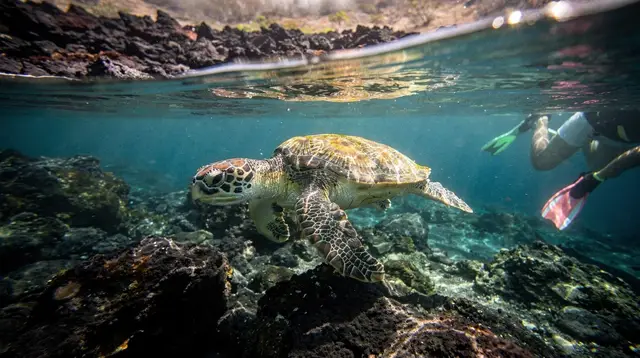
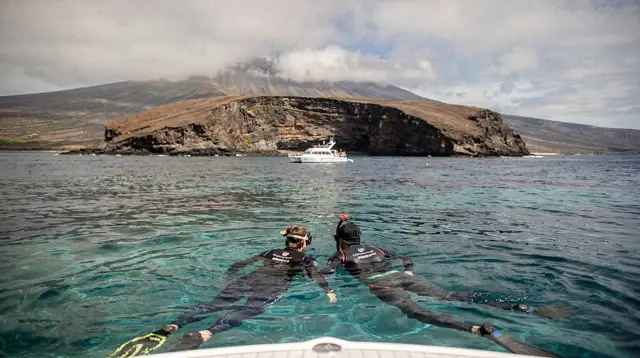
Teenagers who are comfortable swimmers can usually handle open-water snorkeling from a boat, which gives them a level of freedom that a shore snorkel with younger siblings doesn’t. Molokini crater trips and Turtle Town outings, departing from Maalaea, Kihei or Lahaina, put snorkelers in open water with a crew nearby rather than wading in from sand. Sea turtles are common at Turtle Town, though never guaranteed, and federal rules require staying at least 3 meters (10 feet) away from them.
For families where the parents want a slower boat day while the teenager wants to be in the water most of the trip, a snorkel-focused departure rather than a general sightseeing cruise usually gives a better return. Kayaking and stand-up paddleboarding in South Maui or from a rental are other ways to put a teenager in charge of their own board rather than a passenger seat, and a kayak-and-snorkel combo out of Makena pairs paddling with time in the water in one outing. For something with more motor and speed, jet skiing and parasailing are the closer match to what a teenager pictures when they ask for “something fun on the water.”
Hiking and waterfalls: a full-body option that isn’t a beach day
Not every teenager wants another beach afternoon, and Maui’s trails give an alternative that still counts as an adventure. Iao Valley is short and accessible, useful as a half-day stop rather than a full outing. For something longer, Waihee Ridge and the Lahaina Pali Trail climb further and reward with wider views, and both suit a teenager looking for real elevation gain rather than a paved loop.
A full-day guided hike that includes lunch is a practical way to cover more ground than a family could plan alone, with a guide who knows current trail conditions — useful given how fast Maui’s weather and trail surfaces can change after rain. For a shorter but photogenic outing, a hike to a lesser-known waterfall with photos included gives a payoff without an entire day’s commitment; hidden waterfalls near Haiku covers similar ground for families planning it independently.
A caution worth repeating for this age group specifically: Maui’s valleys are prone to sudden, heavy rain far upslope from where hikers are standing, which can turn a calm stream into a flash flood with little warning at the trailhead. Staying on marked trails and turning back at rising water matters more here than the trail description usually conveys, and it’s a rule worth setting with teenagers before they’re out of sight ahead of the group.
Biking downhill from Upcountry
The bike descents that start on the slopes of Haleakala are one of the more popular teenager-friendly adventure activities on the island. Since 2007, commercial operators haven’t run rides from the summit itself; most descents begin lower, around 1,900 meters, and follow paved roads down through Upcountry ranchland rather than off-road trails. A sunrise tour with hotel pick-up included combines the summit visit with the down-mountain scenery in one early start, and the Haleakala sunrise bike tour guide covers what that specific combination involves. For a version that skips the pre-dawn wake-up, the Haleakala bike tour without sunrise runs later in the day at a similar pace.
Safety briefings before these rides are not a formality — braking on a paved mountain road at speed is different from a flat bike path, and downhill bike tour safety tips is worth a read before booking, particularly for a teenager without much cycling experience. A zipline through the Upcountry forest canopy is a shorter alternative on the same side of the island for a family that wants the adrenaline without committing to a half-day bike route.
The Road to Hana as a teenager activity, not a scenic drive
The Road to Hana deserves its own section here because it works differently for teenagers than for younger kids. It is not a quick scenic loop — closer to 100 km of narrow, winding road with over 600 curves and dozens of one-lane bridges, and covering it properly with stops takes the full day, not a couple of hours. For teenagers, the stops along the way are the actual draw: swimming holes, short waterfall hikes, and black-sand beaches break up the driving in a way that keeps the day active rather than passive.
A guided Road to Hana tour that includes lunch removes the driving and the stress of one-lane bridges, letting everyone actually look at the scenery, and pairs well with the planning in one-day Road to Hana itinerary. For a family that wants more flexibility on timing and stops, a private Road to Hana tour with meals included gives control over the pace without putting a teenager behind the wheel on unfamiliar roads. The Pipiwai Trail to Waimoku Falls, near the end of the drive in the Kipahulu district, is roughly 6 km round trip through bamboo forest and is one of the better hikes on the whole route for a teenager with energy left after the drive — though it, like the pools nearby, closes to swimming after heavy rain due to flash flood risk, so it’s worth checking conditions rather than promising a swim.
The more intense options — and why this page stays general on them
Maui does have activities pitched at a higher intensity level than the ones above: longer backcountry routes, bigger open-water crossings, and adventure sports that go further than a standard beginner lesson or half-day tour. These exist on the island and are worth knowing about for an older or more experienced teenager, but they vary enough in requirements, conditions and provider that this page won’t specify age minimums, difficulty ratings or prices for them — that detail belongs with the specific operator at the time of booking, not in a general activity guide. If a teenager in the group already has real ocean, cycling or hiking experience, it’s worth asking a local operator directly what the next level up looks like rather than assuming the beginner version is the ceiling.
A custom, higher-intensity full-day tour with meals included is one way families with more capable teenagers structure a day that goes beyond the standard sightseeing pace, built around the group’s actual fitness and experience rather than a fixed itinerary.
Whale watching and sailing as a lower-key day
Not every day needs to be high-energy, and a sailing trip gives a middle option between a beach day and a hike. During whale season, from December through April with a peak in January through March, boats in the Auau Channel between Maui, Lanai and Molokai regularly spot humpback whales, though nothing is ever guaranteed and boats must keep a legally required distance. A whale-watching sail that includes lunch works as a day that still feels like an outing without demanding the physical effort of surfing or hiking, which can be a useful rest day dropped into a more active week.
Outside whale season, the same boats typically run sunset sails or general coastal cruises instead — sunset catamaran cruises from Lahaina covers that version of the outing.
A few things to book ahead, not decide on arrival
Three reservations on Maui fill up and cannot be arranged last-minute, and they matter as much for a teenager-focused trip as any other: the Haleakala sunrise entry (booked on recreation.gov up to 60 days out), Waianapanapa State Park’s black-sand beach (a timed online reservation for non-residents), and Iao Valley (a timed slot and parking reservation). None of these can be added to the plan the morning of.
One more practical note specific to this age group: Maui County bans the sale, distribution and use of sunscreens containing oxybenzone, octinoxate or octocrylene, so only mineral, zinc-based sunscreen is allowed on the water. Teenagers spending full days surfing, snorkeling or hiking go through sunscreen fast, so it’s worth packing enough mineral sunscreen for the whole trip rather than assuming it’s easy to restock everywhere.
Sample two-day pairing for a family with teenagers
| Day | Morning | Afternoon |
|---|---|---|
| Day 1 | Surf lesson in Lahaina or Kihei | Snorkel boat to Molokini or Turtle Town |
| Day 2 | Haleakala sunrise and downhill bike | Rest or short trail near the hotel |
This isn’t a fixed template — a family that prefers hiking to surfing can swap freely — but it illustrates the balance that tends to work: one high-energy water activity, one high-energy land activity, and enough gap between them for teenagers to actually recover rather than burning out by day three.
Maui with teenagers: frequently asked questions
Is Maui a good destination for a family trip with teenagers?
Yes. The mix of beaches, surf breaks, trails and a full-day road trip gives teenagers enough variety and physical activity that they rarely feel stuck on a resort itinerary built for younger children.
Do teenagers need a guided tour, or can they do things independently?
It depends on the activity. Surfing, snorkeling from a beach, and short trails can be arranged with more independence for older teens, while Haleakala’s sunrise, the Road to Hana, and anything on the water benefit from a booked tour that handles logistics, timing and safety.
Can teenagers do the Road to Hana in a day?
Yes, and it’s one of the better teenager activities on Maui, but it is a full day on a narrow, winding road, not a quick morning drive. A guided van tour removes the driving and the parking headaches at each stop.
Is Haleakala sunrise worth it with teenagers?
Many teenagers enjoy it, but it means a very early wake-up, near-freezing temperatures at the summit, and a mandatory reservation booked well in advance. It suits a teen who can handle an early start more than one who wants to sleep in.
Are there more extreme activities for teenagers on Maui?
Yes, the island has more intense options for older or more adventurous teens, including backcountry terrain, longer open-water outings and downhill routes. These are worth researching individually rather than booking on a whim, since they demand more preparation than a standard beach day.
What should teenagers avoid on Maui?
Hookipa Beach is a surf and wind-sports spot for experienced riders, not a place to learn; Jaws (Peahi) is watched from the cliff, never entered; and swimming with spinner dolphins is against federal rules, so it isn’t offered as an activity regardless of age.
Do teenagers need their own gear for surfing or snorkeling?
No. Surf lessons and snorkel trips typically include boards, wetsuits or rash guards, and snorkel gear. Renting gear separately only makes sense for a family staying long enough to use a beach repeatedly on their own.
Family-friendly activities on GetYourGuide
Verified deep-linked GetYourGuide tours. Book through these links and we earn a small commission at no cost to you.
GetYourGuide does not provide a product photo for this activity — the image shows the meeting point, photographed by us.