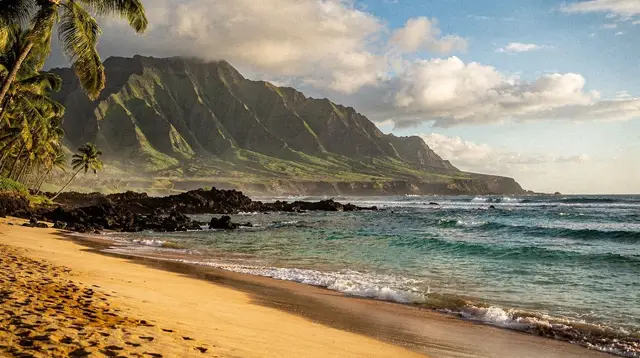
8 Days in Maui: A Slow-Travel Itinerary
Why space the days out instead of filling all eight
A common mistake on a first Maui trip is booking something different every single day: snorkeling one morning, a luau that night, sunrise at the summit the next dawn, then the full Road to Hana the day after that. It looks efficient on paper and leaves most visitors exhausted by day five, catching a cold at 3,055 m or falling asleep at the Hana lookouts. This itinerary does the opposite. It picks two home bases, Kihei and Lahaina, and schedules exactly three planned excursions across eight days: a Molokini snorkel trip, a Haleakala sunset visit, and one full Road to Hana day. Everything else is unstructured beach time, short walks and no alarm clock. It does not attempt to cover Kahului sightseeing, a second boat trip, or an overnight in Hana — those trade-offs are deliberate, not an oversight.
Day 1 – Arrival and settling into Kihei
Flights land at Kahului (OGG), the only airport on Maui with mainland and regular inter-island service. Pick up the rental car at the airport rather than later — cars book out fast in high season — and drive roughly 30 minutes south to Kihei. Kihei is the most affordable, least formal base on the island: condos rather than resorts, and a run of beach parks (Kamaole I, II and III) within walking distance of most lodging. There is no plan for the rest of the day beyond checking in, buying groceries, and watching the sunset from the sand. Reef-safe mineral sunscreen only — Maui County bans the sale, distribution and use of sunscreen containing oxybenzone, octinoxate or octocrylene, and rental condos rarely stock it.
Day 2 – A free day on the Kihei beaches
No tour, no drive further than the next beach park. This is the first of several intentionally empty days, and it matters more after a long travel day than it looks. Rotate between Kamaole I, II and III, all with public access, restrooms and reasonably calm water for South Maui. Anyone still adjusting to the five- or six-hour time difference will find the early Hawaii mornings work in their favor here — sunrise walks on an empty beach, then a slow afternoon.
Day 3 – Molokini snorkel tour
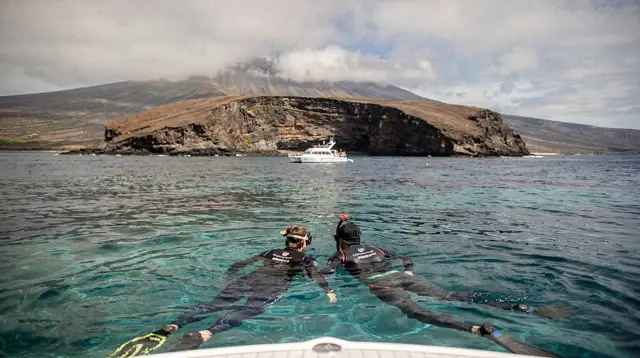
The first planned excursion, and the one that rewards an early start: visibility at Molokini is consistently better in the morning, before the trade winds pick up in the channel. Boats leave most often from Maalaea, the closest departure point to the crescent, roughly 20 minutes by water. Nobody steps ashore on Molokini itself — it’s a state marine reserve, and the snorkeling happens from the boat.
a 2-hour Molokini snorkel trip departing MaalaeaTake motion sickness medication before boarding, not after symptoms start — the channel crossing is often the choppiest part of the morning. Back on land by early afternoon, the rest of the day is unplanned; most people are content to nap.
Day 4 – Free day, South Maui coastline
Another day with nothing booked. This is a good day to drive the short stretch south from Kihei toward Wailea and Makena without any timed activity attached. Walk part of the Wailea coastal path, or park near Big Beach (Oneloa) — a genuinely striking stretch of sand, but one with a shorebreak strong enough to injure people every year, so it’s a walking and photography stop more than a swimming one for anyone with kids. Snorkelers can try the shore entry at Turtle Town’s northern edge without a boat.
Travelers visiting between December and April can swap this free afternoon for a shore-based alternative to the standard boat snorkel:
a humpback whale watching cruise from LahainaOutside whale season, skip it and keep the day open — the point of this block is recovery time before the move west.
Day 5 – Drive to Haleakala and Upcountry for a sunset visit
This is the second planned excursion, and it’s kept fully isolated from the day before and the day after — no beach outing beforehand, no early departure the next morning. The drive from Kihei up the Haleakala Highway takes close to two hours with stops, climbing through Upcountry pastureland, lavender and goat farms near Kula. This plan uses the sunset visit rather than sunrise: sunset needs only the park entrance pass, good for three days, with none of the recreation.gov reservation required for the pre-dawn slot.
a guided Haleakala sunset tour with snacks and photo stopsPack real layers — temperatures near the 3,055 m summit sit close to freezing at dusk, with wind, regardless of how warm the coast felt that morning. The volcano is dormant, not extinct, and what looks like a crater from photos is actually an erosion valley cut by two rivers. Drive back down after dark; there’s nothing else scheduled for the evening.
Day 6 – Move to Lahaina and Kaanapali, easy afternoon
Check out of Kihei and drive to Lahaina or Kaanapali, roughly 45 minutes depending on traffic through Maalaea. Lahaina is still rebuilding after the August 2023 fire; Front Street is not the browsable strip it once was, and the historic banyan tree survived but access around it remains limited. The harbor itself is open and running boats. For today’s plan, the destination is simply the beach: Kaanapali’s 5 km stretch and its oceanfront Beach Walk, with Black Rock at the north end for shore snorkeling — no boat required. Settle into the new base and treat the rest of the day as unplanned.
Day 7 – Light day in West Maui, sunset on the water
Still no big excursion. Spend the morning around Kaanapali or drive the short distance to Napili and Kapalua for a quieter, more sheltered bay — good for anyone snorkeling with kids. In the evening, a sunset sail out of the Lahaina harbor is a low-effort way to close out the West Maui stretch without an early alarm; details on picking one are in the Lahaina sunset cruise guide. This is the last easy day before the final planned excursion, kept deliberately light rather than filled with another activity.
Day 8 – Road to Hana, the one full day
The last of the three planned excursions, and the most demanding: roughly 100 km of the Hana Highway from Paia to Hana, about 620 curves and 59 one-lane bridges, best treated as a full day rather than a quick loop. There is no gas station between Paia and Hana, so fill up before leaving. Two stops need advance planning, not spontaneity: Waianapanapa State Park’s black sand beach requires an online reservation with a timed entry slot for non-residents, and the Kipahulu pools near Hana close to swimming after rain without warning.
a guided Road to Hana tour that includes lunchA guided van removes the driving, the one-lane-bridge etiquette and the parking search at each stop, which is worth considering on a trip built around not spending the day stressed behind the wheel. Whichever way it’s done, this is the one day of the eight with a real schedule — start early, and don’t try to add anything else to it. It’s also a natural day to double as the drive back toward Kahului for a departure the following morning, since Hana sits roughly 2.5 hours from Paia and considerably farther from the airport.
Adjusting the pace further
| If you have… | Change this itinerary by |
|---|---|
| 6 days instead of 8 | Drop Day 2 or Day 4 (one of the free Kihei days); keep all three excursions on separate days |
| A tighter budget | Skip the Haleakala tour add-on and self-drive instead — see self-drive vs. guided Haleakala |
| No rental car for part of the trip | Book West Maui lodging with a shuttle and treat Days 6–7 as walkable; Haleakala and Hana still require a car |
| Whale season (Dec–Apr) | Swap Day 4’s beach walk for the whale watching cruise above |
For a version of this trip that adds a fourth planned day and covers more of the island, see the seven-day complete Maui itinerary; for one built specifically around avoiding a rental car, see three days in Maui without a car.
FAQ: planning an eight-day slow Maui itinerary
Is eight days enough to see Maui without rushing?
Yes, if the plan accepts leaving some areas out. Eight days at a slow pace covers two bases, one boat trip, one Haleakala evening and one Road to Hana day, with rest days between them rather than a tour scheduled every morning.
Should the Haleakala visit and the Road to Hana day be on the same trip segment?
No. Both are physically tiring and weather-dependent, so this itinerary keeps at least one rest day between them rather than stacking them back to back.
Do we need to book the Haleakala sunrise slot for this itinerary?
No. This plan uses the Haleakala sunset visit instead, which needs only the park entrance fee and no recreation.gov reservation, which suits a slower, less alarm-driven schedule.
Can this itinerary be done without a rental car?
Not really. Reaching Upcountry, the Haleakala summit and the Hana Highway requires a car; the Maui Bus does not serve any of the three.
Where should we stay for eight slow days?
This plan uses two bases: Kihei for the first block in South Maui, then Lahaina or Kaanapali for the second block in West Maui, which shortens the drive to both Haleakala and the start of the Hana Highway.
What does this itinerary skip on purpose?
It leaves out a second boat trip, Central Maui sightseeing beyond the airport transfer, and an overnight stay in Hana, trading full island coverage for fewer transitions and more unplanned time.
What should we pack differently for a slow-travel trip like this?
Nothing unusual for Maui itself, but pack real layers for the Haleakala evening (temperatures near freezing at altitude) and mineral sunscreen only, since Maui County bans reef-harming chemical sunscreens outright, not just their sale.
Is it worth adding a fourth planned excursion if we feel restless on a free day?
If it happens, a whale watching cruise in season is the lowest-effort add since it needs no driving beyond Lahaina harbor — but adding a second land excursion on what was meant to be a rest day undermines the reason for building in the free days in the first place.
tours.8 days
Verified deep-linked GetYourGuide tours. Book through these links and we earn a small commission at no cost to you.
GetYourGuide does not provide a product photo for this activity — the image shows the meeting point, photographed by us.