Wheelchair-Accessible Beaches on Maui
Which Maui beaches are wheelchair-accessible?
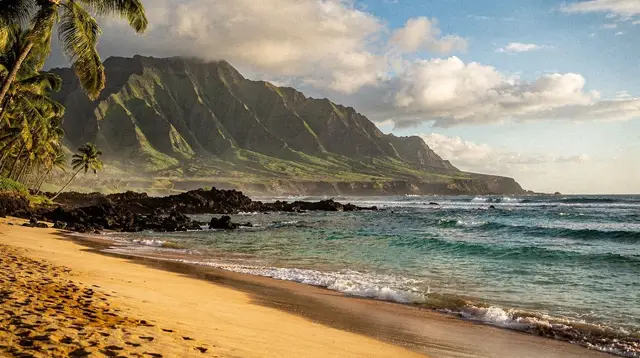
Kamaole III and Kalama Park in Kihei, the Wailea coastal path beaches (Ulua, Mokapu, Wailea Beach), and Kaanapali Beach via the paved Beach Walk offer the most realistic wheelchair access, with paved paths and firmer sand near the entry points. Big Beach in Makena is not a good fit: its shorebreak is dangerous and its sand is soft and steep.
What “accessible” actually means on a Maui beach
Every beach in Hawaii is public up to the high-water mark, by law, no exceptions. That includes the sand directly in front of the Grand Wailea, the Andaz, the Sheraton Kaanapali, and every other resort along Wailea and Kaanapali. Hotels are required to maintain a public access path to the shoreline, and you do not need to be a guest, buy anything, or check in with anyone to use it. That is the good news, and it is worth stating plainly because a lot of visitors assume a manicured resort beach is private property. It is not.
The harder truth is that “public” and “accessible” are two different things. A beach can be fully open to everyone and still be nearly impossible to cross in a wheelchair, because the obstacle is not a fence or a security guard, it is the sand itself. Dry, loose sand swallows wheels, manual or powered. What actually determines whether a beach works is the combination of three things: how far you have to travel from a car to the water, what the surface is like along that route (pavement, packed sand, boardwalk, or loose sand), and how the sand behaves near the waterline once you get there. This page goes through Maui’s beaches with those three questions in mind, region by region, and says plainly where the access is real and where it is not.
Kihei: the most consistently workable stretch
Kihei is Maui’s flattest, most built-up beach corridor, and that works in its favor here. The string of county beach parks known as Kamaole I, II, and III sit right along South Kihei Road with paved parking lots directly across from the sand, which shortens the distance between a car and the beach more than almost anywhere else on the island.
Kamaole III is the strongest single option in Kihei. It has a large paved parking area, restrooms, and a grass lawn that runs close to the sand before the surface turns loose. The stretch of sand itself is still sand, soft in the dry upper section and firmer where it is wet near the water, so the last stretch to the shoreline is the same challenge every Maui beach presents. But the distance covered in soft sand here is shorter than at most other parks, and the flat grass buffer means you are not crossing a long soft approach just to reach the point where the sand starts.
Kalama Park, just south of the Kamaole parks, has a paved beachfront path and a boardwalk-style walkway along part of its length, which gets a wheelchair closer to the water on pavement than almost any other spot on Maui. It is a park more than a swimming beach, with a skate park and ballfields alongside the shoreline strip, but for someone who wants ocean views, a paved route, and calm water nearby without committing to a sand crossing, it is worth building a stop around.
Kihei’s water is also the calmest on the island most days, since the whole south-facing coast sits in the lee of Haleakala. That matters for anyone planning to get into the water, not just onto the sand: fewer waves means an easier, safer transfer at the shoreline.
Wailea: paved path, resort-grade facilities
Wailea’s coastal path is a 2.5-kilometer paved walkway that runs behind the resort beaches, and it is the single best piece of accessible infrastructure on any Maui beach corridor. It is flat, wide, shaded in sections, and connects several beach accesses without ever leaving pavement.
Wailea Beach, in front of the Grand Wailea and the Four Seasons, has a public access point with paved parking and restrooms, and the walk from the lot to the point where sand begins is short. Ulua Beach and Mokapu Beach, a short distance up the path, share a public access point with a paved lot and are popular precisely because the entry is straightforward and the water is usually calm and clear, which is also why they are two of the better snorkeling beaches on this stretch.
The pattern across all three is the same as in Kihei: the path and parking are genuinely accessible, and the final few meters from firm ground to the water are sand, and therefore still a real obstacle. What makes Wailea worth the trip regardless is that the distance you have to cover in that soft sand is short, the facilities are well maintained, and if the sand proves too much on a given day, the paved path itself is a legitimate beach outing on its own, with ocean views the entire way.
Makena, immediately south of Wailea, is a different story. Big Beach (Oneloa) gets photographed constantly and shows up on every “best beaches” list, but its sand is deep, soft, and steep, and its shorebreak is powerful enough to injure swimmers, including able-bodied ones, every year. This is not a beach to recommend for wheelchair access, and it is not a beach to recommend at all for anyone unsteady on their feet near the water. If a itinerary or a well-meaning local pushes it, that shorebreak warning is worth passing on before the sand-access issue even comes up.
Kaanapali: the Beach Walk does the heavy lifting
Kaanapali’s five-kilometer beach is backed for most of its length by the Beach Walk, a paved pedestrian path connecting the resorts from one end to the other. Like Wailea’s coastal path, this is genuinely accessible infrastructure: flat, paved, and lined with public access points between the hotels, each one required by law even though the hotels themselves are private.
The practical approach here is to use the Beach Walk as the accessible spine and treat the sand crossing at each access point as a separate, shorter decision. Some access points have a gentler, shorter run to the water than others, and hotel staff at the public accesses are generally used to helping visitors locate the best one nearby, even if you are not a guest. Black Rock, at the north end of the beach near the Sheraton, is Kaanapali’s best snorkeling spot, but it sits on a section with more exposed lava rock and a narrower sand shelf, which makes it a harder entry point than the flatter, wider sand further south along the same beach.
Parking is the other factor to plan around at Kaanapali: hotel lots charge, often a substantial daily rate, and the free public beach access parking is limited and fills early. Arriving before mid-morning matters here more than the sand itself does.
Napili Bay and Kapalua Bay, north of Kaanapali proper, are smaller and more sheltered, with calmer water most of the year, but they lack the paved path infrastructure that makes Kaanapali and Wailea workable. Both have a steeper, shorter beach with less flat approach, so they are a harder recommendation for wheelchair access even though they are excellent, calm swimming spots for everyone else.
Central Maui and the rest of the island
Kahului and Maalaea are functional hubs, not beach destinations. Kahului’s shoreline near the harbor is not set up for beach access at all, and Maalaea’s small harbor beach sits next to a working boat harbor rather than a resort-style stretch of sand. Neither is worth building a beach day around, though Maalaea is the departure point for boats out to Molokini and Turtle Town for anyone planning a day on the water rather than a day on the sand.
Upcountry and the Hana coast have no comparable beach access at all. The Haleakala region is entirely mountain slope, and the beaches along the Hana Highway, including the black-sand beach at Waianapanapa, sit below steep, often uneven paths through lava rock and forest, with no paved approach and no realistic wheelchair access. If the itinerary includes a Hana-direction day, treat it as a scenic and cultural stop rather than a beach stop, and consider a guided option that removes the driving and lets a passenger focus on the views rather than the logistics.
a private van tour that covers the highlights of the Hana Highway without requiring anyone to drive or manage parking along the wayGetting into the water once you reach the sand
Reaching the shoreline is only half the question. The water entry itself is easier at some of these beaches than others. Kihei and Wailea both benefit from being on Maui’s leeward, south-facing coast, where the water is calmer on most days than the surf-exposed north and west shores. Kaanapali is generally calm as well, aside from occasional winter swell at its northern end near Black Rock.
For a low-effort way to experience Maui’s marine life without a beach entry at all, the Maui Ocean Center in Maalaea is a fully accessible, indoor-and-outdoor aquarium built around ramps and level walkways, with no sand or surf involved.
a self-guided visit to Maui’s aquarium, walking level ramps past reef tanks and a shark tunnel instead of crossing sandFor a beach day that still gets someone on the water without a long sand crossing, a paddleboard put in from a short, firm stretch of sand near Kihei or Wailea is worth considering with an experienced helper.
a paddleboard rental picked up near South Maui’s calmer beaches for a short, assisted time on the waterAnd for a full day that samples the accessible side of West Maui, including Kaanapali’s Beach Walk and nearby stops, without self-driving between them, a guided highlight tour covers the ground with someone else doing the navigating.
a guided day covering West Maui’s coastal towns and viewpoints without the need to plan each stop and parking spot yourselfPractical checklist before you go
| Beach | Access route | Parking | Sand at waterline |
|---|---|---|---|
| Kamaole III (Kihei) | Paved lot, grass buffer | Free, paved, fills on weekends | Short soft stretch, firms up near water |
| Kalama Park (Kihei) | Paved beachfront path | Free, paved | Boardwalk section, then sand |
| Wailea Beach / Ulua / Mokapu | 2.5 km paved coastal path | Free public lots, limited spots | Short soft stretch |
| Kaanapali Beach (via Beach Walk) | Paved promenade behind hotels | Hotel lots charge; free public spots limited | Varies by access point |
| Big Beach (Makena) | Sand only, no paved approach | Free lot, unpaved surface | Deep, steep sand; dangerous shorebreak |
| Waianapanapa (Hana) | Lava-rock path, uneven steps | Reservation required, unpaved | Not accessible |
A few things are worth confirming before building a day around any of these:
- Call ahead about beach wheelchairs. A few county parks keep an all-terrain loaner chair with balloon tires on hand, but it is never guaranteed and availability changes without notice.
- Go early. Accessible parking stalls at the busiest beach parks, including Kamaole III and the Wailea public lots, fill by mid-morning.
- Expect resort parking fees. Kaanapali and Wailea hotel lots charge per hour or per day even in accessible stalls; the free public access lots are smaller and less predictable.
- Bring your own reef-safe sunscreen. Maui County goes further than state law: ordinance 5306, in effect since October 1, 2022, bans the sale, distribution, and use of sunscreens containing oxybenzone, octinoxate, or octocrylene (with no exception for sunscreen brought from the mainland unless you have a medical prescription); only mineral, zinc- or titanium-based sunscreen is allowed, and it needs to come with you rather than be bought locally.
- Pair a beach stop with a flatter activity. If the sand proves harder than expected on a given day, the paved paths at Wailea and Kaanapali are worthwhile on their own, and the Maui Ocean Center is a reliable backup that involves no sand at all.
For accessible attractions and tours beyond the beach itself, including which operators can accommodate mobility devices, see the companion guide to accessible tours and attractions on Maui. For families weighing the same beaches from a different angle, family-friendly snorkel tours and the comparison of Kaanapali versus Wailea cover overlapping ground. Anyone still deciding where to base a trip can also read where to stay for a first Maui visit and do you need a rental car in Maui, since a car remains close to essential for reaching any of these beaches at a workable hour. Broader planning questions are covered in the best time to visit Maui and what to pack for Maui.
FAQ: wheelchair access on Maui’s beaches
Is Big Beach in Makena wheelchair accessible?
No. Big Beach (Oneloa) has deep, soft sand and a shorebreak that injures people every year, including able-bodied swimmers. It is not a realistic option for wheelchair users and this guide does not recommend it for that purpose.
Can I get onto the sand at a Wailea resort beach without staying there?
Yes. Every beach in Hawaii is public up to the high-water mark, including the beaches fronting Wailea and Kaanapali resorts, which are legally required to provide public beach access. You do not need to be a hotel guest to reach the sand.
Do any Maui beach parks lend beach wheelchairs?
Some county beach parks keep an all-terrain beach wheelchair with balloon tires available on request, but supply is limited, availability changes, and it is never guaranteed. Call the specific park or Maui County Parks and Recreation ahead of your visit to confirm rather than planning around it.
Which Maui beach has the smoothest path from parking to the water?
The paved segment of the Wailea coastal path next to Ulua and Mokapu beaches, and the paved Kaanapali Beach Walk behind Kaanapali Beach, get a wheelchair closest to the waterline before the surface turns to loose sand.
Are Maui’s beach parking lots accessible?
Designated accessible parking stalls exist at the larger county and state beach parks, such as Kamaole III and Wailea Beach Park, but they are limited in number and fill early on weekends and holidays. Hotel beach access lots at Kaanapali and Wailea charge for parking even in accessible stalls.
Is the sand itself a problem for wheelchairs on Maui?
Yes, this is the main obstacle. Loose, dry sand is very difficult for any wheelchair to cross, and Maui’s beaches vary widely in how far that soft stretch extends before reaching firmer, wetter sand near the water.
What should I bring for an accessible beach day on Maui?
Mineral sunscreen only, since Maui County bans oxybenzone, octinoxate, and octocrylene sunscreens for sale and use; a wide-brimmed hat; drinking water, since not every beach park has facilities nearby; and a plan for an early arrival, since accessible parking fills quickly at the most workable beaches.
Is there a way to enjoy Maui’s marine life without a beach entry at all?
Yes. The Maui Ocean Center in Maalaea is built around level ramps and walkways rather than sand, with reef tanks, a shark tunnel, and outdoor viewing areas that do not require any beach crossing.
Accessible Maui tours on GetYourGuide
Verified deep-linked GetYourGuide tours. Book through these links and we earn a small commission at no cost to you.
GetYourGuide does not provide a product photo for this activity — the image shows the meeting point, photographed by us.