Accessible Tours and Attractions in Maui
What Maui tours and attractions work well for travelers with mobility limitations?
Boat-based tours (whale watching, sunset cruises), the Maui Ocean Center, paved or vehicle-based experiences, and any activity where you can confirm the vehicle type and terrain in advance tend to work best. Popularity alone does not mean accessible — always check the actual boarding method, seating, and ground surface before booking.
Maui does not have one accessibility standard that every tour operator follows. A “family-friendly” activity and an “accessible” one are not the same claim, and a listing’s popularity says nothing about whether the boat you board has a step, a ladder, or a level gangway. This guide is about tours and attractions — organized activities you book in advance — not about the sand and shoreline access covered in wheelchair-accessible beaches on Maui. If a plan involves a beach itself, that page is the better starting point.
What “accessible” actually means for a booked activity
Before judging any tour by its name or its marketing photos, three separate questions decide whether it will actually work:
The vehicle or vessel. A van with a side door and a low step is a different proposition from a 15-passenger shuttle boarded by a steep stair. A catamaran with a boarding ramp at the dock is different from a smaller boat boarded from a floating dock or, worse, waded to from the beach. Ask the operator which specific vehicle or vessel is used for the time slot being booked — not the category of tour in general, since some operators run mixed fleets.
The terrain at the destination. Paved paths, packed sand, loose sand, gravel, and lava rock all demand different things from a wheelchair, a walker, or a person managing limited stamina or balance. A stop billed as a “short walk to a viewpoint” can mean forty feet of level sidewalk or four hundred feet of uneven lava rock — the tour description rarely says which.
The schedule. A packed circle-island itinerary with fifteen-minute stops assumes everyone moves at the same pace. A private tour, even at a higher price, buys the flexibility to take stops slower or skip one that turns out to be difficult.
None of these three questions get answered by star ratings or by how frequently a tour is booked. They get answered by a phone call or a direct message to the operator before paying.
Attractions with generally dependable access
A short list of Maui attractions built around level, paved circulation, independent of which tour company sells the ticket:
| Attraction | Why it tends to work | What to verify anyway |
|---|---|---|
| Maui Ocean Center (Maalaea) | Indoor-outdoor aquarium with paved, level walkways designed for general foot traffic | Wheelchair/scooter rental availability on the day |
| Sunset catamaran cruises departing Lahaina or Maalaea | Larger catamarans often have a level boarding ramp and open deck space | The specific vessel’s boarding method and deck layout |
| Whale watching tours (winter season) | Similar vessel types to sunset cruises, often with covered and open seating | Whether restrooms are onboard, and boarding tide/dock conditions |
| Farm and food tours with vehicle-based transport | Movement between stops happens by van, minimizing walking | Terrain at each individual stop, which can still vary |
The Maui Ocean Center entry ticket, for an aquarium visit with paved, indoor-outdoor pathways built for everyday foot traffic, is one of the more predictable bookings on the island for exactly this reason: it was built as a public attraction, not adapted after the fact.
For time on the water, a small-group whale watching trip in the Auau Channel (winter season only, see whale season on Maui) and a sunset cruise out of West Maui both run on larger vessels — but confirm the specific boat’s boarding setup with the operator, since fleets vary.
Attractions and activities to think twice about
Some of Maui’s best-known draws work against mobility limitations by their basic design, not because of any operator’s fault:
- The Haleakala summit and its hiking trails. The visitor areas near the summit sit above 3,000 meters, where cold, wind, and thin air are physically demanding even for travelers without mobility limitations. See what to wear at the Haleakala summit for the conditions, and Haleakala parking and access for what the paved overlooks versus the trailheads actually involve.
- The Pipiwai Trail and other waterfall hikes near Hana. Uneven, often muddy ground over a six-kilometer round trip rules these out for most mobility-limited travelers; they belong to a different part of this site’s coverage, not this page.
- Ridge and coastal hiking trails such as Waihee Ridge or the Lahaina Pali Trail — steep, uneven, and not designed for anyone needing level footing.
- Snorkeling tours that require entering the water from a boat ladder, including most Molokini and Turtle Town trips. The swim itself, and the ladder entry and exit, are the limiting factor, independent of the boat’s deck accessibility.
- Ziplines and downhill bike tours, which typically require an ability to walk to a launch point and physically manage the equipment.
None of this means Maui is closed off — it means these specific categories are worth skipping in favor of activities matched to the terrain and vehicle involved, rather than to the itinerary’s popularity.
Helicopter tours: read the boarding process, not the brochure
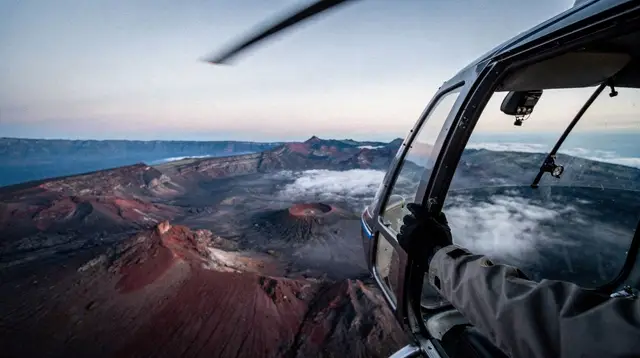
Helicopter flights over the West Maui Mountains or the Haleakala crater (see what a Maui helicopter tour is actually like, the West Maui Mountains flight, and the Haleakala crater flight) reach terrain that no road or trail gets close to — but the aircraft itself is the limiting factor, not the scenery. Most tourist helicopters on Maui seat passengers in a fixed configuration with a step up from the tarmac into the cabin, and there is rarely room for a wheelchair to be brought aboard, folded or otherwise. Doors-off versus doors-on changes the view and the wind noise, not the boarding process — do not assume one option is easier to board than the other. Ask the operator directly whether a seat transfer is possible from a wheelchair, how high the step into the cabin is, and whether the flight requires walking any distance across the tarmac between the check-in building and the aircraft.
Luaus and evening shows
A luau is usually one of the more accommodating evening activities for a mobility-limited traveler, since seating is arranged in advance and the venue is built for large groups moving at their own pace rather than a fixed hiking pace. Old Lahaina Luau and the venues covered in the best luau in Kaanapali both seat guests at tables on relatively level ground, though the specific seating area (ground-level cushions versus table seating) is usually a request made when booking, not something assigned automatically. Luau versus dinner show is worth reading if a full luau’s outdoor, grass-lawn setting feels like more walking than a plan calls for — an indoor dinner show trades some atmosphere for more predictable, level flooring.
Whichever format is chosen, what to wear to a luau covers footwear that holds up on grass or sand, which matters more for a mobility-limited guest than for anyone else in the group.
Shore-based alternatives to boat-based activities
Several of Maui’s signature marine experiences have a shore-based version that removes the boat-boarding question entirely. Watching whales from shore during the winter season (see whale season on Maui) needs nothing more than a level viewpoint and, ideally, binoculars — no boarding, no swell, no boat ladder. Turtle Town snorkeling from shore is a similarly land-based alternative to the boat trips out to the same reef, though it still requires wading into open water rather than off a boat deck, so it suits a different set of limitations than a boat trip does. Neither substitute delivers exactly the same experience as the boat-based version, but both remove the one obstacle — boarding — that rules out the boat trips for many travelers.
Getting between activities
Since the Maui Bus does not reach the Haleakala summit or the Hana Highway (see Maui Bus public transportation), most multi-stop days depend on either a rental car or a private/shared transfer. A rental car gives full control over pacing but requires being able to get in and out of the vehicle and to walk from parking areas to attractions unassisted or with a companion’s help. A private or shared airport transfer or a private tour shifts that responsibility to a driver who can be briefed in advance on specific needs.
For a full day that touches the west side without the logistics of a self-driven itinerary, the West Side highlights tour covering Lahaina and the Kaanapali coast runs by van, which keeps walking segments shorter and more predictable than a self-guided day would. For the Hana side of the island, a private van tour partway along the Hana Highway allows the operator to skip stops that turn out to have difficult footing, something a fixed-departure group tour generally cannot do. See guided tour versus self-drive for how that trade-off plays out beyond accessibility specifically.
Booking questions worth writing down
A short, direct message to any tour operator answers more than a browse through reviews:
- What vehicle or vessel will be used on this specific date and time?
- Does boarding involve steps, a ladder, or a ramp?
- What is the ground surface at each stop — paved, sand, gravel, or lava rock?
- How long is the longest walking segment, and is there somewhere to sit and wait?
- Is the schedule fixed, or can stops be shortened or skipped if needed?
- Are restrooms available onboard or at the stops?
Operators who run tours regularly for mixed groups usually answer these quickly and specifically. A vague or generic answer is itself useful information — it usually means the operator has not thought through the question either.
Airport arrival and rental logistics
Kahului Airport (OGG) is the arrival point for nearly every visitor (see renting a car at OGG), and the terminal-to-curb distances and rental car shuttle involve some walking regardless of how a traveler gets around the rest of the island. A private OGG transfer removes the rental car counter and shuttle from that first day, which is worth weighing against the flexibility a rental car provides for the rest of a stay. Where to stay in Maui for a first visit and West Maui versus South Maui both affect how much daily transfer distance a mobility-limited trip will actually involve, since Kaanapali and Wailea sit on opposite sides of the isthmus from the airport.
Weather, packing, and paperwork that affect a mobility-limited trip
Maui’s two seasons — a drier stretch from May to October and a wetter one from November to April, detailed in Maui weather by month — matter more for a mobility-limited traveler than for most, since wet pavement, muddy trailheads, and slicker boat decks all raise the stakes of a fall.
The Haleakala summit is the extreme case: at over 3,000 meters it can approach freezing at dawn year-round regardless of the season down at sea level, which is a separate planning question from mobility but compounds it — cold hands and stiff joints make any walking segment harder. Maui packing list is written for a general traveler, but the same logic applies with less margin for error: stable, closed-toe shoes for any tour that mentions uneven ground, and a jacket for the Haleakala summit even in summer. On paperwork, ESTA and Maui travel requirements are the same for every visitor regardless of mobility — there is no separate accessibility documentation that speeds up or changes entry requirements, so that step of planning does not need extra lead time on its own.
Accessible tours and attractions on Maui: frequently asked questions
Is Maui a good destination for travelers with limited mobility?
It can be, if activities are chosen carefully. Maui has no single accessibility standard across tour operators, so the vehicle, the boarding process, and the terrain at the destination vary a lot even within the same category of tour.
Are boat tours on Maui accessible for wheelchair users?
Some are, but boarding methods differ by vessel and by harbor conditions on the day. A catamaran with a gangway and level deck is a different experience from a smaller vessel boarded by ladder or from the water. Call the operator directly and ask about the specific boat, not the tour category.
Can someone with limited mobility do a Road to Hana tour?
A guided van tour removes the driving and parking, which are the two hardest parts for a mobility-limited traveler doing it independently, but most stops still involve some walking on uneven ground. Ask the operator which stops have paved or level access before booking.
Does the Maui Ocean Center work for wheelchairs?
Yes. It is an indoor-outdoor aquarium with paved, level pathways built for general public foot traffic, which makes it one of the more dependable accessible attractions on the island.
Are helicopter tours an option for travelers with mobility limitations?
It depends on the aircraft and the operator’s boarding process, which can involve a step up into a small cabin with fixed seating. Ask about cabin access and seat transfer specifically; do not assume it is the same as boarding a commercial plane.
What questions should I ask before booking any tour for accessibility?
Ask what vehicle or vessel is used, whether boarding requires steps or a ladder, what the ground surface is at each stop (paved, sand, lava rock, gravel), how long any walking segment is, and whether the schedule allows extra time. A tour description alone rarely answers these.
Is the Maui Bus a viable way to reach accessible attractions?
It covers routes between Kahului, Wailuku, Kihei, Lahaina, and Kaanapali, but it does not reach the Haleakala summit or the Hana Highway, and its accessibility features vary by vehicle. For most organized tours, a private or shared shuttle transfer is more predictable.
Accessible Maui tours on GetYourGuide
Verified deep-linked GetYourGuide tours. Book through these links and we earn a small commission at no cost to you.
GetYourGuide does not provide a product photo for this activity — the image shows the meeting point, photographed by us.