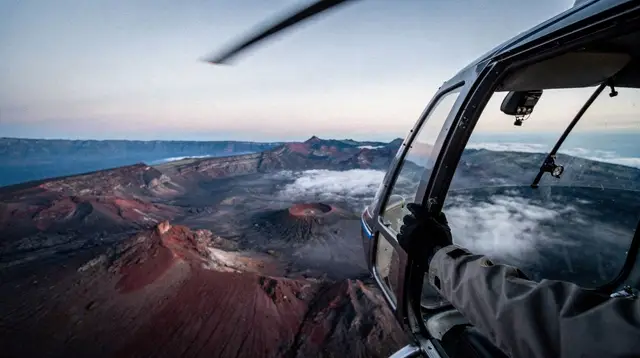
Maui Helicopter Tour: What to Expect
What should I expect on a Maui helicopter tour?
A Maui helicopter tour runs 45 to 75 minutes total, including a 30-minute check-in with weight verification and a safety briefing. Expect a headset-linked pilot narration, window or door seating assigned by weight, and a specific route booked separately, such as West Maui or Haleakala, rather than one flight covering the whole island.
Why a helicopter changes how you see the island
Most of Maui’s interior is invisible from the road. The Honoapiilani Highway hugs the coast, the Hana Highway threads through a narrow corridor of forest, and the road up to the Haleakala summit only shows one slice of the volcano at a time. A helicopter is the only way most visitors will see the sea cliffs of the northeast coast, the folds of the West Maui Mountains, or the crater floor from above — terrain with no trail, no road, and in several places no legal foot access at all.
That is the appeal, but it is also where first-time bookers get confused. “A Maui helicopter tour” is not one product. It is a category of flights, each covering a different piece of the island, sold as separate itineraries with separate prices and separate durations. This guide covers what happens before, during, and after any of those flights — check-in, safety, seating, the in-flight experience, and what to do if the weather does not cooperate. For what a specific route actually shows you, see the West Maui mountains flight or the Haleakala crater flight; for the doors-off-versus-doors-on decision, that comparison lives on its own dedicated page.
Some of what a helicopter shows you has changed in recent years. Lahaina, on the West Maui coast below the mountains many of these flights bank along, is still rebuilding after the 2023 wildfire, and an aerial pass over the town looks different from what older photos or brochures show — see how the town is rebuilding and how Maui tourism has adapted since for context before you fly.
The routes are sold separately — set your expectations here
Before going further, the single most common source of disappointment is worth stating plainly: booking “a helicopter tour” does not mean you will see everything. Operators split Maui’s air tours into distinct itineraries, and a 45-minute flight over the West Maui Mountains does not fly anywhere near the Haleakala crater, and vice versa. Some operators run longer combination flights that cover both regions, but that is a specific, usually pricier product, not the default.
A few of the itineraries you will find when comparing options:
| Route type | What it typically covers | Rough duration |
|---|---|---|
| West Maui Mountains | Coastal cliffs, waterfalls, and the interior valleys above Lahaina and Kaanapali | 45-50 min |
| Haleakala crater | The volcano’s summit, crater floor, and upcountry ranchland | 45-50 min |
| Hana / rainforest corridor | The windward coast, waterfalls, and forest along the Hana Highway corridor | 65-75 min |
| Multi-island | Maui plus a crossing to Molokai or a wider island-hopping route | 55 min and up |
If you already know which of these interests you, the dedicated pages for the West Maui and Haleakala routes go into what you will actually see. If you are still deciding, read on — the ground experience is nearly identical across all of them.
Booking: what operators need from you in advance
Every reputable operator asks for your weight when you book, not as a formality but because seat placement and the helicopter’s weight-and-balance calculation are done by total passenger load. Expect a field for weight (clothed, not gym-weight) on the booking form, and expect it to be checked again at the counter. Being significantly heavier than what you booked can mean a reseated flight, an added fee, or in rare cases a rebooking to a different departure — it is one of the few genuine surprises worth avoiding by being honest at booking.
Most flights depart from a small operations building at or near Kahului Airport (OGG), since that is where the tour operators’ hangars are based, rather than from the resort areas of West Maui or South Maui. Factor in drive time from Kaanapali or Wailea; it is closer to 30-45 minutes each way, on top of the tour itself. If you have not sorted out ground transport yet, renting a car at OGG, an OGG private transfer, and the comparison of rental car versus transfer from OGG all cover the drive to and from the operator’s base.
Bring a valid government-issued photo ID — this is treated similarly to a domestic flight check-in. Arrive early: most operators ask for 30 minutes before departure for check-in, weighing, and the safety briefing, and a late arrival can mean forfeiting the seat.
Where you are staying also shapes how easy this errand is: West Maui and Wailea both add a longer round trip than staying near Kahului itself. If you have not settled on a base yet, the Kaanapali versus Wailea comparison and where to stay in Maui for a first visit both factor in drive times like this one.
Check-in and the safety briefing
At the counter, staff verify your reservation, confirm weight, and issue a boarding assignment. You will then watch a short safety video or receive a live briefing covering seatbelt use, emergency procedures, and how the doors and windows operate — standard practice under the FAA’s Part 135 rules that govern commercial air tour operators in Hawaii.
Seating is assigned based on total passenger weight distribution, not on a first-come basis, so do not expect to request a specific side of the aircraft with certainty, though staff will try to accommodate a stated preference (window versus middle) when the weight math allows it. Everyone gets a noise-canceling headset wired for two-way communication — you will hear the pilot’s narration throughout the flight, and on some aircraft you can talk back or ask questions.
What to bring, what to leave behind
A short, unglamorous list, but it is where most avoidable friction happens:
- Bring: photo ID, sunglasses (glare off the ocean and crater rock is real), any motion-sickness remedy you personally use, and a phone or camera on a wrist strap.
- Leave at the counter or in the car: selfie sticks, large bags or backpacks, loose scarves or anything that could get pulled toward an open window, and in many cases hats — check your operator’s specific list, since some flights restrict headwear entirely for open-door configurations.
- Wear: closed-toe shoes are commonly required, and layers help, since cabin temperature drops noticeably as the aircraft climbs toward the Haleakala summit route in particular.
If you are also planning the sunrise drive up Haleakala on the same trip, the packing advice for what to wear at the Haleakala summit in the cold applies almost as well to a summit-route helicopter flight, since the cabin is not heated to resort-lobby temperatures. For everything else worth packing for the rest of the trip, see the general Maui packing list.
In the air
Once airborne, the noise of the rotor fades behind the headset, and the pilot narrates the terrain as it passes — place names, geological notes, and practical asides about what you are seeing. This is where the route you chose actually matters: a West Maui flight banks along sea cliffs and waterfall-cut valleys, a Haleakala flight climbs toward thin air and volcanic rock, and a Hana-corridor flight follows the rainforest coastline toward waterfalls with no road access at all.
Turbulence is common over ridgelines and near the crater rim, where wind patterns shift quickly; pilots route around the worst of it, but expect some bumps as a normal part of the flight rather than a sign of trouble. If you are prone to motion sickness, take your usual remedy before check-in — there is no pulling over partway through a helicopter flight.
Photography works best through the window rather than pressed against it; reflections and prop wash near open doors can ruin shots, and pilots often slow or bank to give a clear angle at notable viewpoints rather than expecting you to time it yourself.
Landing and after
The flight ends back where it started, with a short taxi to the pad and a return of headsets at the door. Many operators offer a printed or digital photo package of the flight, and some post a highlight reel; ask at check-in if this matters to you, since it is not always included in the base price.
Total time from arrival to walking back to your car is closer to 90 minutes to two hours once check-in and the briefing are counted — plan the rest of the day loosely around that, especially if you are driving back to a resort in West Maui or South Maui.
Weather, cancellations, and the realistic backup plan
Wind, low cloud ceilings around the summit, and visibility along the coast can all ground or reroute a flight, sometimes with only a few hours’ notice. This is more common on routes that pass near the Haleakala summit, where weather changes fast, than on lower coastal routes, but neither is exempt.
Most operators rebook affected flights to another available slot rather than issuing a straight refund, so the practical protection is scheduling your flight early in your trip rather than on the last available day, leaving a buffer to rebook if needed. If you are working around a tight schedule, ask the operator directly what their weather policy is before you book — the answer varies by company, and phrasing like “flexible rebooking” can mean different things.
Broader seasonal patterns matter here too. Maui runs a dry season from May to October and a wetter season from November to April, and the month-by-month weather guide and the general best time to visit Maui page both cover how that split affects visibility and cloud cover on flights over the summit and the windward coast.
Cost and what drives the price difference
Prices vary by route length, aircraft type, and whether the flight offers open-door seating, which typically costs more due to the specialized equipment and restraint systems involved. A short West Maui or Haleakala flight tends to sit at the lower end of the range; a longer Hana-corridor or multi-island route costs more, reflecting both flight time and fuel. Prices shown by operators are generally per person and do not include the taxes and resort-area transfer time noted elsewhere on this site — always check whether photo packages or door-off upgrades are bundled or billed separately before comparing two operators on price alone.
Building a flight into the rest of your trip
A helicopter tour is a two-hour errand, not a full day, so most visitors pair it with ground activities in the same region it flies over. If you are considering the drive itself, the Road to Hana one-day itinerary and the stop-by-stop map of the highway show what a rainforest-corridor flight passes over at highway speed instead of rotor speed; the comparison of a guided Road to Hana tour versus driving yourself is worth reading if you have not decided how to see Hana on the ground.
Flying the Haleakala route pairs naturally with the sunrise drive itself — see the guided sunrise tour versus self-drive comparison for how that decision is usually made. And a flight is not the only way to see the island from an unusual vantage point: winter visitors often add whale watching from Lahaina, and snorkelers heading out to Molokini crater sometimes ask how the underwater crater relates to what a flight shows from above — the short answer is in how Molokini crater formed.
If you are mapping a helicopter flight into a short trip, the one-day Maui highlights tour and the longer seven-day adventure and hiking itinerary both show where an air tour typically slots in relative to beach time, driving days, and hiking.
Choosing your first route
If this is your first helicopter flight and you have not settled on a region, a reasonable way to decide is by what you have already done or plan to do on the ground. If you are driving the guided Road to Hana tour with lunch or tackling the drive yourself, a rainforest-corridor flight like the 75-minute Hana rainforest helicopter tour shows you waterfalls and coastline the highway never reaches. If you are curious about the outer islands, the 55-minute Molokai voyage helicopter tour or the longer 3 Island Hawaiian Odyssey helicopter flight extends the trip beyond Maui’s own coastline. None of these substitute for the West Maui mountains or Haleakala crater routes described on their own pages — each is a distinct booking, not an add-on.
Whichever you choose, pair it with a full read of the specific route’s own guide before booking, since duration, what is actually visible, and door configuration differ meaningfully between them.
Helicopter tours in Maui: frequently asked questions
How long does a Maui helicopter tour actually take?
The flight itself runs 30 to 75 minutes depending on the route, but plan for a total of 90 minutes to two hours once check-in, the safety briefing, and post-flight paperwork are included.
Do I need to choose a specific route in advance?
Yes. Operators sell separate itineraries such as West Maui mountains, Haleakala’s summit, or a multi-island route to Molokai; a general booking does not automatically include every region.
Will I be weighed before the flight?
Almost every operator collects your weight at booking and verifies it at check-in, because seat assignment and weight balance in a helicopter are done by total load, not by ticket type.
Is a helicopter tour safe, and what if I get airsick?
Commercial air tour operators in Hawaii fly under FAA Part 135 rules with scheduled maintenance and licensed pilots. Motion sickness happens to some passengers in turbulence; take medication beforehand if you are prone to it, since there is no way to end the flight early.
Can children or pregnant travelers fly?
Most operators accept children as lap-free seated passengers above a minimum age set by each company, and pregnancy is typically left to the traveler’s own judgment rather than a blanket ban, but policies vary and are worth confirming when booking.
What should I bring, and what should I leave behind?
Bring a valid photo ID, sunglasses, and any motion sickness remedy you use. Leave selfie sticks, large bags, and loose scarves at the counter; cameras and phones on a wrist strap are generally fine, and hats are often not allowed at all.
Will weather cancel my flight?
Wind, cloud ceiling, and visibility around the summit or coastline can ground or reroute a flight with little notice. Most operators rebook free of charge rather than refund, so building a buffer day into the trip protects the experience more than the money.
Helicopter and air tours on GetYourGuide
Verified deep-linked GetYourGuide tours. Book through these links and we earn a small commission at no cost to you.
GetYourGuide does not provide a product photo for this activity — the image shows the meeting point, photographed by us.