Four Days in Maui: A Honeymoon Itinerary
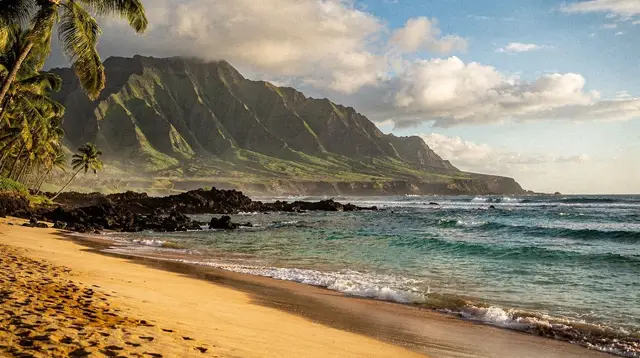
Four days is not much time on an island with six distinct regions, so this itinerary picks two coasts and one mountain instead of trying to circle Maui. It is built for a couple who wants resort mornings, one memorable evening, and a single active outing worth getting up for — not a checklist of every beach on the island.
The shape of the trip
Two nights in Wailea for the calmest water on the island, one night in Lahaina for the harbor and a proper sunset, and a half-day up toward Haleakala before the flight home. It assumes a rental car picked up at the airport on arrival — see rental car versus a private transfer from OGG if you are weighing a private transfer instead — and a slower pace than the standard first-timer’s loop covered at the three-day first-timers itinerary.
What this itinerary does not cover: the Hana Highway is a full day on its own, at odds with a relaxed four-day honeymoon, so it is left out entirely. A shorter romantic version of Maui without a car is handled separately at a three-day romantic getaway itinerary, and the mechanics of booking the Haleakala sunrise specifically live at the Haleakala sunrise reservation guide, since that reservation window opens 60 days in advance and is easy to miss if you leave it to the last minute.
Day 1: Arrival and settling into Wailea
Flights land at Kahului (OGG), the only airport on Maui with mainland and interisland service — Kapalua and Hana have short runways with no long-distance flights. Collect the rental car and drive roughly 30 minutes south to Wailea, the resort coast where hotels sit along a public 2.5-mile coastal path. If Wailea versus a west-side base is still an open question by the time you land, the west Maui vs. south Maui comparison lays out the trade-off in more detail than a four-day itinerary has room for.
Keep the first afternoon unscheduled. Wailea’s beaches are calm enough for an easy first swim, and the coastal path between the resorts is a good post-flight walk. Every beach in Hawaii is public up to the high-water line, including the ones in front of the resorts, so a walk down the beach and back needs no reservation and costs nothing beyond parking.
Dinner on night one should stay close to the hotel. Save the more involved outings for when the jet lag has worn off.
Day 2: Snorkeling and slow beach time
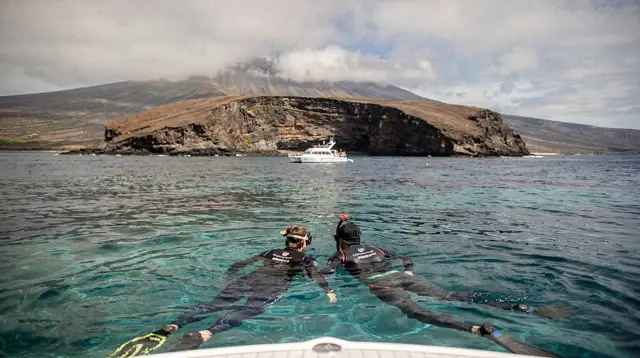
This is the day to book a boat. Maalaea harbor, a short drive north of Wailea, is the closest departure point to Molokini crater, and morning trips consistently have calmer water and better visibility than afternoon ones, before the trade winds pick up. For a honeymoon pace that combines the crater with a second stop, a Molokini and Turtle Town snorkel trip out of Wailea covers both in a single morning, with sea caves along the way.
Molokini itself is an uninhabited, crescent-shaped crater about 2.5 miles offshore — nobody lands on it, everyone swims from the boat inside the marine reserve. At Turtle Town, green sea turtles are common but never guaranteed, and federal law requires staying at least 10 feet away regardless of how close they come to you.
If seasickness is a concern, take motion-sickness medication before boarding, not after: the channel between Maui, Kahoolawe and Molokini can be choppy even on a clear day. Chemical sunscreen containing oxybenzone, octinoxate or octocrylene is banned from use anywhere in Maui County, so pack (or ask the operator for) a mineral, zinc-based sunscreen — the Molokini snorkel packing list has the rest of the packing list. If neither of you owns a mask and snorkel worth flying with, renting gear on land ahead of the trip is usually simpler than relying on whatever a boat hands out; snorkeling gear rental on Maui covers where and how.
Back on land by early afternoon, this is the day to actually use the resort: pool, spa, a slow lunch in Wailea or Makena, or the walk out toward Big Beach if you want sand without a group tour attached. Big Beach’s shorebreak is powerful enough that it is not a place to swim casually with small children, though that is less of a concern for a couples’ trip.
Day 3: West Maui and a Lahaina sunset
Check out of Wailea and drive northwest — about 45 minutes to an hour depending on traffic — toward Lahaina. Lahaina burned on August 8, 2023, and the town is still rebuilding; Front Street is not the intact shopping strip it once was, and the historic banyan tree survived the fire but access to it remains restricted. The harbor, however, is operating, and it remains the departure point for catamarans, sunset sails and whale-watching boats. Check the county’s current guidance before you go, and treat this stop as a working harbor and a town in recovery, not a sightseeing detour through the burn area.
Spend the afternoon on the water close to Lahaina. Olowalu, just south of town, has an easy reef accessible without a long boat ride — a coral reef snorkeling trip at Olowalu is a gentler add-on if the Molokini trip didn’t feel like enough time in the water. Between December and April, with a peak from January to March, this stretch of coast also borders the Auau Channel, one of the best humpback whale nurseries anywhere — a whale-watching cruise out of Lahaina is worth building the evening around if your dates fall in season; outside that window, skip it, since there are no whales here in summer. the whale season guide has the full breakdown of when the season starts, peaks and ends if your trip dates are flexible enough to matter.
For the evening itself, a sunset sail out of the harbor is the honeymoon set piece of this trip: catamarans clear the harbor as the light turns, with West Maui’s cliffs behind you and, most evenings, a clean view of the sun dropping past Lanai. the sunset catamaran cruise guide covers what a typical sail includes, and what to wear on a sunset cruise is worth a glance so the outfit photos don’t fight the wind on deck.
A traditional luau is the other honeymoon-evening option some couples prefer to a boat: the Old Lahaina Luau review and the best luau in Kaanapali cover two well-known versions, luau versus dinner show explains how a luau differs from a dinner cruise, and what to wear to a luau has the dress code. Either the sail or the luau tends to sell out on peak dates, so book before you land rather than the afternoon of. See the Lahaina whale-watching tour guide and the Kaanapali vs. Wailea comparison if you’re deciding how much time to give this coast versus the resort side. Overnight in Lahaina or nearby Kaanapali.
Day 4: Upcountry and Haleakala before departure
The last day is the most active one, and it needs an early start regardless of your flight time. From West Maui, the drive up to the Haleakala summit takes roughly 2.5 hours; from a more central start it’s closer to 2 hours, so build the return drive to the airport into your schedule before you commit to the summit.
This itinerary treats Haleakala as a sunset or daytime visit rather than a sunrise one on purpose. The sunrise entry window, 3 a.m. to 7 a.m., requires a separate recreation.gov reservation that opens 60 days out and fills for good dates — worth planning ahead of the trip if it matters to you, but not something to try to add on the morning of your last day. The full process is covered at the Haleakala sunrise reservation guide; the park’s regular daytime and sunset entry only needs the standard three-day vehicle pass, described at the Haleakala parking and access guide.
Whichever time you go, dress for cold: near-freezing temperatures at the summit are normal year-round, with real wind on top of that, and the elevation itself takes some getting used to — not recommended within 24 hours of scuba diving. Details on what to actually bring are at the Haleakala summit packing guide — bring a real jacket, not a hoodie.
Haleakala is dormant, not extinct, and hasn’t erupted in centuries; there is no active lava anywhere on Maui, and none has ever come from this mountain in recent memory. The “crater” at the summit is technically an erosional valley cut by two rivers, which is a more interesting story than the volcano legend it’s often given. For an unusual way to take in the summit without hiking, a sunset llama trek on the Haleakala slopes covers the Upcountry views at an easy pace, well suited to a last day that also needs to end at the airport.
If you’d rather stay lower and warmer, spend the morning in the Upcountry towns of Kula and Makawao instead — lavender and goat farms, small galleries, and views back down over both coasts — before heading to Kahului. Either way, allow a buffer before your flight: island roads are two-lane and slower than the distances suggest, especially coming back down from the summit.
Wailea, Lahaina and Haleakala on a 4-day honeymoon
| Day | Base | Focus | Pace |
|---|---|---|---|
| 1 | Wailea | Arrival, unpack, first swim | Very slow |
| 2 | Wailea | Molokini/Turtle Town snorkel, resort time | Active morning, slow afternoon |
| 3 | Lahaina | West Maui snorkeling, sunset sail | Active afternoon, evening event |
| 4 | Haleakala day trip | Upcountry or summit, departure | Early start, easy finish |
Practical notes for this itinerary
Prices throughout Maui are shown before tax: expect roughly 4.2–4.5% general excise tax on tours and purchases, plus a combined state and county lodging tax of around 18% on hotel nights, and daily resort fees on top of the room rate that are never included in the quoted price. Tip 18–20% at restaurants and a comparable share for boat crews and guides. Travelers under the Visa Waiver Program need an approved ESTA before departure — it is an authorization, not a visa — more on that at Maui’s ESTA and travel requirements.
For help deciding when to travel or what to pack beyond the Haleakala layers, see the best time to visit Maui and the Maui packing list. And if Wailea and Lahaina don’t feel like the right pairing for your dates or budget, where to stay in Maui for first-timers walks through the alternatives.
tours.4 days
Verified deep-linked GetYourGuide tours. Book through these links and we earn a small commission at no cost to you.
GetYourGuide does not provide a product photo for this activity — the image shows the meeting point, photographed by us.